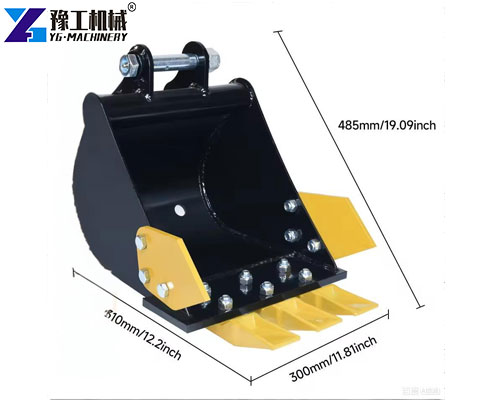
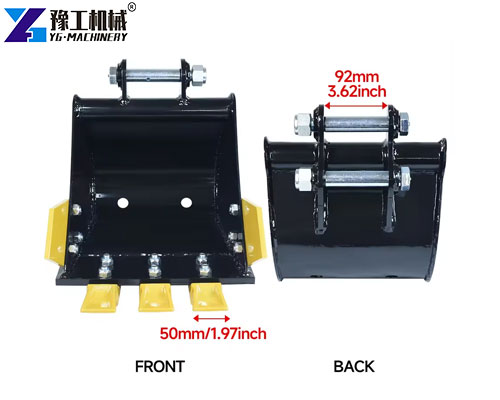
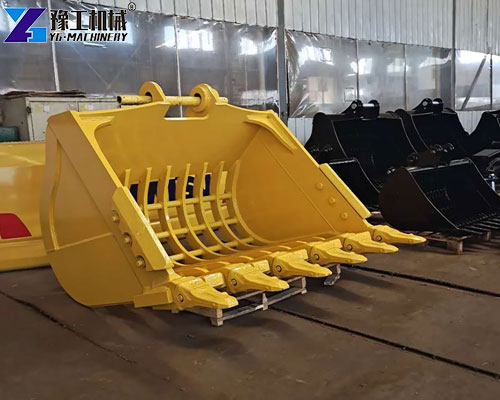
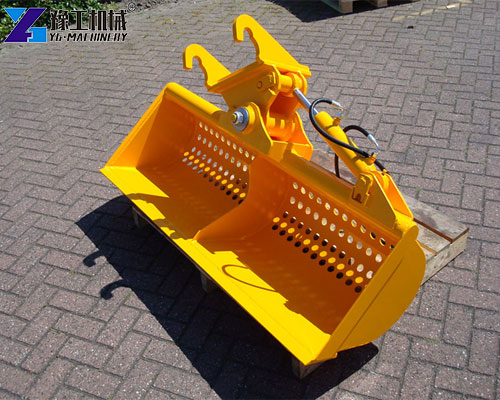
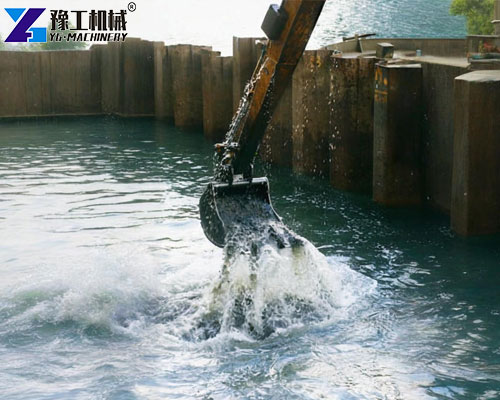
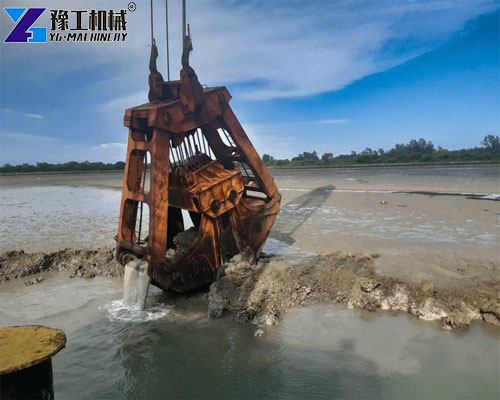
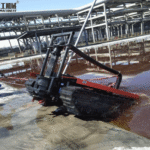
Excavator dredging bucket solutions are widely used in the Philippines for removing river sediment and restoring drainage capacity in flood-prone waterways. In June 2025, a local civil engineering contractor deployed a new excavator dredging bucket in a municipal river cleaning project in Luzon. The contractor reported that the equipment improved sediment removal efficiency while reducing the number of manual cleanup operations required after the rainy season.
The project focused on restoring a narrow river channel affected by accumulated silt and organic debris. The machine allowed operators to reach deeper sediment layers without damaging the surrounding riverbank. Local engineers confirmed that the bucket design was well suited for soft mud conditions common in tropical waterways.
Project Background: River Sediment Accumulation in the Philippines
River dredging is a recurring infrastructure challenge in many regions of the Philippines. Seasonal monsoon rainfall causes large volumes of soil and organic material to accumulate in riverbeds.
In this project area:
Sediment thickness reached 40–70 cm in several sections of the channel.
Water flow capacity had decreased by approximately 30% during the rainy season.
Manual dredging previously required 10–12 workers per shift.
Local authorities required a solution that could remove sediment efficiently while operating in a narrow river corridor less than 6 meters wide.
The contractor evaluated several river dredging options, including floating dredgers and suction pumps. However, the dredging bucket for excavator provided a more practical solution for this specific site.
Key selection factors included:
Mobility: Equipment could move along narrow riverbanks without additional floating platforms.
Lower operational cost: Only one operator required.
Fast deployment: Installation completed within 30 minutes.
Flexible digging depth: Adjustable according to sediment layer thickness.
This configuration allowed the contractor to begin dredging operations on the same day the equipment arrived on site.
Role of Excavator Dredging Attachment in River Maintenance
An excavator dredging attachment is commonly used when river access for specialized dredging vessels is limited.
In this project, the attachment provided several operational advantages:
Immediate compatibility with existing construction equipment
Easy transport between work locations
Simplified operator training
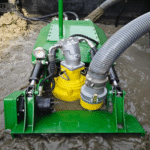
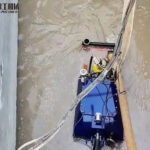
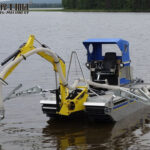
For deeper sediment layers or underwater operations, contractors may also use specialized equipment such as sediment removal robot or small dredging boat to complement excavator dredging operations.
These machines are often deployed in lakes, reservoirs, and large river sections where continuous underwater sediment removal is required.
Project Results and Performance Data
After two weeks of operation, measurable improvements were recorded in the river channel.
Project outcomes included:
1,850 cubic meters of sediment removed
River channel depth increased by 50–80 cm
Water flow capacity improved during rainfall events
Manual labor requirements reduced by 70%
Local project supervisors confirmed that the machine improved operational efficiency while maintaining stable excavation control in soft mud conditions.
The contractor’s site engineer provided the following evaluation after completing the first dredging stage:
Installation was straightforward.
Sediment removal capacity was consistent across different river sections.
Operators required minimal additional training.
The engineer also noted that the bucket design reduced the number of excavation cycles required to clear heavily silted areas.
Why Contractors Choose YG as a Manufacturer?
Equipment reliability is a key factor for contractors working on river maintenance projects. YG focuses on manufacturing durable excavation attachments designed for demanding operating environments.
The company provides:
Custom bucket sizes for different excavator models
Wear-resistant steel materials
Engineering consultation for dredging applications
Global shipping support for international projects
These factors help contractors select equipment that matches both machine specifications and local working conditions.
The excavator dredging bucket used in this Philippines river maintenance project demonstrated practical advantages in sediment removal efficiency, mobility, and operating cost. Field data showed improved waterway capacity and reduced labor requirements within a short operational period.
For contractors working in flood-prone or sediment-heavy environments, selecting a properly designed dredging attachment can significantly improve dredging efficiency while maintaining compatibility with existing excavation equipment.
YG continues to supply engineered excavation attachments for infrastructure maintenance projects worldwide.