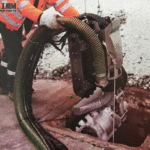
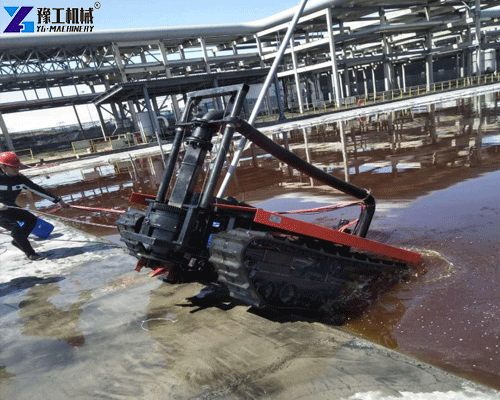
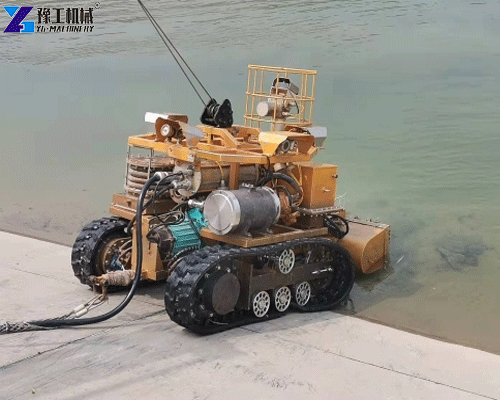
In June 2025, a Lagos-based environmental contractor confirmed that a robotic dredging reduced sludge removal time in a polluted urban channel by approximately 60%, compared with manual dredging. The project targeted a shallow river connected to a coastal lagoon, where accumulated sediment and organic waste had reduced water depth from 1.8 m to less than 0.9 m, increasing flood risk during the rainy season. The contractor selected a robotic solution because it could operate continuously in narrow waterways, avoid diver entry, and maintain stable performance in contaminated environments.
Project Background: Severe Sedimentation in Lagos Urban Waterways
What problem did the customer face?
The contractor maintained municipal drainage canals and natural river sections within Lagos State. Several waterways showed:
- Sediment thickness between 0.5 m and 1.2 m
- High concentration of organic sludge mixed with plastic debris
- Narrow access points, with widths between 3 m and 8 m
- Unsafe conditions for manual dredging due to bacteria and industrial runoff
Traditional dredgers could not enter these confined areas. Manual excavation required 6–8 workers and typically removed only 15–20 m³ per day.
Flood incidents increased during peak rainfall. Local authorities required a faster and safer removal method.
Why the Customer Selected a robotic dredging Instead of a Traditional Dredger?
What operational requirements needed to be met?
The contractor defined five key criteria:
- Operate in shallow water, minimum depth 0.6 m
- Access narrow river sections under bridges
- Remove soft sludge without damaging the riverbed
- Allow remote operation to reduce safety risks
- Maintain productivity above 40 m³ per day
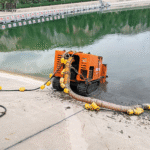
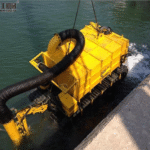
A compact robotic platform met these requirements. It required no large transport vessel and could be deployed from the riverbank using a small crane.
Compared with a conventional lake cleaning machine, the robotic unit offered higher maneuverability in confined areas and lower transport costs.
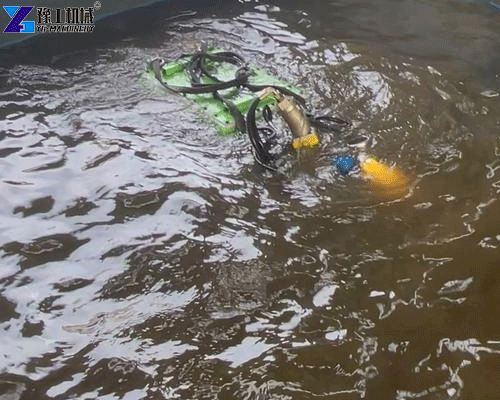
Technical Specifications of the Supplied Equipment
What configuration was delivered?
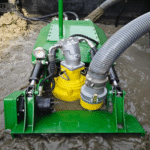
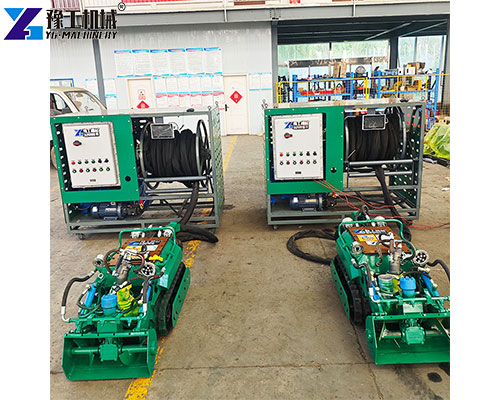
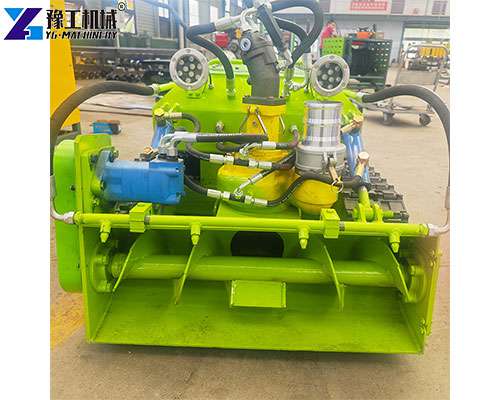
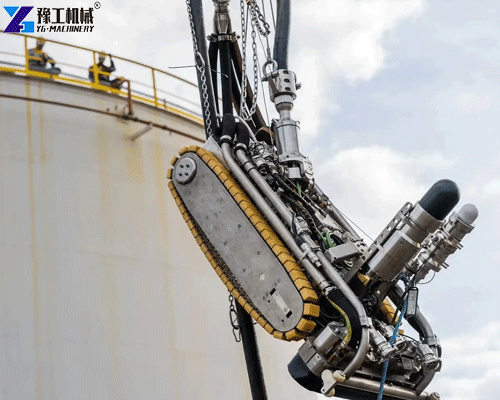
The supplied system included one amphibious robotic dredging unit and a shore-based control station.
Key parameters:
- Operating depth: 0.5 m to 8 m
- Pump capacity: 120 m³ per hour
- Cutter power: 7.5 kW hydraulic drive
- Travel speed: up to 3 km/h
- Remote control distance: up to 500 m
- Weight: 1,200 kg
- Power source: diesel-hydraulic system
- Discharge distance: up to 150 m via pipeline
The integrated cutter head loosened compacted sediment. A slurry pump transferred material directly to a designated containment area.
How the robotic dredging Was Deployed in Nigeria?
How was installation completed?
Deployment required minimal infrastructure:
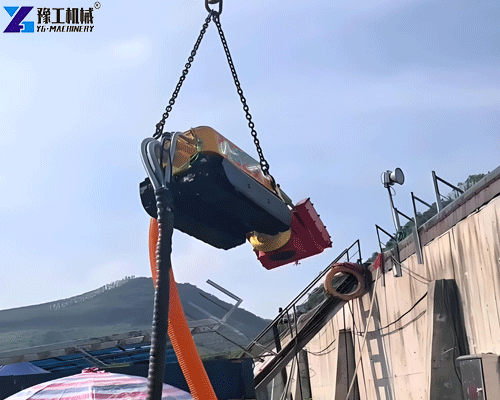
- Transported by flatbed truck
- Lifted into the water using a 5-ton mobile crane
- Connected to discharge pipeline
- Remote control system activated onshore
Installation time was approximately 4 hours.
No floating support vessel was required.
Operational Performance and Measured Results
What improvements were observed?
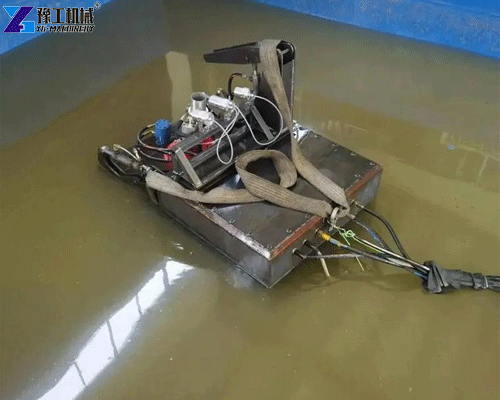
The contractor recorded performance over a 30-day cleaning period:
- Average removal rate: 45–60 m³ per day
- Total sludge removed: 1,420 m³
- Labor requirement reduced from 8 workers to 2 operators
- Fuel consumption: approximately 12 liters per day
- Operating time: 8–10 hours daily
Water depth increased to 1.6 m, restoring drainage capacity.
Flooding incidents in the serviced channel were reduced during subsequent rainfall.
Why Remote Robotic Dredging Was More Effective in This Environment?
What limitations existed with manual and mechanical alternatives?
Manual dredging faced several risks:
- Worker exposure to contaminated water
- Low productivity
- Physical fatigue
Large dredgers faced access limitations:
- Bridge clearance less than 2.5 m
- Narrow canal width
- High transport cost
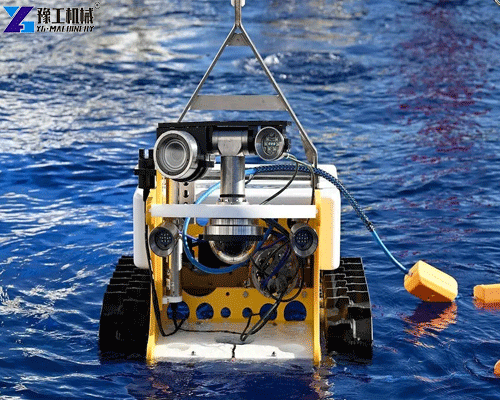
A remote control dredging robot addressed these constraints by operating independently and navigating tight areas.
The operator controlled movement, cutter activation, and pumping from a safe location.
Suitability for Oil-Contaminated and Industrial Sediment
Why was robotic removal necessary in polluted areas?
Sediment analysis showed:
- Organic sludge content: 45%
- Sand content: 30%
- Industrial residue and debris: 25%
These materials required controlled removal to avoid resuspension.
An underwater sludge robot provided stable suction and precise positioning, reducing turbidity and minimizing environmental disturbance.
This approach aligned with environmental protection requirements.
Customer Evaluation and Operational Feedback
What did the contractor report after deployment?
The contractor highlighted three measurable benefits:
- Cleaning speed increased by more than 2×
- Equipment access improved in narrow waterways
- Maintenance requirements remained low
Routine maintenance included:
- Hydraulic oil inspection every 500 hours
- Cutter blade inspection every 200 hours
No major component failures occurred during the first six months.
Why Robotic River Cleaning Is Increasing in Nigeria?
What market conditions support adoption?
Nigeria faces widespread waterway sedimentation due to:
- Heavy seasonal rainfall
- Urban waste discharge
- Oil industry sludge accumulation
Many drainage canals and rivers are inaccessible to conventional dredgers.
Compact robotic systems offer practical solutions for:
- Municipal waterways
- Industrial lagoons
- Oil facility sediment ponds
Infrastructure contractors increasingly prioritize equipment that reduces labor dependency.
Delivery, Training, and Support Details
How was the system supplied?
Project timeline:
- Production period: 25 days
- Shipping to Lagos port: 32 days
- Commissioning and training: 2 days
Training included:
- Remote operation procedures
- Pump maintenance
- Emergency shutdown protocol
Operators achieved independent operation within one week.
FAQ: for robotic dredging Projects
What is the typical price range?
Price depends on pump capacity, operating depth, and configuration. Small and medium units typically range between USD 15,000 and USD 60,000.
What environments are suitable?
Applicable environments include:
- Rivers
- Lagoons
- Reservoirs
- Industrial sediment ponds
Minimum operating depth is typically 0.5 m.
How is the equipment transported?
Transport requires a standard truck and small crane. No specialized transport vessel is needed.
What is the expected service life?
With proper maintenance, operational lifespan typically exceeds 8–10 years.
How many operators are required?
Standard operation requires:
- 1 remote operator
- 1 technician for monitoring
Reliable Robotic River Cleaning Solution for Nigerian Waterways
This Nigerian project demonstrated that a robotic dredging can significantly improve sediment removal efficiency in narrow and polluted waterways. The system achieved measurable productivity gains, reduced labor requirements, and restored drainage capacity within one operational cycle. Robotic dredging provides a practical and scalable solution for municipalities and contractors managing sediment-affected rivers, lagoons, and industrial water bodies.