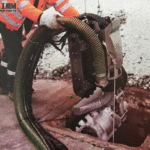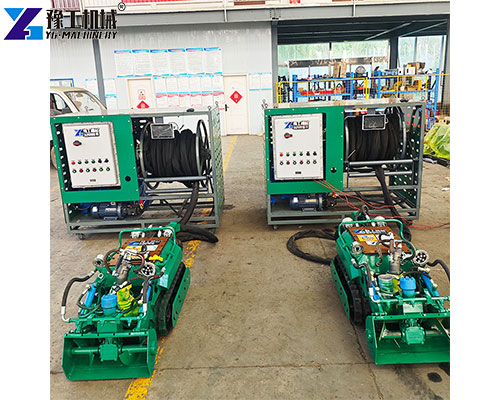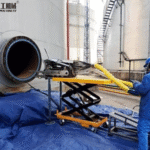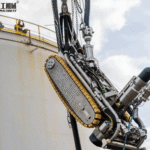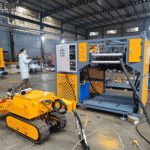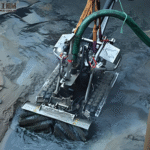
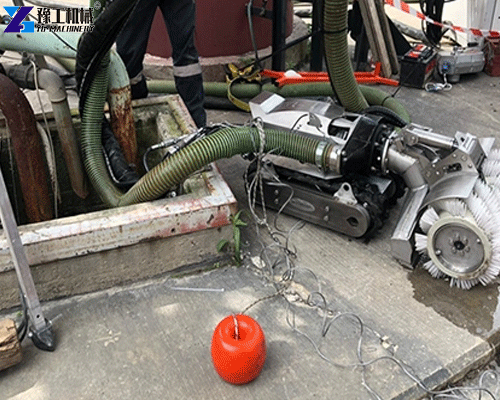
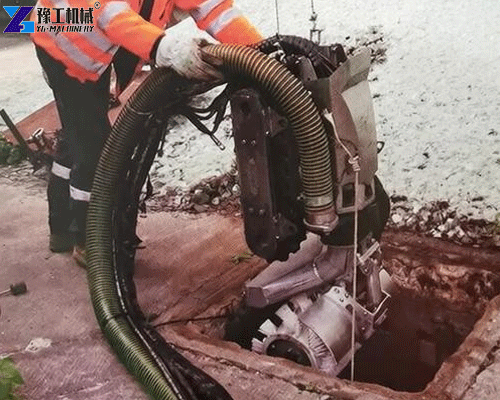
A remote control dredging robot is a high-precision, remotely operated device designed to remove sludge, sediment, and debris from industrial tanks, reservoirs, and oil storage facilities. Its advanced automation, safety features, and adaptability make it ideal for environments where human entry is hazardous or impractical. For industries ranging from chemical processing to petroleum storage, this technology provides reliable, efficient, and cost-effective sludge management.
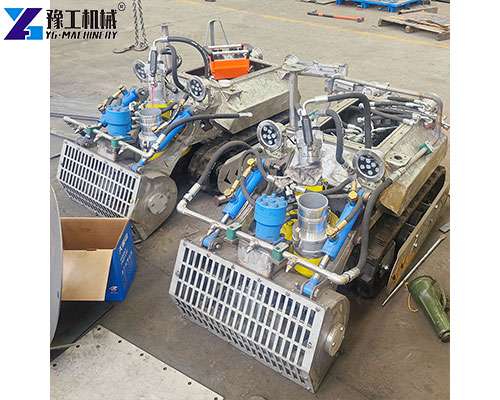
Remote Control Dredging Robot Parameters
| Parameter | YG500 | YG600 | YG700 | YG800 | YG900 | YG1200 |
| Robot Dimensions (mm) | 1500*500*650 | 1500*600*650 | 1600*700*650 | 1600*850*700 | 1650*960*750 | 1900*1200*750 |
| Dredging Width (mm) | 500 | 600 | 700 | 800 | 900 | Suitable for large culverts |
| Travel Speed (m/s) | 3–15 | 3–15 | 3–15 | 3–15 | 3–15 | 0–17 m/min |
| Pump Diameter (inch) | 3 | 3 | 4 | 4 | 4 | 4or6 |
| Pump Flow (m³/h) | 100 | 100 | 160 | 160 | 200 | 250 |
| Pump Head (m) | 0–30 | 0–30 | 0–25 | 0–25 | 0–25 | 0–30 (Horizontal: 100–150m) |
| Hydraulic Station Dimensions (mm) | 2200*1200*1700 | 2200*1200*1700 | 2200*1200*1700 | 2200*1200*1700 | 2200*1200*1700 | 2120*1240*1200 |
| Main Motor Power (kW) | 18 | 18 | 22 | 22 | 22 | 45KW (50KW) or Diesel 76KW (123KW) |
| Hydraulic System Pressure (Mpa) | 0–16 | 0–16 | 0–16 | 0–16 | 0–16 | Not specified |
| Particle Size (mm) | 15 | 15 | 40 | 40 | 50 | 0–40 (customizable) |
| Winch Speed (r/min) | 0–10 | 0–10 | 0–10 | 0–10 | 0–10 | 0–10 |
| Pipe Length (m) | 30–50 Optional | 30–50 Optional | 30–50 Optional | 30–50 Optional | 30–50 Optional | 30m/pack, 20kg pressure resistant, optional |
| Control System | Wireless Remote | Wireless Remote | Wireless Remote | Wireless Remote | Wireless Remote | Wireless Remote |
| Lighting System | Underwater LED*2 | Underwater LED*2 | Underwater LED*2 | Underwater LED*2 | Underwater LED*2 | Underwater LED*2 |
Key Features of Remote Control Dredging Robot
1. Fully Remote Operation
The robot can be controlled from a safe distance using wired or wireless interfaces. Operators can navigate underwater obstacles, adjust dredging speed, and monitor progress in real time without entering hazardous tanks.
2. High-Efficiency Sludge Removal
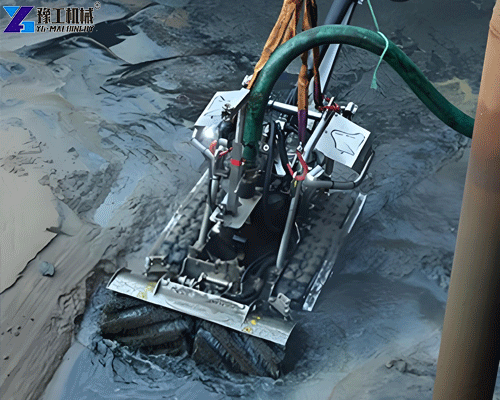
Equipped with hydraulic suction pumps and precision dredging heads, it can remove high-density sludge or sediment at rates up to 25–35 m³ per hour. This ensures fast cleaning while minimizing downtime.
3. Adaptability to Various Environments
The system can operate in oil tanks, chemical storage facilities, or water reservoirs. Its corrosion-resistant materials, sealed hydraulic systems, and variable propulsion modules (crawler or thruster-based) allow deployment in harsh conditions.
4. Automation and Monitoring
With robotic dredging capabilities, the device can be programmed for repetitive cleaning cycles. Sensors monitor depth, flow rate, and pump load, providing actionable data for predictive maintenance.
5. Safety and Labor Efficiency
By eliminating the need for confined space entry, it reduces safety risks and labor costs significantly. The automatic sludge removal robot can operate continuously for extended periods with minimal human supervision.
How to Choose the Right Remote Control Dredging Robot?
Selecting an appropriate remote control dredging robot depends on several key factors:
- Tank Size and Depth – Determine the maximum depth and surface area of the tank. Robots with adjustable dredging arms or modular configurations are better for large or irregularly shaped tanks.
- Sludge Type and Density – Heavy, viscous sludge requires a higher-capacity hydraulic pump. Light sediment may allow smaller, more energy-efficient units.
- Operating Environment – Consider temperature, chemical composition, and water conditions. Corrosion-resistant materials and waterproof electronics are essential for oil or chemical tanks.
- Mobility Requirements – For tanks with limited access or complex interiors, crawler tracks or articulated arms improve maneuverability.
- Automation Needs – Determine whether scheduled, repeatable cleaning cycles are necessary. Integration with remote monitoring systems can reduce operational oversight.
Long-term costs, maintenance requirements, and ease of deployment should also be part of the decision-making process to ensure maximum return on investment.
Nigeria Oil Tank Cleaning Case
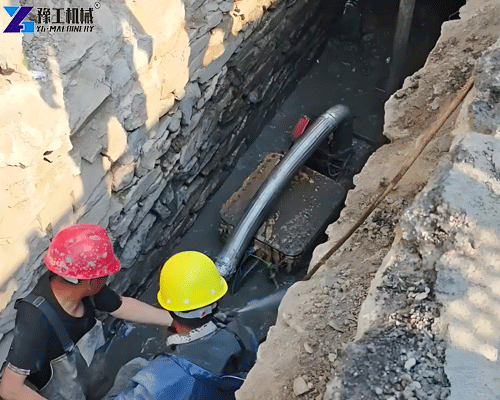
In 2025, a remote control dredging robot was deployed at a petroleum storage facility in Lagos, Nigeria, to address heavy sludge buildup in a series of 3,000 m³ crude oil tanks. Traditional cleaning methods required draining tanks and manual entry, posing significant safety hazards.
Project details and outcomes:
- Deployment time: Less than 48 hours per tank
- Sludge removal efficiency: 70% in the first operation cycle
- Downtime reduction: Eliminated tank shutdowns required for manual cleaning
- Operator safety: Zero human entry required
- Equipment configuration: Wired remote with optional wireless module, crawler tracks for stability, high-torque hydraulic pump
The remote controlled dredger enabled continuous operation while maintaining oil quality standards. Operators highlighted the robotic dredging precision and the automated sludge removal functionality as decisive advantages over conventional methods.
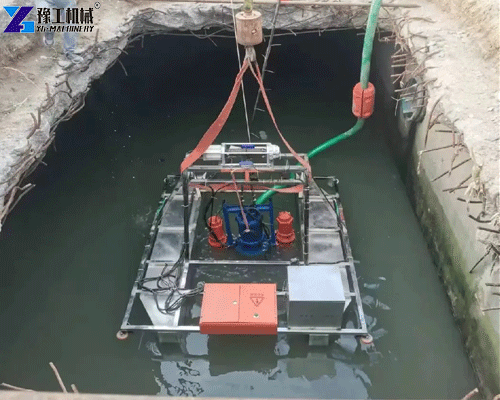
Advantages Over Traditional Tank Cleaning Methods
- Reduced Labor Costs: No need for confined space personnel.
- Enhanced Safety: Eliminates chemical or explosion hazards associated with manual cleaning.
- Time Efficiency: Continuous operation allows rapid sludge removal.
- Precision Cleaning: Robotic dredging ensures uniform sludge removal without damaging tank surfaces.
- Scalability: Units can be deployed across multiple tanks or facilities as needed.
Applications Across Industries
- Petroleum & Oil Storage: Sludge cleaning robot for oil tanks and refineries.
- Chemical Plants: Removing hazardous sediments safely.
- Water Reservoirs & Municipal Tanks: Robotic dredging of sediment and debris.
- Food Processing & Wastewater Systems: Automatic sludge removal robot ensures hygiene compliance.
The modular design and remote control dredging robot adaptability make it suitable for nearly any environment where sediment and sludge pose operational or safety challenges.
FAQ about remote control dredging robot
Q1: Can it operate continuously without draining the tank?
Yes, it is designed for submerged operation while the tank remains in use.
Q2: How much sludge can it remove per hour?
Depending on model, hydraulic pump, and sludge density, removal rates range from 15–35 m³ per hour.
Q3: Is it safe for chemical or oil tanks?
Yes. Corrosion-resistant materials and sealed hydraulics ensure safe operation in hazardous liquids.
Q4: How is it controlled?
The machine can be controlled via wired or wireless remote interfaces. Optional automation allows pre-programmed cleaning cycles.
Q5: Can it replace manual dredging entirely?
In most cases, yes. Its robotic dredging and automated sludge removal significantly reduce or eliminate the need for human entry.
remote controlled dredger in YG Machinery
A remote control dredging robot provides a safe, efficient, and precise solution for industrial sludge management. With demonstrated success in projects like the Nigeria oil tank cleaning case, it reduces labor costs, improves operational uptime, and ensures consistent tank maintenance. For facilities requiring long-term, high-efficiency sludge removal, investing in a remote controlled dredger or automatic sludge removal robot is a practical and reliable choice.