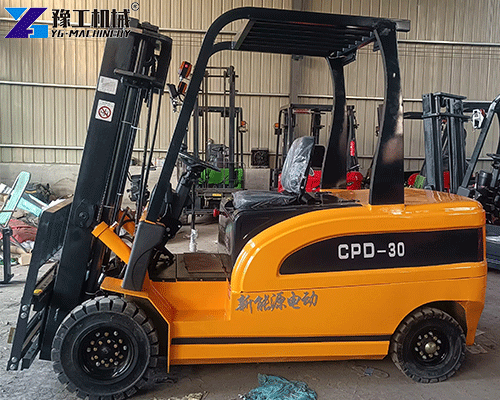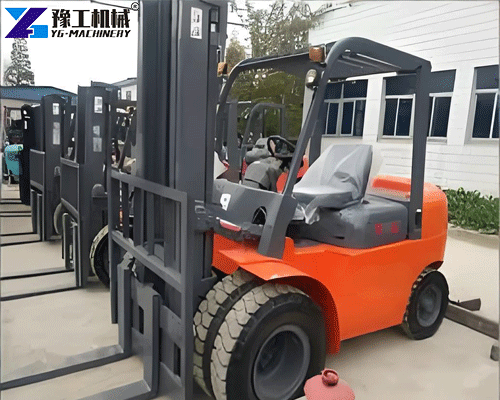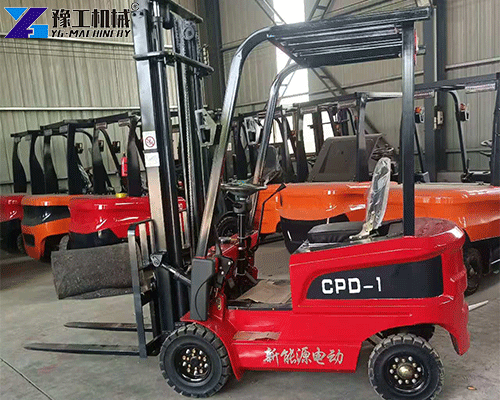
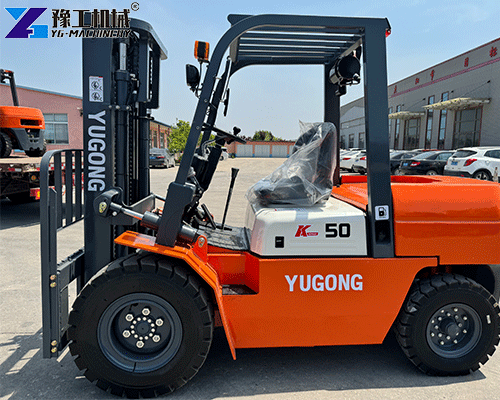
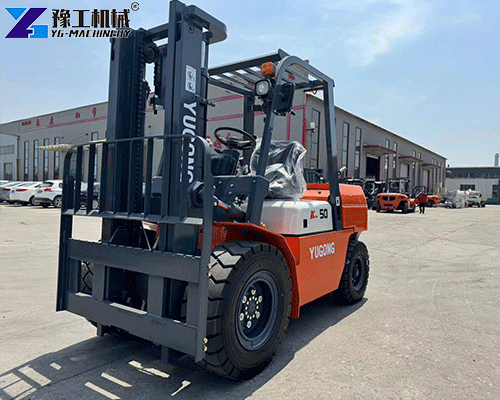
A diesel powered forklift is an internal combustion forklift designed for high-load, high-intensity material handling, especially in outdoor and industrial environments where durability, torque, and long operating hours are required.
What Is a Diesel Powered Forklift?
A diesel powered forklift uses a diesel engine to generate mechanical power for lifting, driving, and hydraulic operations.
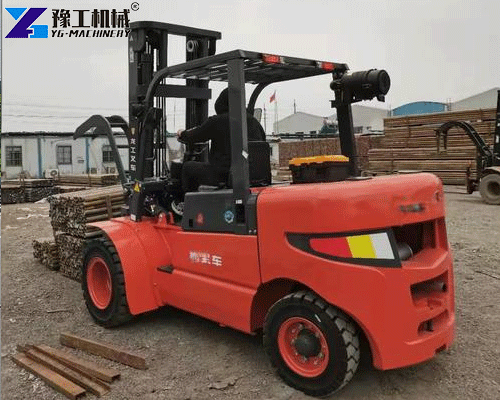
It is commonly used in ports, construction sites, steel yards, timber yards, and logistics hubs with heavy loads.
Compared with electric forklifts, diesel forklifts prioritize power output, continuous operation, and environmental adaptability rather than zero emissions or low noise.
Click Here to Get A Free Quote
Diesel Powered Forklift Parameters
| Specification | Unit | CPC20 | CPCD20 | CPC25 | CPCD25 | CPC30 | CPCD30 | CPC35 | CPCD35 | CPC38 | CPCD38 |
| Power Type | Diesel | Diesel | Diesel | Diesel | Diesel | Diesel | Diesel | Diesel | Diesel | Diesel | |
| Rated Load | kg | 3000 | 3000 | 3500 | 3500 | 3000 | 3000 | 3500 | 3500 | 4000 | 4000 |
| Load Center | mm | 500 | 500 | 500 | 500 | 500 | 500 | 500 | 500 | 500 | 500 |
| Driving Type | Sit-on | Sit-on | Sit-on | Sit-on | Sit-on | Sit-on | Sit-on | Sit-on | Sit-on | Sit-on | |
| Max Lifting Height (H) | mm | 3000 | 3000 | 3000 | 3000 | 3000 | 3000 | 3000 | 3000 | 3000 | 3000 |
| Mast Height Lowered (H1) | mm | 2000 | 2000 | 2070 | 2070 | 2070 | 2070 | 2070 | 2070 | 2150 | 2150 |
| Max Fork Height with Load Backrest (H2) | mm | 4030 | 4030 | 4030 | 4030 | 4220 | 4220 | 4220 | 4220 | 4220 | 4220 |
| Free Lift Height (H3) | mm | 30 | 30 | 30 | 30 | 30 | 30 | 30 | 30 | 30 | 30 |
| Overall Height with Overhead Guard (H4) | mm | 2120 | 2120 | 2120 | 2160 | 2160 | 2160 | 2160 | 2160 | 2160 | 2160 |
| Min Ground Clearance at Mast (H5) | mm | 115 | 115 | 115 | 115 | 135 | 135 | 135 | 135 | 148 | 148 |
| Seat to Overhead Guard Clearance (H6) | mm | 1000 | 1000 | 1000 | 1000 | 1000 | 1000 | 1000 | 1000 | 1000 | 1000 |
| Towing Pin Height (H9) | mm | 290 | 290 | 290 | 290 | 310 | 310 | 310 | 310 | 323 | 323 |
| Load Backrest Height (H13) | mm | 1000 | 1000 | 1000 | 1000 | 1215 | 1215 | 1215 | 1215 | 1215 | 1215 |
| Overall Length with/without Forks (L/L’) | mm | 3685/2615 | 3685/2615 | 3685/2615 | 3685/2615 | 3913/2693 | 3913/2693 | 3913/2693 | 3913/2693 | 4063/2843 | 4063/2843 |
Click Here to Get A Free Quote
Key Advantages of Diesel Powered Forklifts
Diesel forklifts are selected for their mechanical strength and operational stability.
Main advantages include:
- High torque output for heavy lifting tasks
- Stable performance under continuous, long-hour operation
- Strong adaptability to uneven ground and outdoor conditions
- Simple mechanical structure with mature engine technology
- Wide availability of fuel and spare parts worldwide
Models such as a 3 ton diesel forklift and 5 ton diesel forklift are widely used because they balance lifting capacity and maneuverability.
Typical Applications and Use Scenarios
Diesel forklifts are primarily used where load weight and operating intensity are high.
Common applications include:
- Construction material yards
- Ports and container terminals
- Mining and quarry operations
- Steel, stone, and timber handling
- Outdoor warehouses and logistics parks
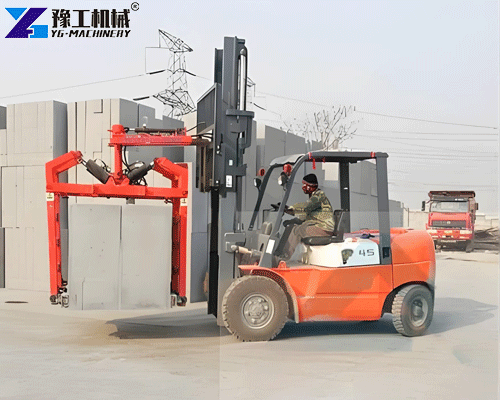
For extreme conditions, a heavy duty diesel forklift is often chosen to handle oversized pallets, steel coils, or stone blocks.
Working Principle of a Diesel Forklift
A diesel engine converts fuel combustion into mechanical energy.
This energy is transmitted to:
The drive axle for movement
The hydraulic pump for mast lifting and steering
Hydraulic systems control the mast, forks, and attachments, ensuring stable lifting even under heavy loads.
Click Here to Get A Free Quote
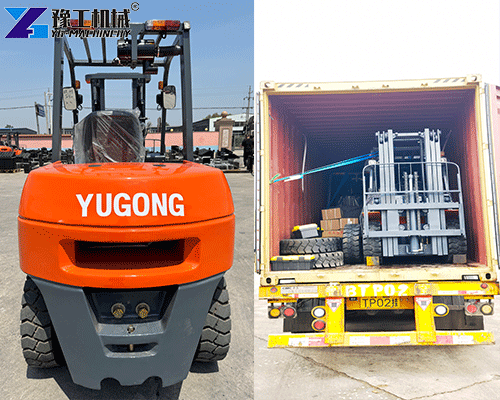
Diesel Forklift vs Electric Forklift
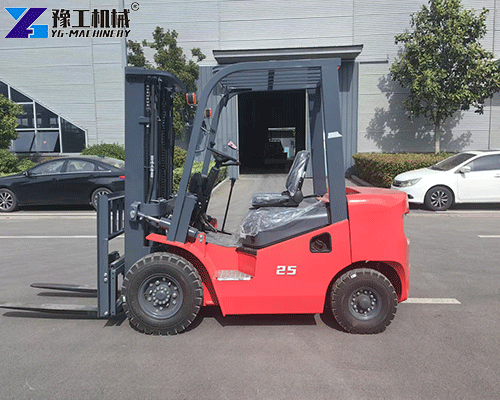
Electric forklifts and diesel forklifts serve different operational needs.
Diesel forklifts are suitable for:
- Outdoor operations
- Heavy loads
- Long, uninterrupted shifts
Electric forklifts are suitable for:
- Indoor warehouses
- Emission-sensitive environments
- Lower noise requirements
YG Machinery manufactures both diesel forklifts and electric forklifts, allowing users to choose based on site conditions and regulatory requirements.
Diesel Forklift Price: Key Influencing Factors
The diesel forklift price is not fixed and depends on multiple technical and commercial variables.
Main price factors include:
- Rated load capacity (e.g., 3 ton, 5 ton, or higher)
- Engine brand and emission standard
- Mast type and lifting height
- Tire configuration (pneumatic or solid)
- Optional attachments (side shifter, fork positioner)
- Local certification and compliance requirements
A 3 ton diesel forklift typically costs less than a 5 ton diesel forklift, while heavy duty models increase in price due to reinforced structures.
Click Here to Get A Free Quote
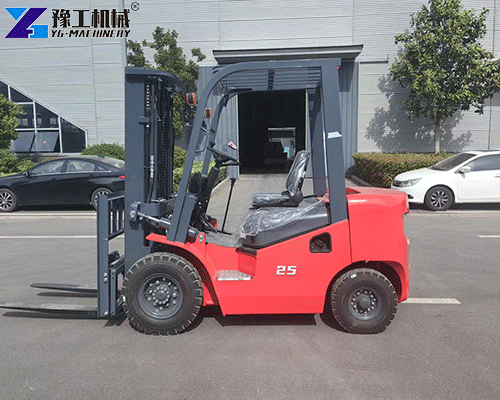
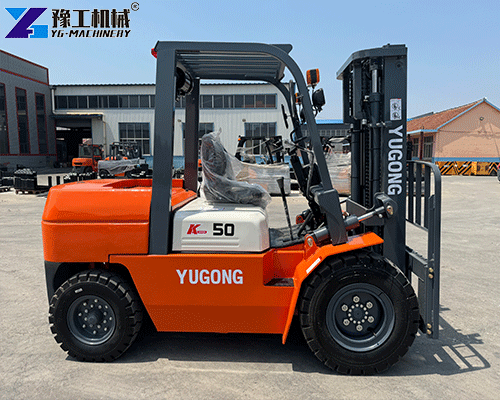
How to Choose the Right Diesel Powered Forklift?
Selection should be based on operating conditions rather than price alone.
Key selection criteria:
- Maximum load weight and pallet size
- Required lifting height
- Indoor or outdoor operation
- Ground condition and slope
- Daily operating hours
- Local emission regulations
Choosing the correct configuration improves efficiency and reduces long-term operating costs.
YG Machinery Diesel and Electric Forklift Capabilities
YG Machinery designs and manufactures both diesel forklifts and electric forklifts for global markets.
Capabilities include:
- Load range from light-duty to heavy-duty models
- Customizable mast heights and attachments
- Engines compliant with different regional standards
- Stable supply chain for spare parts
- Export experience in Europe, America, and Asia
This dual product line allows customers to build mixed fleets using diesel and electric solutions.
Click Here to Get A Free Quote
FAQ: Diesel Powered Forklift
What is the typical diesel forklift price range?
Prices vary by capacity and configuration. A 3 ton diesel forklift is usually more affordable than a 5 ton diesel forklift or heavy duty diesel forklift.
What is the difference between a 3 ton and 5 ton diesel forklift?
The difference lies in load capacity, structural reinforcement, engine output, and operating stability under heavy loads.
Are diesel forklifts suitable for indoor use?
Diesel forklifts are generally not recommended for enclosed indoor spaces due to exhaust emissions, unless ventilation is sufficient.
How does maintenance compare with electric forklifts?
Diesel forklifts require regular engine oil, filter, and fuel system maintenance, while electric forklifts focus more on battery management.
Can diesel forklifts use attachments?
Yes. Common attachments include side shifters, fork positioners, clamps, and extended forks.