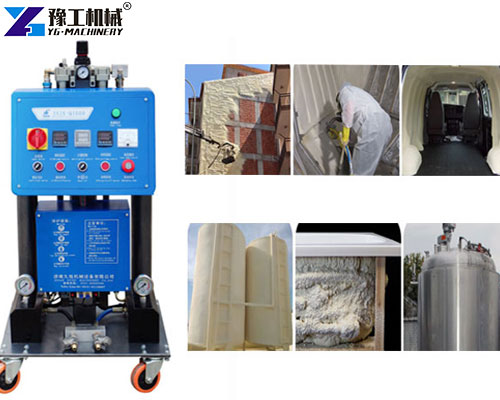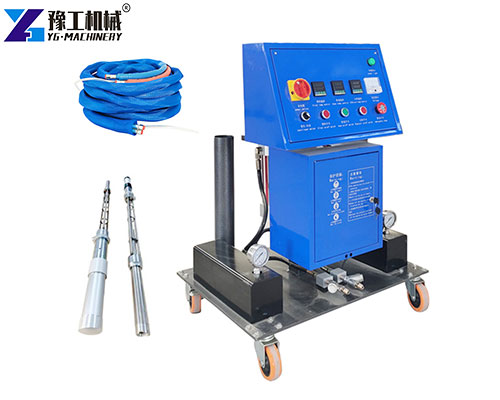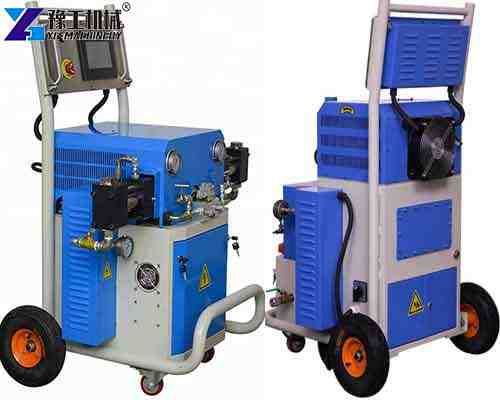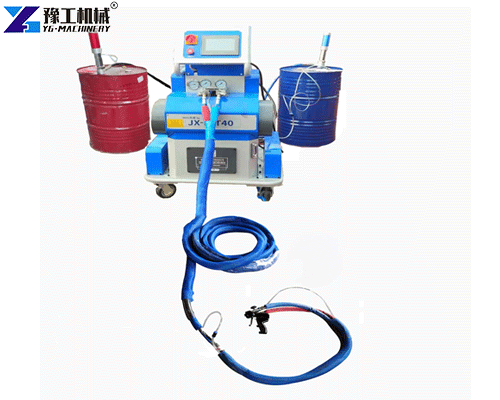
Polyurethane spray machines can operate reliably in cold and extreme climates, but only when the correct materials, heating systems, and operating procedures are used. Low temperatures significantly affect material viscosity, reaction speed, and spray quality, making winter spraying one of the most failure-prone environments if not properly managed.
This guide explains how cold weather impacts polyurethane spraying, why heating systems are critical, common winter spraying failures, and key engineering precautions for successful projects in extreme climates such as Russia, Northern Europe, and North America.
Click Here to Get A Free Quote
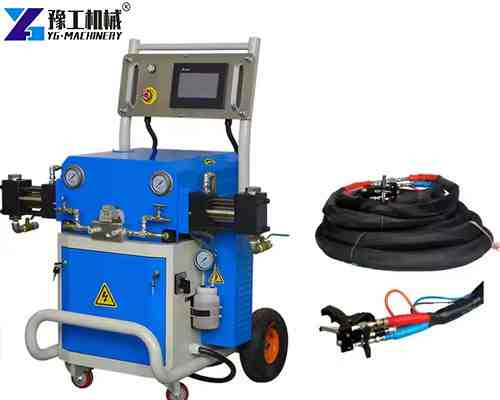
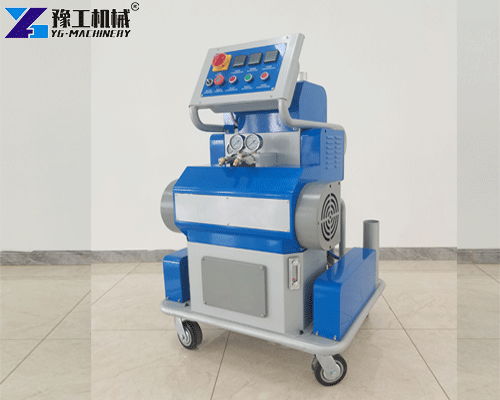
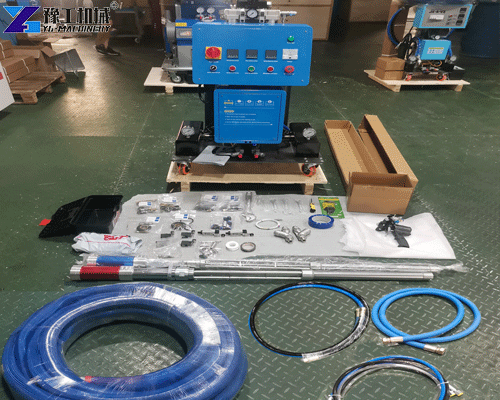
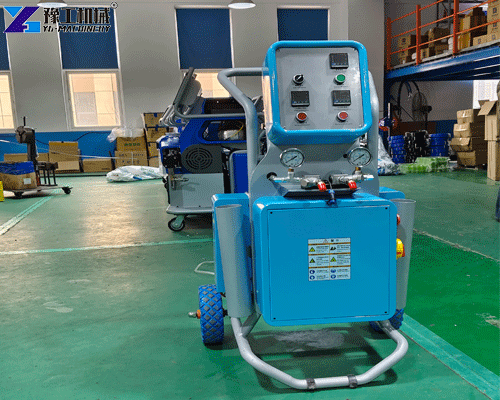
Polyurethane Spray Machine Parameters
| Project | YGMC-500 high configuration PU Machine |
| Proportion Fixed Mainframe | 1 set |
| Self-cleaning spray gun | 1 set |
| Gross weight | 300KG |
| Net weight | 250KG |
| Feed pump | 2 sets |
| Heated hose | 49.2 ft (15 m) |
| Data ratio of raw materials | 1: 1 (fixed) |
| Raw material viscosity range | 200-1000CPS (at working temperature) |
| Max Working pressure | 35MPa (350 bar) |
| Maximum Fluid Temperature | 88 ° C (190 ° F) |
| Maximum output | 24kg/min (42 lb/min) |
| Each heater power | 6000W |
| Heating hose power | 1000W / 15m |
| Total power | 15000W |
| Voltage | 230V 1-ph / 3-ph 220V/400V 3-ph |
| Machine size | 870mm* 700mm* 1150mm |
Click Here to Get A Free Quote
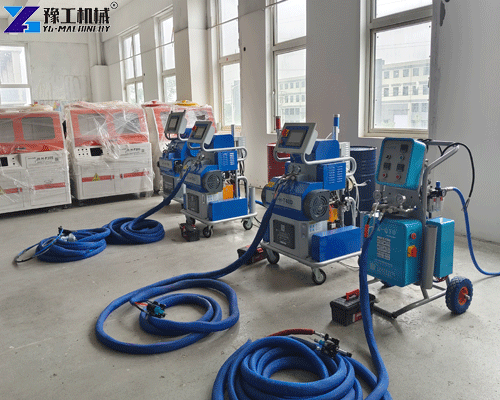
How Low Temperatures Affect Polyurethane Spraying?
Cold weather directly influences both spray materials and machine performance. Understanding these effects is the foundation of reliable winter operation.
1.1 Material Viscosity Increase
At low temperatures, polyurethane components (A and B) become thicker:
- Higher viscosity reduces pump efficiency
- Poor atomization causes uneven spray patterns
- Incomplete mixing leads to weak foam structure or coating defects
When material temperature drops below the recommended range (typically 20–25°C), spraying quality becomes unstable.
1.2 Slower Chemical Reaction and Curing
Polyurethane reactions are temperature-sensitive:
- Foam expansion slows significantly
- Gel time increases
- Final strength and adhesion may decrease
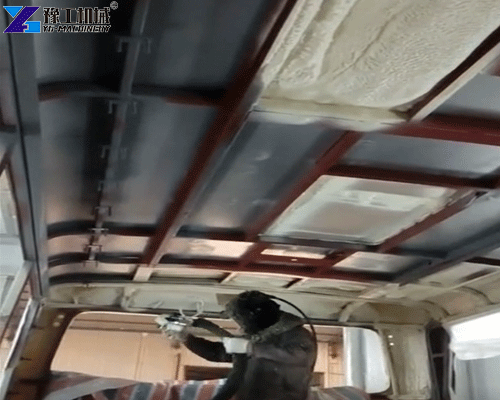
In extreme cold, sprayed foam may appear normal initially but fail structurally after curing, especially on roofs, truck insulation, or metal surfaces.
1.3 Moisture and Condensation Risks
Cold environments increase the risk of:
- Surface condensation
- Moisture contamination
- Foam shrinkage or delamination
This is a common issue in early-morning or night spraying during winter projects.
Click Here to Get A Free Quote
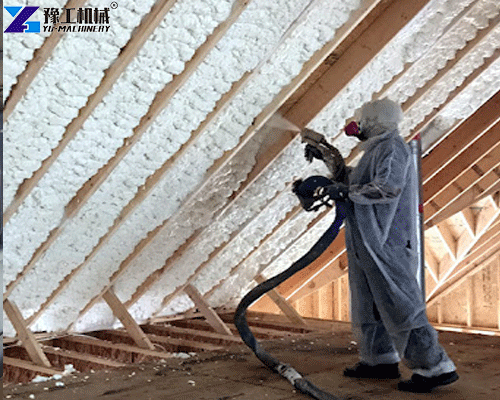
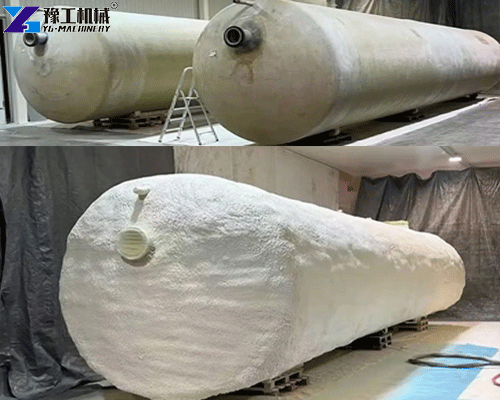
Why Heating Systems Are Critical in Cold Weather Spraying?
A polyurethane spray machine designed for cold climates must include integrated heating solutions, not just higher pump pressure.
2.1 Material Tank Heating
Heated material tanks maintain consistent temperature before pumping:
- Prevent material thickening
- Stabilize flow rate
- Ensure accurate A/B ratio
Without tank heating, cold materials may cause ratio imbalance, leading to brittle foam or poor insulation performance.
2.2 Heated Hoses
Heated hoses are essential for long hose runs in winter:
- Maintain material temperature from machine to spray gun
- Prevent heat loss in open or outdoor environments
- Improve spray consistency and finish
For projects in Russia or Northern regions, full-length hose heating is considered mandatory.
2.3 Spray Gun Temperature Stability
Cold spray guns increase clogging risk and poor atomization. A stable system ensures:
- Smooth trigger response
- Reduced nozzle blockage
- Consistent spray pattern
Click Here to Get A Free Quote
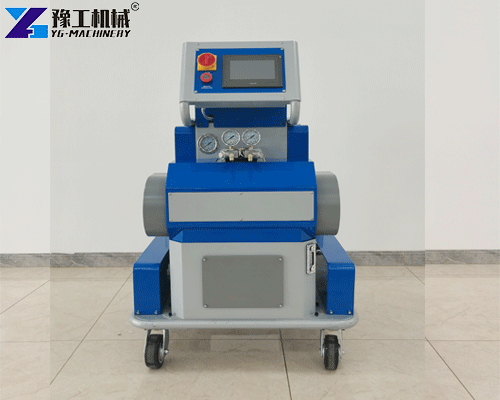
Common Winter Spraying Failures and How to Avoid Them
Cold weather spraying failures are often blamed on materials, but in reality, process control is usually the issue.
3.1 Uneven Spraying and Poor Adhesion
Causes:
- Cold substrate surface
- Insufficient material temperature
- Improper spray distance
Solutions:
- Pre-warm surfaces when possible
- Maintain recommended spray distance
- Perform test spraying before full application
3.2 Slow or Incomplete Curing
Causes:
- Low ambient temperature
- Incorrect material formulation for winter
- Inadequate heating power
Solutions:
- Use winter-grade polyurethane materials
- Increase pre-heating time
- Monitor surface temperature, not just air temperature
3.3 Gun Blockage and Material Crystallization
Causes:
- Cold material inside gun chamber
- Intermittent spraying in low temperatures
Solutions:
- Keep continuous spray rhythm
- Clean gun immediately after shutdown
- Avoid long idle periods during spraying
Click Here to Get A Free Quote
Engineering Precautions for Cold Climate PU Spray Projects
Professional winter spraying requires engineering-level planning, not just equipment adjustments.
4.1 Choose the Right Machine Configuration
For cold and extreme climates, a polyurethane spray machine should include:
- High-power heating units
- Accurate digital temperature control
- Stable pressure output
- Cold-weather-rated hydraulic or electric systems
This is especially important for mobile spraying projects, such as truck insulation, pipelines, or outdoor roofing.
4.2 Environmental Control on Site
Even partial environmental control helps:
- Temporary enclosures
- Wind shielding
- Controlled spraying windows during daytime
These measures significantly improve final coating quality.
4.3 Operator Experience Matters More in Winter
Cold weather magnifies operational mistakes. Skilled operators understand:
- Temperature compensation
- Reaction behavior changes
- Visual signs of poor mixing
This is why many winter project failures occur with inexperienced crews rather than poor equipment.
Click Here to Get A Free Quote
Proven Cold Climate Applications: Russia Case Reference
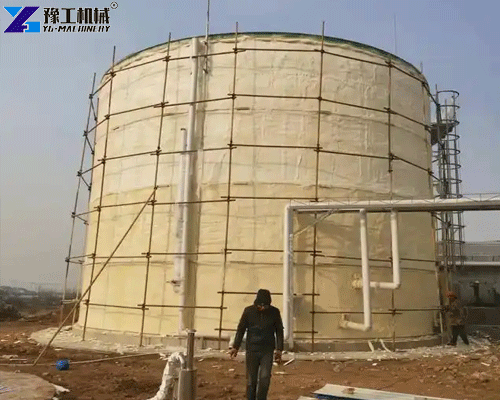
In multiple Russian projects, polyurethane spray machines have been successfully used for:
- Truck roof insulation
- Cold storage insulation
- Industrial equipment protection
By using fully heated spray systems, winter-grade materials, and controlled spraying procedures, contractors achieved stable foam density, strong adhesion, and long-term durability, even in sub-zero environments.
Click Here to Get A Free Quote
cold weather polyurethane spraying from YG Machinery
Cold weather does not limit polyurethane spraying — poor preparation does. With the right polyurethane spray machine, integrated heating systems, and professional operating procedures, reliable spraying is achievable even in extreme climates.
For contractors working in cold regions, investing in proper winter-ready equipment is not optional — it is essential for quality, safety, and project success. Contact us to know more details now!【WhatsApp/WeChat/Phone】+86 13837115193.