Automated Solution for Removing Pond Bottom Sludge in Aquaculture Farms
In modern aquaculture farming, maintaining clean pond conditions is essential for healthy aquatic growth and stable production. However, continuous feeding, fish and shrimp waste, algae residues, and organic matter gradually accumulate at the pond bottom, forming thick layers of sludge and sediment.
Traditional pond cleaning methods often require draining the pond, using manual labor, or employing large excavation equipment. These methods can disturb aquatic animals, increase labor costs, and interrupt farming operations.
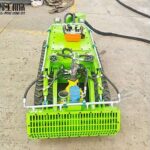
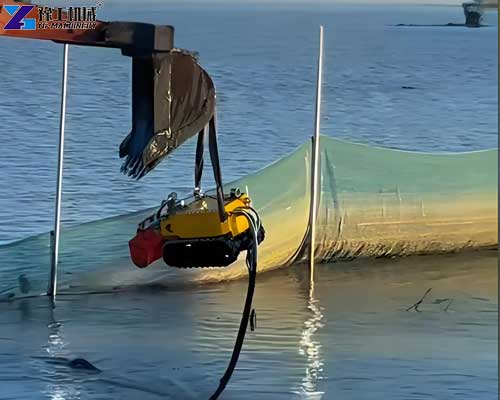
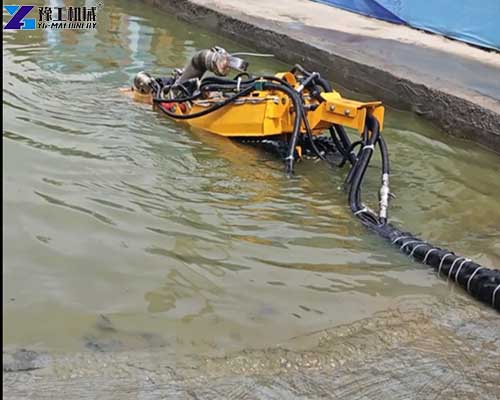
The aquaculture pond dredging robot provides an efficient and environmentally friendly solution for removing bottom sludge without draining the pond. Equipped with remote control operation, crawler mobility, and powerful sludge suction capability, it is designed for shrimp farms, fish farms, and other intensive aquaculture facilities.
Aquaculture Pond Dredging Robot Parameters
| Parameter | YG450 | YG500 | YG600 | YG700 | YG800 | YG900 | YG1200 |
| Robot Dimensions (mm) | ≤1700 × 450 × 450 | 1500 × 500 × 650 | 1500 × 600 × 650 | 1600 × 700 × 650 | 1600 × 850 × 700 | 1650 × 960 × 750 | 1900 × 1200 × 750 |
| Applicable Manhole / Access | ≥600 mm opening | ≥600 mm opening | ≥600 mm opening | ≥700 mm opening | ≥800 mm opening | ≥900 mm opening | Large culvert / open access |
| Dredging Width (mm) | 450 | 500 | 600 | 700 | 800 | 900 | Suitable for large culverts |
| Travel Speed (m/s) | 3–12 | 3–15 | 3–15 | 3–15 | 3–15 | 3–15 | 0–17 m/min |
| Pump Diameter (inch) | 3 | 3 | 3 | 4 | 4 | 4 | 4 or 6 |
| Pump Flow (m³/h) | 50 | 100 | 100 | 160 | 160 | 200 | 250 |
| Pump Head (m) | 0-30 | 0–30 | 0–30 | 0–25 | 0–25 | 0–25 | 0–30 (Horizontal: 100–150 m) |
| Hydraulic Station Dimensions (mm) | 2000 × 1100 × 1500 (recommended) | 2200 × 1200 × 1700 | 2200 × 1200 × 1700 | 2200 × 1200 × 1700 | 2200 × 1200 × 1700 | 2200 × 1200 × 1700 | 2120 × 1240 × 1200 |
| Main Motor Power (kW) | 11–15 kW | 18 | 18 | 22 | 22 | 22 | 45 kW (50 kW) / Diesel 76 kW (123 kW) |
| Hydraulic System Pressure (MPa) | 0–16 | 0–16 | 0–16 | 0–16 | 0–16 | 0–16 | Custom / high-pressure system |
| Particle Size Capacity (mm) | ≤10–20 mm (soft sludge) | 15 | 15 | 40 | 40 | 50 | 0–40 (customizable) |
| Winch Speed (r/min) | 0–10 | 0–10 | 0–10 | 0–10 | 0–10 | 0–10 | 0–10 |
| Pipe Length (m) | 20–30 optional | 30–50 optional | 30–50 optional | 30–50 optional | 30–50 optional | 30–50 optional | 30 m/pack, high-pressure resistant |
| Control System | Wireless Remote Control | Wireless Remote | Wireless Remote | Wireless Remote | Wireless Remote | Wireless Remote | Wireless Remote |
| Lighting System | Underwater LED ×2 | Underwater LED ×2 | Underwater LED ×2 | Underwater LED ×2 | Underwater LED ×2 | Underwater LED ×2 | Underwater LED ×2 |
Why Aquaculture Ponds Need Regular Sludge Removal?
During long-term aquaculture operations, various types of waste accumulate at the pond bottom, including:
- Uneaten feed
- Fish and shrimp excrement
- Dead algae and organic residues
- Fine sediment particles
- Microbial deposits
This mixture gradually forms pond bottom sludge, which can create several challenges:
1. Declining Water Quality
Excessive organic sludge consumes dissolved oxygen during decomposition and may release harmful substances into the water.
Poor sediment conditions can affect:
- Water quality stability
- Aquatic animal growth
- Feed efficiency
- Farming productivity
2. Increased Disease Risk
A dirty pond bottom provides a favorable environment for harmful bacteria and pathogens.
Regular sediment removal helps create a healthier aquaculture environment and reduces potential farming risks.
3. Reduced Pond Capacity
Over time, sediment accumulation reduces the effective depth of ponds and affects water circulation.
Efficient sludge management is therefore an important part of modern aquaculture pond maintenance.
What Is an Aquaculture Pond Dredging Robot?
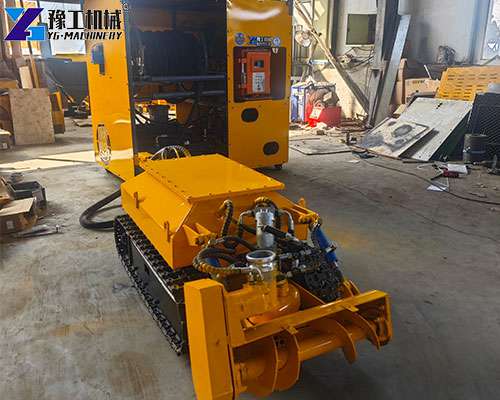
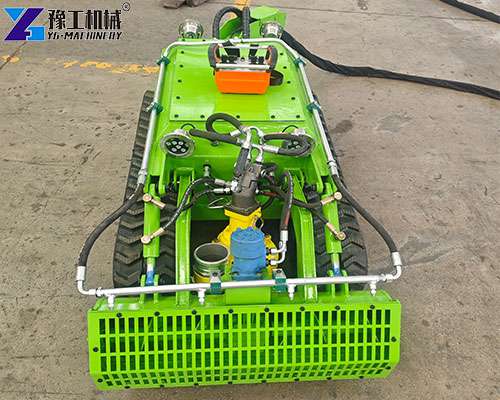
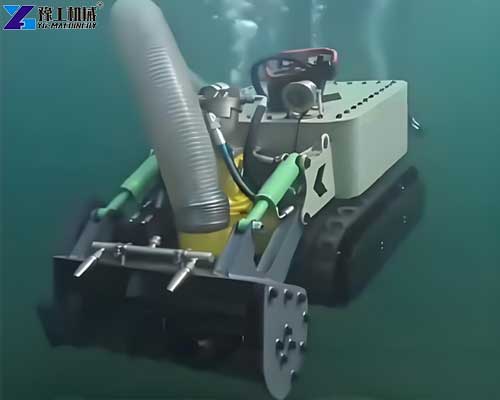
An aquaculture pond dredging robot is an unmanned underwater cleaning system designed to remove sludge and sediment from the bottom of farming ponds.
Unlike traditional dredging equipment, the robot operates directly underwater without requiring workers to enter the pond or completely drain the water.
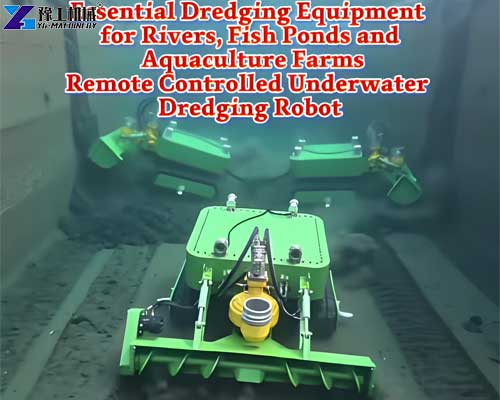
The system usually consists of:
- Crawler-type underwater robot
- Sludge cutting and mixing device
- High-performance suction pump
- Remote control system
- Discharge pipeline
The crawler structure allows stable movement on soft and muddy pond bottoms, while the suction system transports loosened sludge outside the pond for further treatment.
How Does the Shrimp Pond Dredging Robot Work?
For shrimp farming, maintaining a clean pond bottom is especially important because shrimp usually stay close to the sediment layer.
The shrimp pond dredging robot works through several steps:
1. Entering the Pond Bottom Area
The compact crawler robot moves into the pond and reaches areas where sludge accumulates.
Its low-ground-pressure design allows stable operation on soft sediment without damaging the pond structure.
2. Breaking and Mixing Bottom Sludge
A rotating cutting or mixing mechanism loosens compacted sediment and organic deposits.
This process improves sludge fluidity and helps prevent clogging during transportation.
3. Suction and Sludge Transportation
The high-power suction system removes the mixed sludge through a pipeline.
The extracted material can be transported to:
- Sludge treatment areas
- Storage tanks
- Biogas systems
- Fertilizer processing facilities
4. Remote-Controlled Operation
Operators can control the robot from a safe location.
This reduces manual labor requirements and improves cleaning efficiency.
Key Features of Fish Pond Dredging Robot
The fish pond dredging robot is designed to handle the specific challenges of freshwater and commercial fish farming environments.
1.Remote Operation Without Human Entry
Aquaculture ponds often contain muddy sediment and unstable bottom conditions.
Remote control technology allows operators to complete sludge removal safely without entering the pond.
2.Strong Sludge Suction Capability
The system can remove:
- Organic sludge
- Fish waste deposits
- Sediment accumulation
- Uneaten feed residues
The powerful suction system improves cleaning efficiency compared with traditional manual methods.
3.Stable Crawler Design for Soft Pond Bottoms
Ordinary equipment may sink or lose mobility in soft sediment.
The crawler structure provides:
- Better ground contact
- Stable underwater movement
- Reduced sediment disturbance
4.Customized Solution for Different Aquaculture Farms
Every farm has different pond sizes, sludge thickness, and discharge requirements.
The system can be customized according to:
- Pond dimensions
- Cleaning depth
- Pump capacity
- Pipeline length
- Sludge characteristics
Benefits of Aquaculture Sludge Removal Robot
Using an aquaculture sludge removal robot provides multiple advantages for shrimp and fish farming operations.
1.Improve Water Quality Management
Removing accumulated sludge helps reduce organic pollution and supports better water circulation.
A cleaner pond bottom contributes to a more stable farming environment.
2.Reduce Manual Cleaning Costs
Traditional pond cleaning often requires significant labor and pond preparation.
The robotic solution reduces manpower requirements and improves operational efficiency.
3.Minimize Farm Downtime
Because the robot can work underwater without completely draining the pond, farmers can maintain ponds with less disruption.
4.Support Sustainable Aquaculture Farming
Efficient sediment management helps reduce waste accumulation and supports environmentally responsible farming practices.
Applications of Aquaculture Pond Cleaning Robot
The aquaculture pond cleaning robot is suitable for various farming environments, including:
1.Shrimp Farms
For:
- Shrimp ponds
- Intensive shrimp farming systems
- Coastal aquaculture facilities
The robot helps remove organic waste and sediment from pond bottoms.
2.Fish Farms
Suitable for:
- Tilapia farms
- Catfish farms
- Carp farms
- Freshwater fish ponds
3.Aquaculture Wastewater Treatment Ponds
The system can also be applied in ponds where organic sludge accumulation affects water treatment performance.
4.Breeding and Nursery Ponds
Smaller aquatic farming areas can benefit from compact robotic cleaning equipment.
Aquaculture Pond Dredging Robot vs Traditional Pond Cleaning Methods
| Manual cleaning | High labor intensity and unsafe working conditions |
| Pond draining | Interrupts farming cycles and affects production |
| Excavator cleaning | Difficult access and may damage pond structure |
| Aquaculture dredging robot | Remote operation, efficient sludge removal, less disturbance |
The robotic approach provides a more flexible solution for modern aquaculture operations.
How to Choose the Right Aquaculture Sludge Removal robot?
Before selecting an aquaculture sludge removal equipment solution, consider the following factors:
1.Pond Size
Large farming ponds require equipment with higher pumping capacity and longer discharge distance.
2.Sludge Thickness
Different sediment conditions require different cutting and suction capabilities.
3.Pond Environment
Factors such as:
- Freshwater or saltwater
- Shrimp or fish farming
- Pond depth
- Bottom material
should be evaluated before choosing equipment.
4.Cleaning Frequency
Regular maintenance cleaning may require a different configuration compared with deep sludge removal projects.
FAQ About Aquaculture Pond Dredging Robot
1.Can the dredging robot clean ponds without draining water?
Yes. The aquaculture pond dredging robot is designed for underwater operation and can remove sludge while maintaining water levels in the pond.
2.Is this robot suitable for shrimp farms?
Yes. The shrimp pond dredging robot is specifically suitable for removing sediment, organic waste, and accumulated sludge from shrimp farming ponds.
3.Will the robot damage fish or shrimp?
The crawler design and remote operation allow controlled movement with minimal disturbance to aquatic animals.
4.What type of sludge can the robot remove?
It can remove various types of pond sediment, including organic sludge, feed residues, fish waste, and soft bottom deposits.
5.Can the system be customized for large aquaculture farms?
Yes. Pump capacity, pipeline length, robot size, and working configuration can be customized according to different farming requirements.
Conclusion: Improve Aquaculture Efficiency with Robotic Sludge Removal
As aquaculture farms continue to expand, efficient pond maintenance becomes increasingly important. Accumulated sludge and sediment can affect water quality, farming efficiency, and aquatic animal health.
The aquaculture pond dredging robot provides a reliable solution for modern shrimp and fish farms by combining underwater mobility, powerful sludge suction, and remote-controlled operation.
Whether for shrimp pond cleaning, fish farm maintenance, or large-scale aquaculture sludge management, this robotic system helps farmers achieve safer, cleaner, and more efficient pond management.
Contact us to get a customized aquaculture pond dredging solution for your farm.