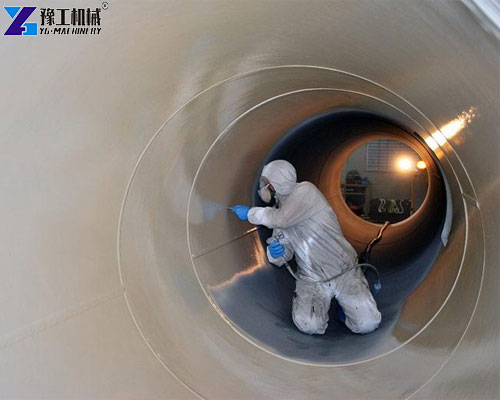
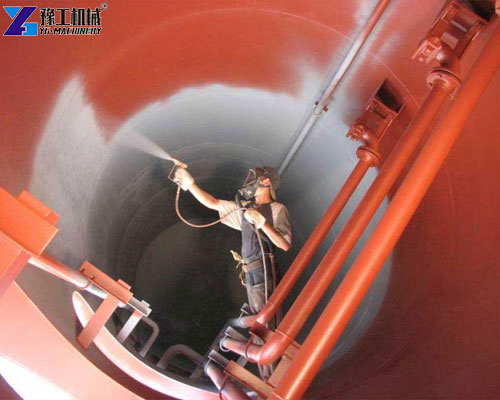
In March 2026, an Australian customer looking for a reliable polyurea spray coating machine found YG Machinery through Google. The customer needed a high-pressure spraying system for applying polyurea inside an industrial tank measuring approximately 4 m in diameter and 8 m in height.
The project required stable material heating, accurate two-component mixing, sufficient spraying pressure, and reliable operation for coating a large internal surface. Based on the customer’s tank dimensions and application requirements, YG Machinery recommended a suitable high-pressure polyurea spraying system and provided technical guidance for the application.
Project Overview
| Customer | Australia |
| Project Date | March 2026 |
| Application | Industrial tank internal coating |
| Tank Size | Approx. 4 m diameter × 8 m height |
| Core Equipment | Polyurea spray coating machine |
| Recommended Model | YG-H-T40 |
| Mixing Ratio | 1:1 |
| Material Output | 2–12 kg/min |
| Maximum Pressure | 36 MPa |
| Heating Temperature | 0–85°C |
| Drive System | Hydraulic |
| Total Power | 26 kW |
The Customer’s Coating Challenge
The customer needed to protect a large industrial tank from demanding operating conditions. Internal tank surfaces can be exposed to moisture, chemicals, abrasion and repeated mechanical impact, making ordinary surface protection difficult to maintain over time.
For this project, the customer needed a spraying system that could:
- Maintain the required temperature of the polyurea components
- Deliver stable two-component material flow
- Provide sufficient spraying pressure
- Support continuous coating of a large tank surface
- Produce a uniform and seamless protective layer
- Work efficiently in a confined tank environment
For a tank approximately 4 m in diameter and 8 m high, the internal cylindrical wall area is about 100 m², excluding the top and bottom. This makes stable spraying performance particularly important because the operator must maintain consistent coating quality across a relatively large surface.
Why Choose Polyurea for Industrial Tank Protection?
Polyurea is widely used for waterproofing, corrosion protection and wear-resistant coatings because it cures rapidly and can form a seamless protective layer.
Compared with conventional coating methods, spray-applied polyurea can provide several advantages for industrial tanks:
1.Seamless Surface Protection
Polyurea is applied as a continuous coating rather than as individual sheets or joints. This helps reduce potential weak points caused by seams and overlapping materials.
2.Fast Reaction and Curing
Polyurea reacts and cures rapidly after spraying. This can reduce waiting time between coating and subsequent operations when the material and application conditions are properly controlled.
3.Good Abrasion Resistance
Industrial tanks may experience contact with liquids, solids or suspended particles. A properly selected polyurea system can provide durable protection against abrasion and mechanical wear.
4.Moisture and Chemical Protection
For suitable formulations, polyurea can provide strong resistance to water and various chemical environments. The exact resistance depends on the selected polyurea formulation and its technical data sheet.
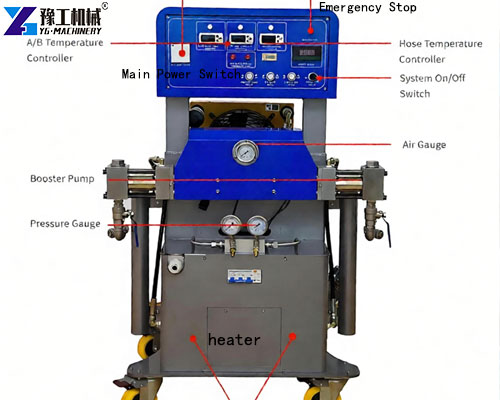
YG Solution: YG-H-T40 Polyurea Spray System
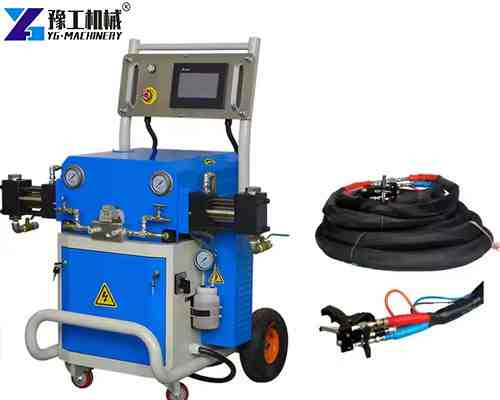
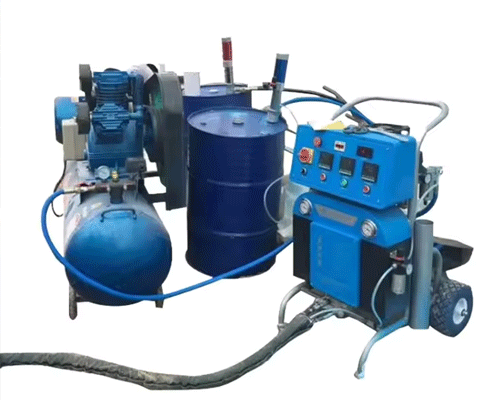
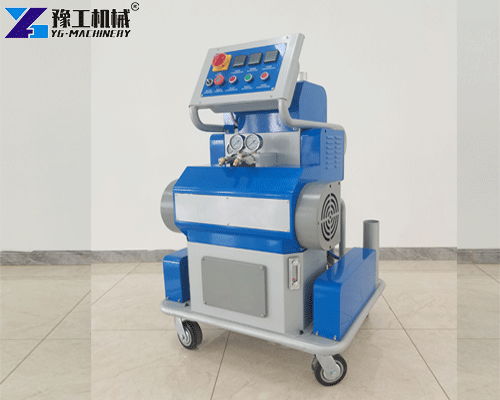
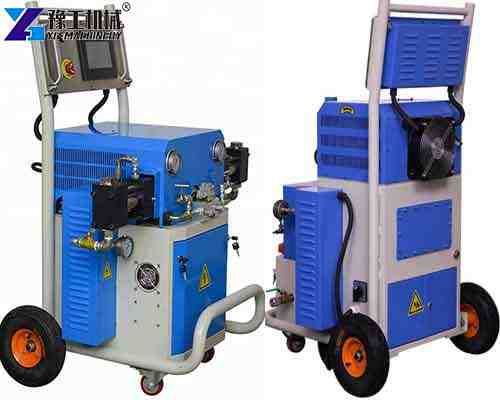
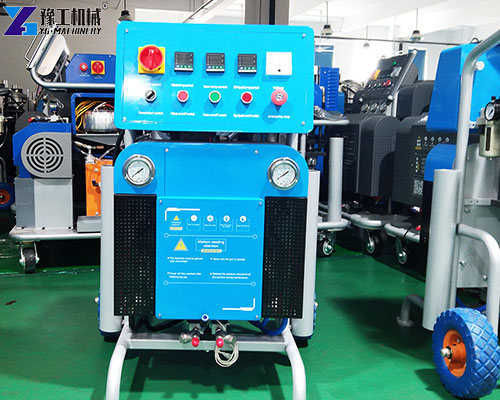
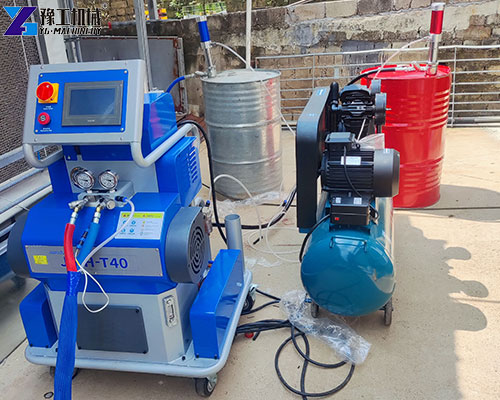
Based on the preliminary project information, YG Machinery recommended the YG-H-T40 high-pressure spray system.
The machine provides a material output range of 2–12 kg/min and a maximum pressure of 36 MPa. Its heating system operates from 0 to 85°C, allowing the material temperature to be adjusted according to the requirements of the selected polyurea formulation.
The YG-H-T40 uses a 1:1 component ratio, making it suitable for compatible two-component polyurea materials with the same mixing ratio.
Its hydraulic drive system supports stable material delivery during continuous spraying, while the heated material system helps maintain the required temperature from the proportioning unit toward the spray gun.
Key Machine Advantages
1. 2–12 kg/min adjustable output
The operator can adjust the spraying output according to the coating material, surface condition and required application speed.
2. Up to 36 MPa spraying pressure
High pressure supports effective atomization and mixing of compatible polyurea materials, helping create a consistent spray pattern.
3. 0–85°C heating range
Proper material temperature is critical for two-component spray systems. The adjustable heating system helps maintain suitable processing conditions.
4. 1:1 material ratio
The machine is configured for 1:1 two-component materials. The final machine selection should always be checked against the polyurea manufacturer’s TDS.
5. Hydraulic drive
The hydraulic system is designed for stable operation and continuous material delivery during industrial spraying applications.
How the Polyurea Tank Coating Process Works?
For an industrial tank project, machine performance is only one part of the coating result. Surface preparation, material conditions and spraying technique are equally important.
1. Inspect and Prepare the Tank
The tank surface should be inspected for corrosion, oil, dust, moisture and other contaminants. Loose material and damaged surface areas should be removed before coating.
2. Complete Surface Preparation
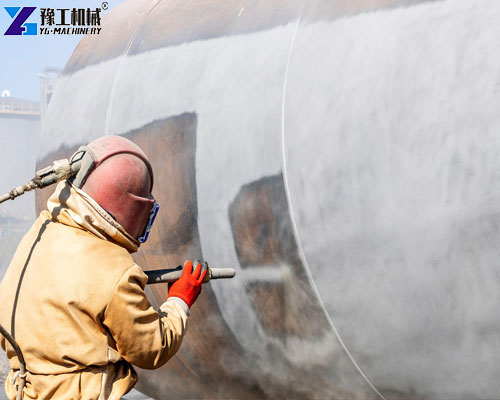
The substrate should be prepared according to the coating manufacturer’s requirements. For steel tanks, suitable abrasive blasting or other approved preparation methods may be required.
The surface must then be cleaned and maintained in the condition required for polyurea application.
3. Set Up the Spray Equipment
The operator checks the power supply, material hoses, heating system, spray gun and component supply.
Before spraying the tank, the A and B components should reach the temperature and pressure specified by the material manufacturer.
4. Spray the Polyurea Coating
The operator uses the high-pressure spray gun to apply the material evenly across the tank surface.
Spray distance, gun movement, overlap and application speed should be controlled consistently to achieve the required coating thickness.
5. Inspect the Finished Coating
After spraying, the coating should be inspected according to the project requirements. Depending on the specification, inspection may include visual inspection, thickness measurement, adhesion testing or other quality-control procedures.
Why YG-H-T40 Was Considered for This Project?
For the approximately 4 m × 8 m tank, the estimated internal wall area is around 100 m². The YG-H-T40 provides enough output flexibility for the operator to adjust spraying speed according to the selected formulation and required coating thickness.
Its combination of:
- 2–12 kg/min material output
- 36 MPa maximum pressure
- 0–85°C heating
- 1:1 component ratio
- Hydraulic drive
- 26 kW total power
makes it a practical configuration for compatible industrial polyurea spraying applications.
However, machine selection should not be based on tank size alone. The final configuration must be matched with the actual polyurea product, because different formulations can have different requirements for mixing ratio, temperature, pressure, viscosity and application thickness.
Click Here to Get A Free Quote
What Should You Confirm Before Buying a Polyurea Spray Coating Machine?
If you are planning a similar tank coating project, provide the following information before selecting equipment:
1. Polyurea Product and TDS
The exact brand and product model are important. Confirm the manufacturer’s recommended:
- Mixing ratio
- Material temperature
- Hose temperature
- Spray pressure
- Component viscosity
- Required equipment configuration
For example, the YG-H-T40 uses a 1:1 ratio, so it should only be selected after confirming that the customer’s material is compatible.
2. Required Coating Thickness
Coating thickness directly affects material consumption and spraying time. Do not select a machine based only on tank dimensions.
The required dry film thickness should come from the project specification or polyurea manufacturer’s recommendation.
3. Actual Coating Area
A 4 m diameter × 8 m high cylindrical tank has approximately 100 m² of internal wall area.
If the bottom or top also needs coating, the actual application area will be larger.
4. Available Power Supply
The YG-H-T40 requires a 380 V / 50 Hz power supply and has a total power of approximately 26 kW.
The customer’s local electrical conditions should therefore be confirmed before shipment.
5. Hose Length and Working Environment
Tank coating often involves long material hoses and work inside or around a confined structure. Hose length, access conditions and ventilation should be considered during equipment configuration.
Can One Spray Machine Apply Both Polyurethane and Polyurea?
Not necessarily.
Although polyurethane and polyurea spraying equipment can look similar, the materials can have different requirements for pressure, temperature, mixing ratio, viscosity and spray-gun configuration.
A machine designed for one material should not automatically be assumed to work with another.
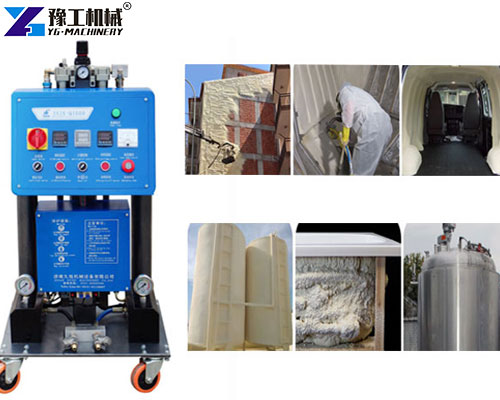
If you need to spray both polyurethane foam and polyurea, tell the supplier the exact materials you plan to use. The supplier can then check whether one machine can support both materials or whether different configurations are required.
Customer Project Result
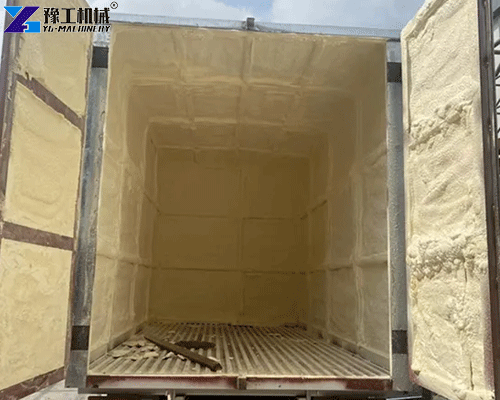
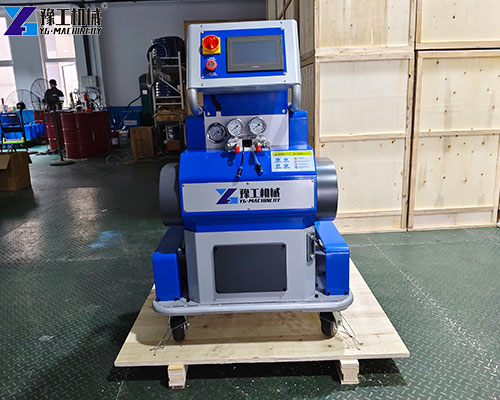
For this Australian project, YG Machinery supplied a polyurea spraying solution based on the customer’s tank dimensions and application requirements.
The recommended system provides adjustable material output, high-pressure spraying and controlled material heating, giving the customer the equipment capabilities needed for compatible industrial polyurea coating work.
The final coating thickness, material consumption and actual spraying time depend on the selected polyurea formulation and project specification. These values should be confirmed from the customer’s application records rather than estimated from machine capacity alone.
Looking for a Polyurea Spray Coating Machine?
Choosing the right equipment is about more than maximum pressure or output. The machine must match your polyurea formulation, mixing ratio, coating thickness, tank size and working conditions.
YG Machinery can help evaluate your application and recommend a suitable polyurea spray coating machine based on your project requirements.
Send us your polyurea product TDS, tank dimensions, required coating thickness and application area to get a suitable machine configuration and quotation.