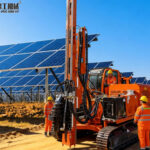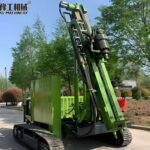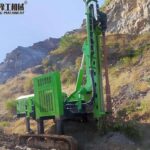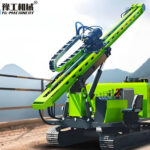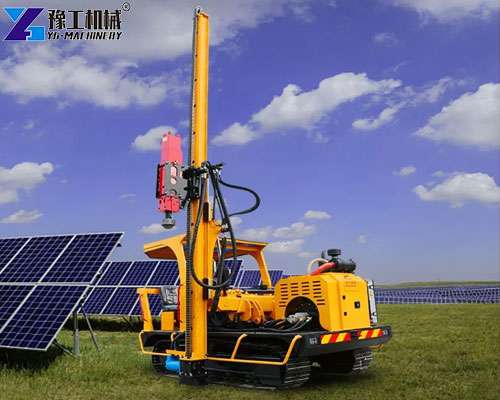
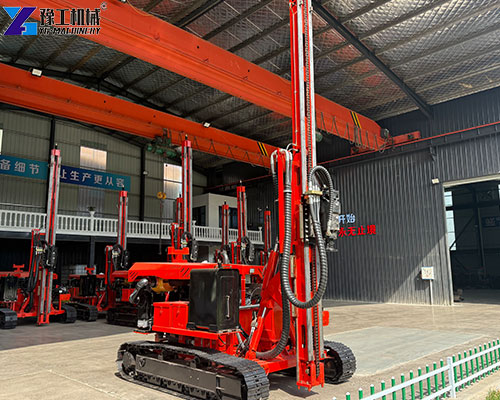
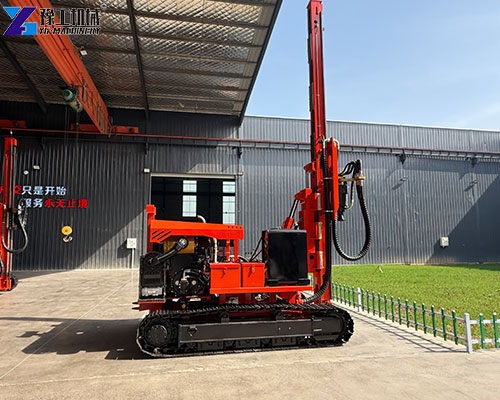
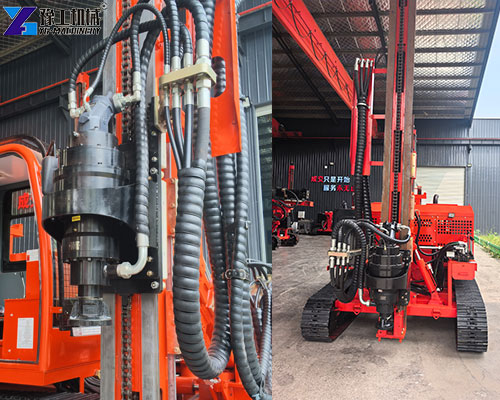
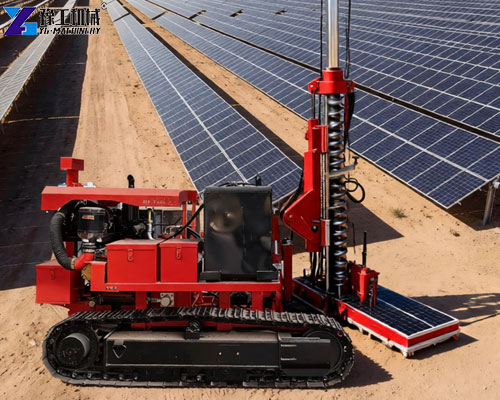
A solar pile ramming machine is a type of solar pile driver used to install foundation piles for ground-mounted photovoltaic systems by driving steel piles directly into the ground with repeated impact force. Using a hydraulic impact hammer, the machine penetrates suitable soil without requiring a full-length predrilled hole.
Solar pile ramming is commonly considered for large photovoltaic projects where many foundation piles must be installed at consistent positions and depths. However, the right installation method depends on the pile design, soil conditions, required depth, and project requirements.
Solar Pile Ramming Machine Parameters
| Crawler Solar Pile Ramming Machine – Hydraulic Hammer Type (requires compressor for rock drilling) | |||
| Parameter | Specification | Parameter | Specification |
| Overall Size | 4700 × 2100 × 2800 mm | Track shoe width | 400mm |
| Power Head | Hydraulic power | Engine | Yuchai four cylinder (85 kW) |
| Overall Quality | 6.5 T | Maximum drilling depth | 6m (can connect drill rods) |
| Maximum Drilling Diameter | 350 mm | Hydraulic hammer flow | 50–110 L/min |
| Impact Frequency | 350–800 bpm | Hydraulic system pressure | 25–30 MPa |
| Oil Pump | 40/40/32 | Travel speed | 5 km/h |
| Climbing Angle | 30° | Strong wind heat dissipation | Large radiator |
What Is a Solar Pile Ramming Machine?
A solar pile ramming machine is a type of pile driving equipment designed for photovoltaic foundation installation.
Unlike drilled installation, which creates a hole before placing the foundation, pile ramming drives the steel pile directly into the ground. The basic process is:
Position → Align → Ram → Check → Repeat
The machine positions the pile, aligns it according to the foundation layout, and uses repeated hammer impacts to achieve the required embedment depth.
In suitable ground, this direct installation method can simplify repetitive foundation work across large solar construction sites.
How Does Solar Pile Ramming Work?
A typical solar pile installation involves five basic steps:
- Position the machine at the designated pile location.
- Align the pile according to the required position and verticality.
- Place the pile under the hydraulic hammer.
- Apply repeated impact force until the pile reaches the specified depth or installation criteria.
- Check the pile position and elevation before moving to the next location.
The actual installation procedure may vary according to the pile profile, soil resistance, foundation design, and equipment configuration.
What Types of Solar Piles Can Be Rammed?
Solar foundation systems can use different steel pile profiles depending on the mounting structure and engineering design.
Common examples include:
- H-shaped steel piles
- C-shaped steel piles
- U-shaped piles
- Steel posts
- Other project-specific steel foundation piles
Not every pile can be directly rammed under every ground condition. Pile dimensions, material, length, wall thickness, and required embedment depth should be evaluated together with the site conditions.
Where Is Solar Pile Ramming Used?
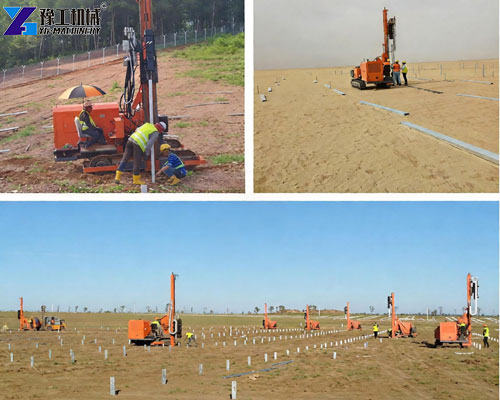
Solar pile ramming is mainly used for photovoltaic projects with repetitive foundation installation requirements.
Typical applications include:
- Ground-mounted solar farms
- Utility-scale PV projects
- Commercial ground-mounted solar systems
- Large open-site photovoltaic installations
The method is particularly relevant when the site provides adequate access for piling equipment and the ground can be penetrated without excessive resistance.
Advantages and Limitations of Solar Pile Ramming
When conditions are suitable, direct pile driving offers several practical benefits:
- Direct installation: Piles can be driven without full-length predrilling.
- Efficient repetitive work: The same installation process can be repeated across large numbers of pile locations.
- Limited excavation: Less soil is removed compared with many drilled or excavated foundation methods.
- Suitable for large sites: Mobile piling equipment can move between multiple installation points.
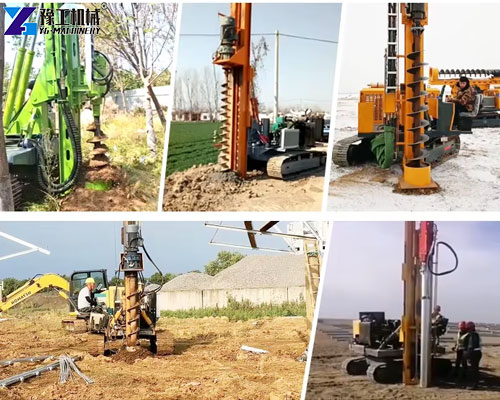
However, pile ramming also has limitations. Very hard rock, dense ground, underground obstructions, or strict vibration restrictions may make direct driving difficult or unsuitable.
In such conditions, predrilling, drilled installation, or another foundation method may need to be considered.
Solar Pile Ramming vs. Drilled Installation
The two methods use different approaches to establish the solar foundation.
| Installation method | Drive pile with impact force | Drill hole before installation |
| Predrilling | Usually not required | Required |
| Main equipment | Pile ramming machine | Drilling rig |
| Typical application | Suitable steel piles and penetrable ground | Harder ground or drilled foundation designs |
| Excavation | Limited | Drilling generates spoil |
| Key consideration | Soil resistance and vibration | Drilling conditions and foundation design |
Neither method is universally suitable. The choice should be based on geotechnical conditions and the project’s foundation requirements.
How to Choose a Solar Pile Ramming Machine?
Before purchasing or renting a solar pile ramming machine, buyers should provide the equipment supplier with key project information:
- Pile type and dimensions
- Pile length
- Required embedment depth
- Soil and geological conditions
- Number of piles
- Expected installation output
- Site terrain and access
- Required pile alignment or verticality
- Vibration and noise restrictions
- Whether predrilling is permitted
These factors help determine whether direct pile ramming is appropriate and what type of hydraulic pile ramming machine is required. For a more detailed discussion of equipment selection, see our solar pile driver selection guide.
Conclusion
A solar pile ramming machine provides a direct method for installing photovoltaic foundation piles by using repeated impact force to drive steel piles into suitable ground. It is particularly relevant to ground-mounted solar projects that require large numbers of repetitive pile installations.
The key to selecting the right installation method is matching the equipment to the pile design, soil conditions, embedment depth, site access, and project requirements. Where direct ramming is unsuitable, predrilling or drilled foundation methods may provide an alternative.