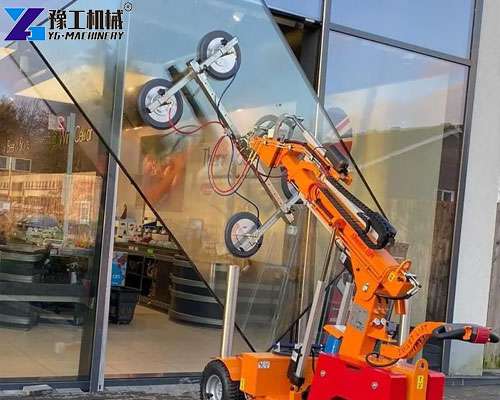
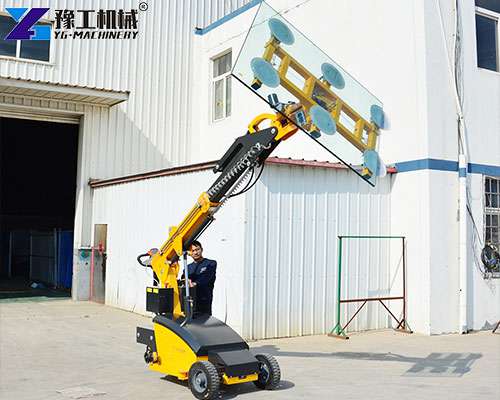
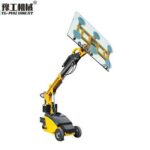
Modern glass installation projects are becoming larger, taller, and more complex. High-rise curtain walls, oversized glass panels, and strict safety regulations make traditional manual lifting or crane-based installation increasingly difficult.
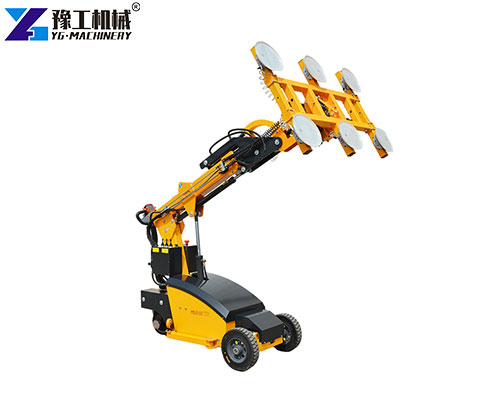
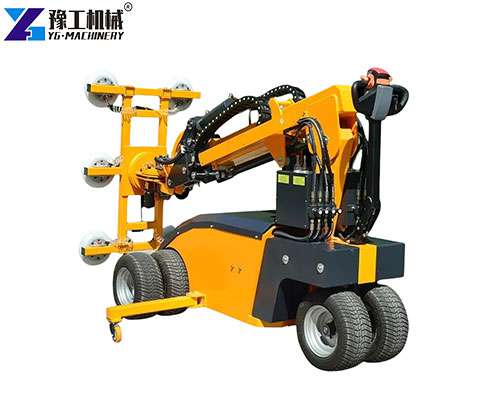
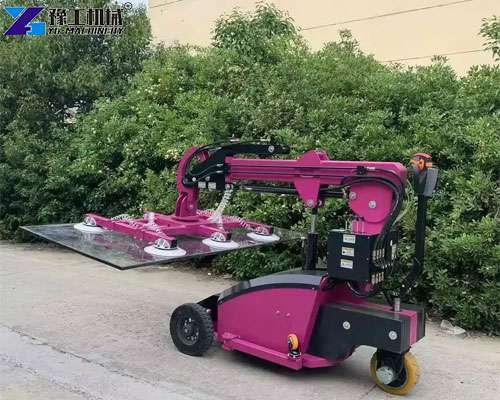
The glass lifting robot is designed to solve these challenges by providing a safer, more precise, and highly efficient way to handle heavy glass panels in construction environments. It replaces risky manual handling and reduces dependence on cranes such as spider cranes or telescopic forklifts in many installation scenarios.
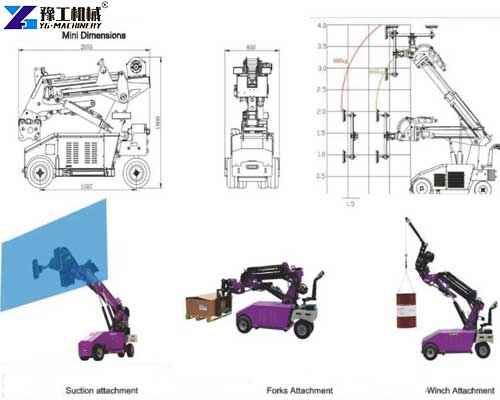
Glass Lifting Robot Parameters
| Model Type | YG-LD-300 | YG-LD-400 | YG-LD-500 | YG-LD-600 | YG-LD-800 | |
| Load Capacity | 300kg(retract)150kg(extend) | 400kg(retract)200kg(extend) | 500kg(retract)250kg(extend) | 600kg(retract)300kg(extend) | 800kg(retract)400kg(extend) | |
| Lifting Height | 3500mm | 3500mm | 3700mm | 3700mm | 4500mm | |
| QTY of Suction Cap | 4pcs | 4pcs | 6pcs | 6pcs | 8pcs | |
| Rubber Suction Cap | 300mm | Ø300mm | Ø300mm | Ø300mm | Ø300mm | |
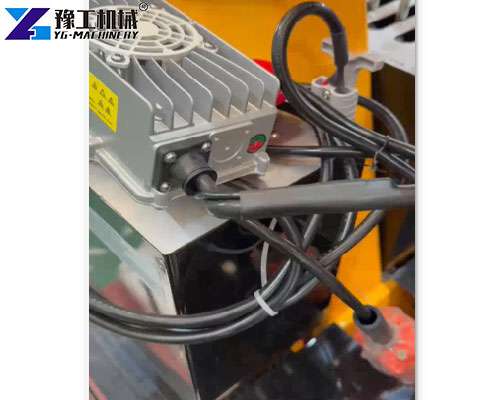
| Maintenance-free Battery | 2x12V/80AH | 2x12V/100AH | 2x12V/120AH | 2x12V/120AH | 2x12V/120AH | |
| Battery Charger | Smart Charger | Smart Charger | Smart Charger | Smart Charger | Smart Charger | |
| Drive motor | 24V/1200W | 24V/1200W | 24V/1200W | 24V/1200W | 24V/1200W | |
| Lifting Motor | 24V/2000W/6L | 24V/2000W/6L | 24V/2000W/6L | 24V/2000W/6L | 24V/2000W/12L | |
| Chassis L*W | 2660*810mm | 2660*810mm | 2800*810mm | 2800*810mm | 2800*810mm | |
| Driving Wheel | Ø250x80mm | Ø250x80mm | Ø300x100mm | Ø300x100mm | Ø300x125mm | |
| Packing Size(mm) | 2560*1030*1700 | 2560*1030*1700 | 2580*1050*1700 | 2580*1050*1700 | 3000*1250*2300 | |
| N.W/G.W | 1100/1150kg | 1280/1330kg | 1300/1350kg | 1400/1450kg | 1600/1650kg | |
| Loading Qty | 1x20GP/40GP: 6SETS/12SETS | |||||
| Movement | Automatic(4 kinds) | 1. The suction cup frame flips 180° electrically. 2. The support plate automatically retracts. 3. Hydraulic arm lifts electrically. 4. The base of the whole machine moves 100-150mm horizontally. | ||||
| Manual (2kinds) | 1. The suction cup holder can be manually rotated 90 degrees (electrically powered optional). 2. The suction cup holder can be manually rotated 360 degrees (electrically powered optional). | |||||
| Usages | Mainly used for the handling, movement, and installation of materials such as glass, marble, wood, iron plate, etc. | |||||
Why Traditional Glass Installation Methods Are No Longer Enough?
In modern construction sites, contractors often face several serious problems:
- Large glass panels are too heavy and fragile for manual handling
- Crane positioning is slow and not precise enough for installation alignment
- High-rise facade installation increases safety risks
- Labor costs are rising, while skilled installers are becoming harder to find
- Wind conditions make suspended glass installation unstable
Traditional tools like glass lifter, spider cranes, or even telescopic boom forklifts can lift glass, but they often lack fine positioning control and flexibility in narrow indoor or facade environments.
This is where a modern glass vacuum lifter robot becomes essential.
What Is a Glass Lifting Robot?
A glass lifting robot is a mobile vacuum-based installation machine designed to lift, transport, and precisely install glass panels, curtain walls, and glazing systems.
Unlike conventional lifting equipment, it integrates:
- Vacuum suction lifting system
- Self-propelled mobile chassis
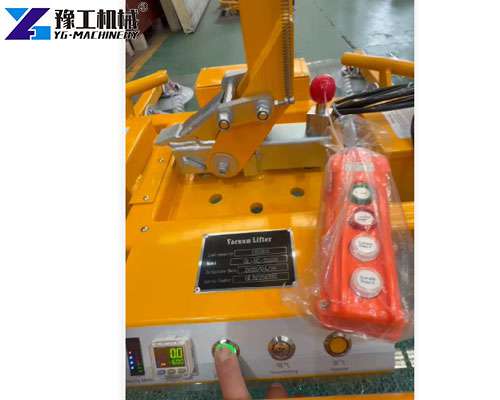
- Remote control operation
- Fine millimeter-level positioning system
This makes it a complete glass handling robot for both indoor and outdoor installation projects.
It is widely used in:
- Curtain wall installation
- Commercial building glazing
- Airport terminal glass installation
- High-rise residential facade work
YG Machinery Smart Glass Lifting Robot Upgrade
The model is our latest generation glass installation robot, improved based on real construction site feedback.
It is designed for demanding glazing environments where precision, safety, and mobility are critical.

Key improvements include:
- Optimized joint angle structure for narrow working spaces
- Reinforced driving axle for heavy-load stability
- Increased tolerance for uneven surface materials
- Enhanced mobility and turning flexibility
- Improved structural stability for vertical lifting operations
Key Features and Advantages of glass handling robot
The glass lifting robot integrates multiple advanced systems to ensure safe and precise operation.
Core features:
- Wireless remote control driving for full mobility
- Enhanced heavy-duty driving axle system
- Quick-change rechargeable batteries for continuous operation
- Increased side turning angle for narrow site access
- Full vertical lifting for precise glass positioning
- Millimeter-level fine adjustment system
- Rear radar monitoring system for obstacle detection
- Optional four-wheel front configuration for improved stability
- Dual-control system for operational redundancy
- IPX2 protection level for construction environments
Safety systems:
- Low vacuum pressure warning
- Low battery alarm system
- Charging protection system
- Side fall protection
- Auto parking brake
- Emergency stop function
These systems ensure that the robot performs safely even in high-risk façade installation environments.
Key Benefits for Glass Installation Contractors
Using a glass lifting robot significantly improves construction efficiency and safety.
Main advantages:
- Reduces labor risk in high-rise glass installation
- Improves installation precision at millimeter level
- Speeds up curtain wall assembly process
- Reduces dependency on cranes and manual lifting teams
- Improves safety compliance for construction sites
- Enables stable operation in narrow or indoor environments
Compared with traditional glass lifting equipment, this robotic system offers a more controlled and intelligent installation process.


Application of glass installation robot
The glass lifting robot is widely used in modern construction and façade engineering projects:
1.Curtain wall installation
High-rise buildings requiring precise glass alignment and safe lifting.
2.Commercial building glazing
Shopping malls, airports, hotels, and office buildings.
3.Indoor glass installation
Atriums, partitions, and interior architectural glass.
4.Large panel handling
Oversized glass panels requiring stable vacuum suction support.
5.Construction logistics support
Works alongside cranes and forklifts for hybrid lifting operations.
Integration with Other Construction Equipment
In real construction environments, the glass lifting robot is often used together with:
Spider Crane
A spider crane is used for lifting glass to higher floors, while the robot performs fine positioning and installation.
👉 Internal synergy:
- crane lifts → robot installs
Telescopic Boom Forklift
A telescopic boom forklift is used for material transport on-site, while the robot handles precise glass placement.
👉 This combination improves:
- site logistics efficiency
- installation accuracy
- safety level
Poland Curtain Wall Installation Case
In a recent project in Poland, a commercial construction contractor used the glass lifting robot for a large curtain wall installation project in a modern office complex.
Project challenges:
- Large glass panels exceeding manual handling limits
- Strong wind conditions affecting crane stability
- Tight installation deadlines
- Safety restrictions for high-altitude manual positioning
Solution:
The glass lifting robot was deployed alongside a spider crane system. The crane lifted glass panels to the installation level, while the robot handled precise positioning and final alignment.
Results:
- Installation speed increased significantly
- Reduced labor risk in high-altitude operations
- Improved alignment accuracy of curtain wall panels
- Stable performance even under wind influence
The client confirmed that the system significantly improved installation efficiency and reduced dependency on manual adjustment.


FAQ about glass lifting robot
1. Can the glass lifting robot replace cranes?
It can replace cranes in some installation stages, but is often used together with spider cranes for best efficiency.
2. What size glass can it lift?
It depends on configuration, typically suitable for large curtain wall glass panels.
3. Is it safe for high-rise installation?
Yes, it includes vacuum safety systems, fall protection, and emergency braking.
4. Can it work indoors?
Yes, it is designed for both indoor and outdoor glass installation.
5. How is it controlled?
It uses a wireless remote control system with dual-controller redundancy.
6. What happens if vacuum pressure drops?
The system will trigger an automatic warning and safety protection system.
Why Choose Our Glass Lifting Robot?
Compared with traditional glass lifting machines, the model provides:
- Higher precision
- Better safety control
- Stronger mobility
- More stable lifting performance
- Reduced dependency on manual labor
It is a next-generation solution for modern façade installation projects.
Conclusion
The glass lifting robot is transforming how glass installation projects are executed in modern construction. By combining vacuum lifting technology, intelligent mobility, and precise control systems, it significantly improves safety and efficiency in curtain wall installation and architectural glazing work.
Whether used with a spider crane or a telescopic boom forklift, the system provides a smarter and safer alternative to traditional glass lifting methods.
For contractors seeking higher efficiency and safer installation processes, the glass lifting robot represents a reliable and future-ready solution for modern construction projects.