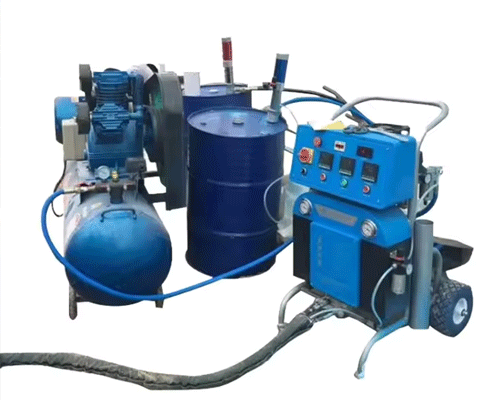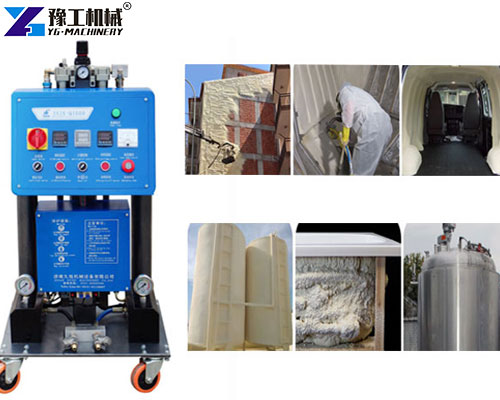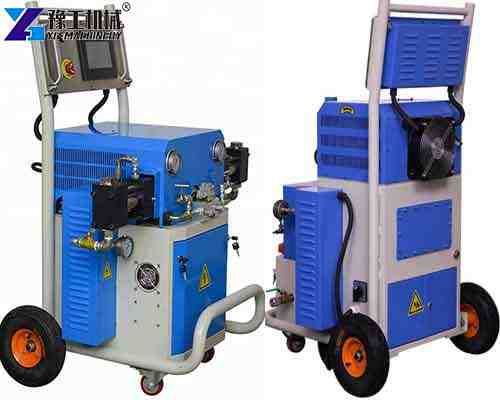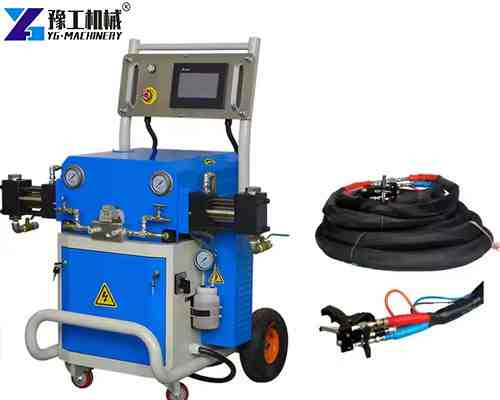
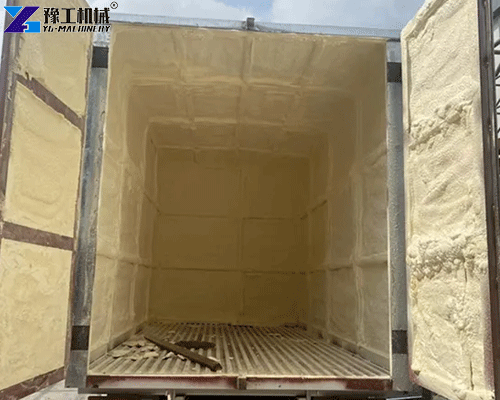
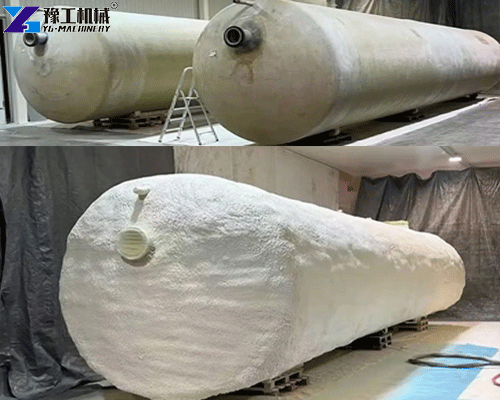
In April 2025, U.S.-based industrial contractor selected polyurea spray equipment to solve coating failure and low efficiency issues in a large-scale waterproofing project. After deployment, the customer achieved stable spray quality, faster curing, and consistent coating thickness under demanding site conditions.
Click Here to Get A Free Quote
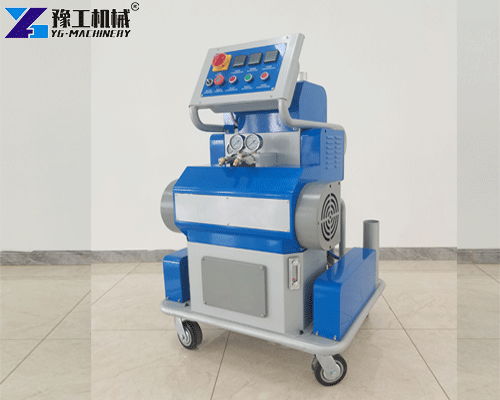
Polyurea Spray Equipment Parameters
| Project | YGMC-500 high configuration PU Machine |
| Proportion Fixed Mainframe | 1 set |
| Self-cleaning spray gun | 1 set |
| Gross weight | 300KG |
| Net weight | 250KG |
| Feed pump | 2 sets |
| Heated hose | 49.2 ft (15 m) |
| Data ratio of raw materials | 1: 1 (fixed) |
| Raw material viscosity range | 200-1000CPS (at working temperature) |
| Max Working pressure | 35MPa (350 bar) |
| Maximum Fluid Temperature | 88 ° C (190 ° F) |
| Maximum output | 24kg/min (42 lb/min) |
| Each heater power | 6000W |
| Heating hose power | 1000W / 15m |
| Total power | 15000W |
| Voltage | 230V 1-ph / 3-ph 220V/400V 3-ph |
| Machine size | 870mm* 700mm* 1150mm |
Click Here to Get A Free Quote
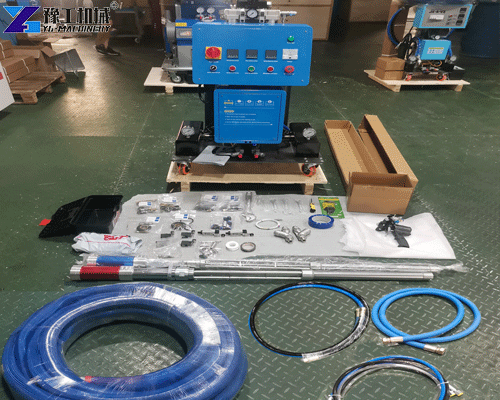
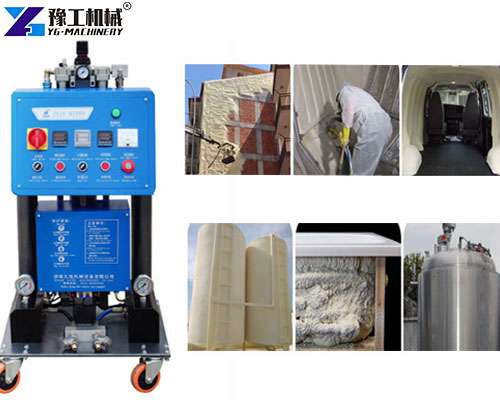
Project Background: United States Industrial Coating Application
The customer is a mid-sized contractor from the United States specializing in industrial floor protection and infrastructure waterproofing.
Application environment
- Project type: Industrial waterproofing and surface protection
- Substrates: Concrete and steel
- Work conditions: Outdoor and semi-enclosed areas
- Performance requirements: Fast curing, high adhesion, and uniform coating
The contractor required equipment capable of handling high-viscosity polyurea materials while maintaining stable pressure and accurate mixing ratios.
Click Here to Get A Free Quote
Problem Faced by the Customer
The customer previously used a basic spraying system that was not optimized for polyurea applications.
Main issues identified
- Unstable pressure during continuous spraying
- Inconsistent A/B ratio leading to uneven curing
- Low spraying efficiency on large surface areas
- Frequent downtime caused by gun blockage
These problems increased labor costs and created quality risks, especially for time-sensitive industrial projects.
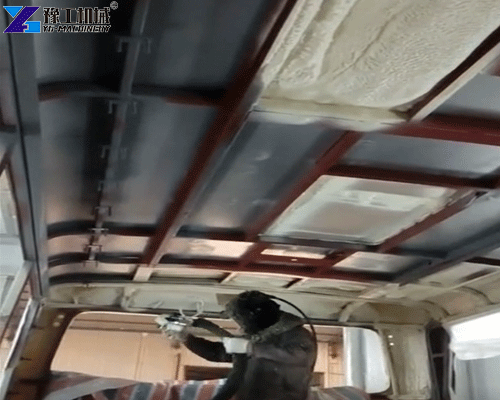
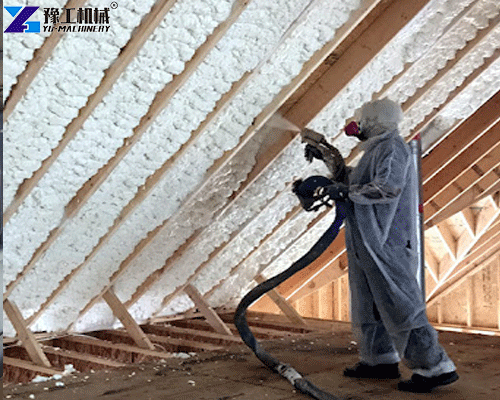
Equipment Selection and Technical Solution
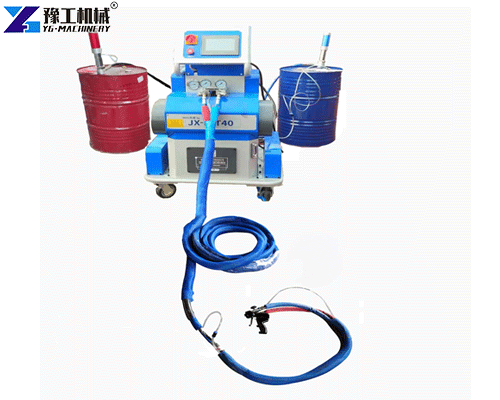
After evaluating several options, the customer selected a high-pressure polyurea spray equipment system configured for U.S. job site standards.
Key selection considerations
- Compatibility with both polyurea and polyurethane materials
- Stable high-pressure output for continuous operation
- Integrated heating system for material temperature control
- Easy transition between polyurea spray machine and pu spray machine applications
The selected configuration also allowed the contractor to use the system as a polyurethane foam machine for sale–type solution, expanding its application range beyond coating projects.
Click Here to Get A Free Quote
How the Polyurea Spray Equipment Solved the Problem?
The installed system addressed the customer’s challenges through precise process control rather than increased complexity.
Technical improvements achieved
- Consistent pressure output ensured uniform spray patterns
- Accurate metering stabilized the A/B mixing ratio
- Heated material lines reduced viscosity-related defects
- Improved spray gun design minimized blockage risk
The result was a predictable spraying process suitable for long work cycles and large-area applications.
Project Results and On-Site Performance
After commissioning, the equipment was used continuously in the U.S. project for industrial waterproofing.
Measured outcomes
- Coating thickness consistency improved significantly
- Curing time met project schedule requirements
- Rework caused by spray defects was reduced
- Overall spraying efficiency increased
The customer reported that the polyurea spray machine performed reliably across different substrates without requiring frequent parameter adjustments.
Click Here to Get A Free Quote
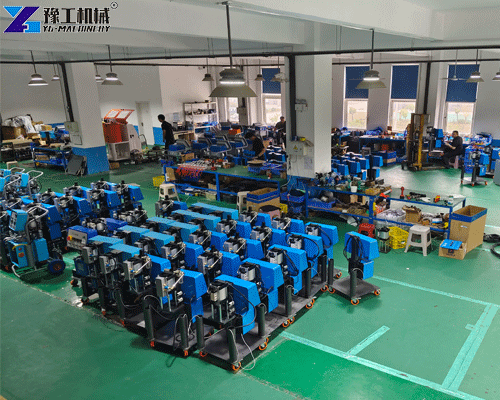
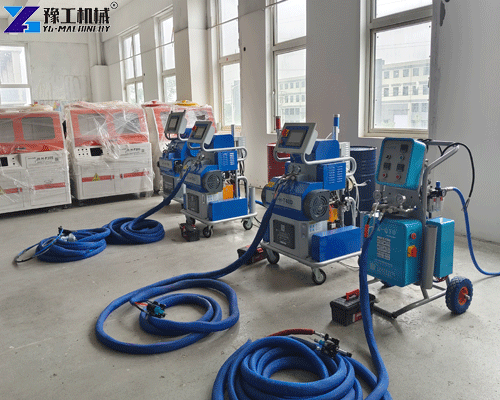
Why This Configuration Was Chosen?
The decision was based on technical fit, not brand preference.
Decision logic
- One system supports multiple materials
- Suitable for both polyurea and PU spraying
- Adaptable to future insulation or foam applications
- Lower long-term operating risk
This flexibility was a key reason the customer viewed the equipment as a long-term investment rather than a single-project solution.
Typical Applications for This Equipment in the U.S.
This type of polyurea spray equipment is commonly used in:
- Industrial floor waterproofing
- Bridge and infrastructure protection
- Roof and tank lining projects
- PU foam insulation when configured accordingly
The ability to switch between polyurea and PU materials improves equipment utilization rates for contractors.
Click Here to Get A Free Quote
FAQ: Buyer Questions from the U.S. Market
What affects the price of polyurea spray equipment?
Price depends on pressure level, heating capacity, control system accuracy, and material compatibility. Configuration matters more than appearance.
Can the same system be used as a PU spray machine?
Yes. With proper settings and material selection, the system functions as a pu spray machine for insulation and coating work.
Is this equipment suitable as a polyurethane foam machine for sale?
Yes. When equipped with foam-specific spray guns and material settings, it can be used for polyurethane foam applications.
What about delivery and commissioning in the United States?
Equipment is shipped fully tested. Remote commissioning guidance and technical documentation are provided to support setup.
What after-sales support is available?
Support includes operating guidance, troubleshooting assistance, and spare parts supply. This reduces downtime during project execution.
Click Here to Get A Free Quote
polyurea spray equipment in YG Machinery
This U.S. case demonstrates that properly configured polyurea spray equipment can solve real-world spraying instability and efficiency issues. The project outcome was achieved through technical matching, process control, and application-specific configuration rather than over-engineering.
For contractors seeking reliable polyurea and PU spraying solutions, equipment adaptability and operational stability remain the most critical factors.