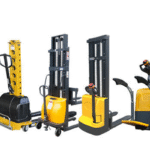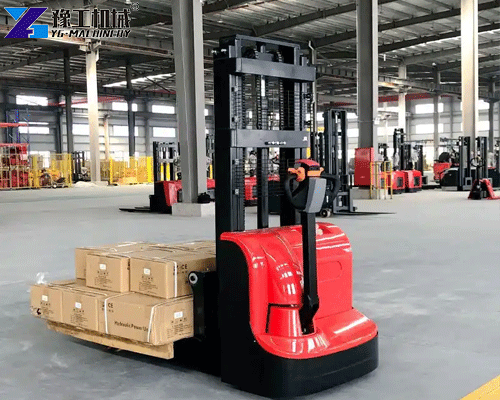
Automatic pallet stacker solutions are increasingly adopted in U.S. warehouse operations to reduce labor dependency, improve stacking safety, and stabilize throughput under rising labor costs.
In 2025, a mid-sized logistics warehouse in Ohio selected YG’s automatic pallet stacker to upgrade its pallet handling process after repeated labor shortages and safety incidents during peak seasons.
Click Here to Get A Free Quote
Project Background: Why U.S. Warehouses Are Shifting to Automatic Pallet Stacker Systems?
According to feedback from the warehouse operations manager, manual pallet stacking had become a structural bottleneck rather than a temporary issue.
The facility handles consumer goods and industrial spare parts, operating two shifts with frequent SKU changes.
Key challenges before the upgrade included:
- Average pallet stacking time exceeded 3.5 minutes per pallet
- Forklift-related minor accidents occurred 2–3 times per quarter
- Temporary labor turnover rate was above 28% annually
- OSHA safety audits flagged stacking height inconsistency
These issues are common across U.S. regional warehouses, especially where order volumes fluctuate and labor availability is unstable.
Click Here to Get A Free Quote
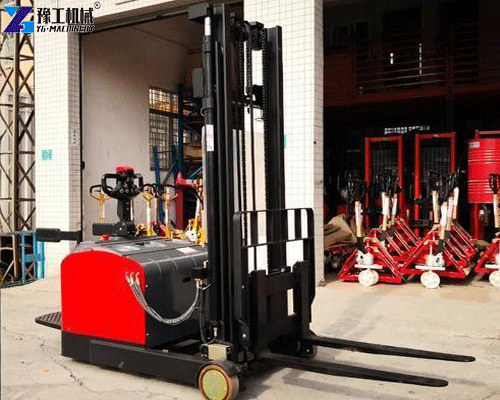
Equipment Configuration and Core Parameters
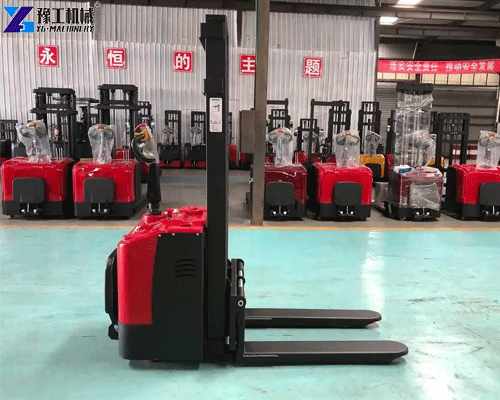
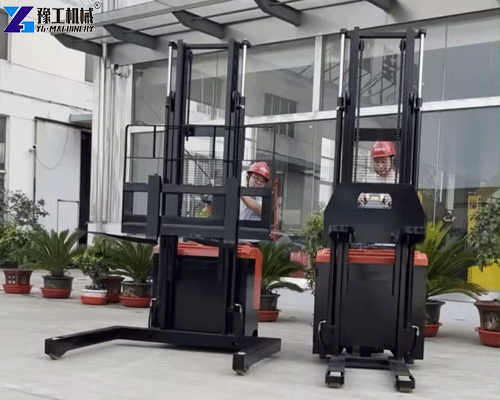
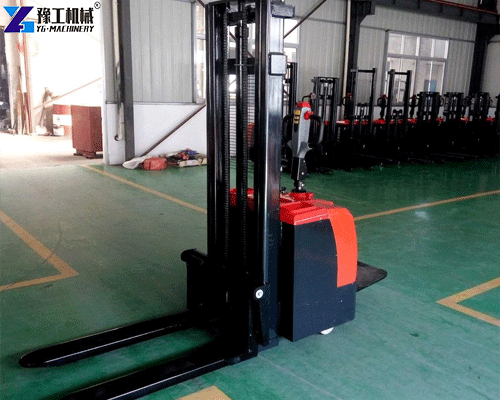
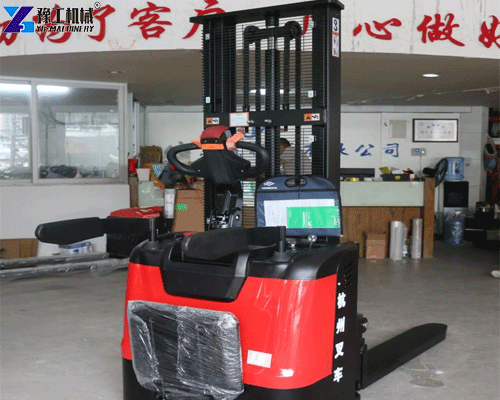
To address these issues, YG proposed a standardized automatic pallet stacker configuration tailored for U.S. warehouse aisles and pallet sizes.
Main Technical Specifications
| Parameter | Stand-on Stacker | Walkie Stacker |
| Power Type | Electric | Electric |
| Driving Type | Stand-on | Walkie |
| Rated Load (kg) | 1000 / 1500 / 2000 | 1000 / 1500 / 2000 |
| Lift Height (mm) | 1600-5000 | 1600-4000 |
| Travel Speed (km/h) | 4.2 / 5.1 | 4.2 / 5.1 |
| Lifting Speed (mm/s) | 70 / 110 | 100 / 135 |
| Max Gradient (%) | 6 | 6 |
| Brake Type | Electromagnetic | Electromagnetic |
| Drive Motor | 1.5 kW | 1200 W |
| Lift Motor | 2.2 kW | 2.2 kW |
| Battery | 48V 32-76Ah | 48V 20-45Ah |
The design prioritized stability during lifting and precise vertical control to ensure uniform pallet stacking.
Click Here to Get A Free Quote
Identified Problem: Manual and Semi-Automatic Stacking Could Not Scale
Before automation, the warehouse relied on manual forklifts and a small number of hydraulic pallet stacker units for secondary operations.
The main limitations observed:
- Manual operation depended heavily on operator experience
- Inconsistent pallet alignment increased downstream conveyor jams
- Night shift productivity dropped by 18–22% compared to daytime
- Equipment utilization rate stayed below 65%
While a hydraulic pallet stacker reduced physical strain, it did not eliminate operator error or improve stacking consistency at higher levels.
YG’s Solution: Task-Specific Automatic Pallet Stacker Deployment
YG recommended replacing part of the manual fleet with automatic pallet stacker units dedicated to fixed stacking zones.
The solution focused on:
- Defined stacking tasks instead of general-purpose handling
- Programmable lifting and lowering speeds
- Fixed stop positions for standard pallet heights
- Reduced operator intervention to basic navigation and safety checks
For cost comparison, the client also evaluated a stacker forklift for sale from a local distributor. However, its turning radius and maintenance cost were less suitable for narrow aisles.
Click Here to Get A Free Quote
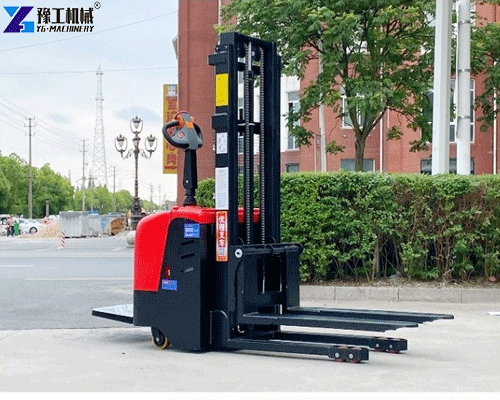
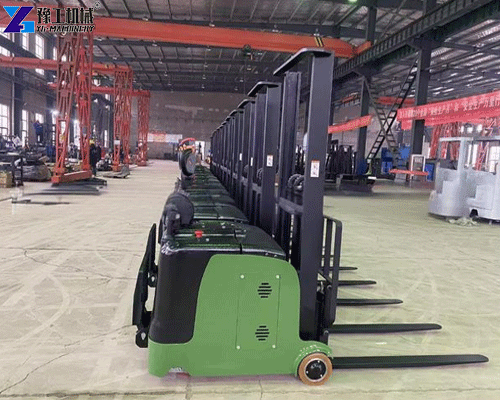
Implementation and Operating Results
After deployment, the warehouse tracked performance data for 90 days.
Measured Improvements
- Average stacking time reduced to 1.9 minutes per pallet
- Forklift-related incidents dropped to zero
- Labor requirement per shift reduced by 1.5 operators
- Pallet alignment error rate decreased by over 60%
The equipment maintained stable performance during temperature variations from -5°C to 35°C, typical for Midwest warehouse environments.
Comparison With Alternative Equipment Options
During the decision process, the client compared three options:
- Manual pallet trucks
- Electric stacker pallet jack units
- Fully automatic systems
The electric stacker pallet jack improved mobility but still required skilled operation. Fully automatic stacking offered better consistency and lower training requirements.
For horizontal transport and general loading tasks, many U.S. warehouses still rely on electric forklift systems, especially where long-distance pallet movement is required.
Click Here to Get A Free Quote
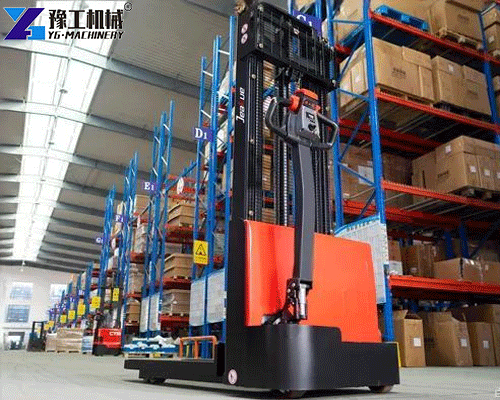
Why This Automatic Pallet Stacker Was Selected?
The final decision was based on operational logic rather than upfront price.
Key decision factors:
- Predictable ROI within 14–18 months
- Reduced dependence on certified forklift drivers
- Lower maintenance frequency compared to internal combustion forklifts
- Compatibility with existing pallet standards
The client emphasized that equipment stability and service response mattered more than initial cost.
Click Here to Get A Free Quote
FAQ: Buyer Questions From U.S. Warehouse Operators
1.What affects the price of an automatic pallet stacker?
Price depends on load capacity, lifting height, battery type, and control system. Custom safety features and U.S.-specific compliance requirements also influence cost.
2.Is it suitable for mixed pallet sizes?
Yes, within standard North American pallet dimensions. Non-standard pallets require parameter adjustment.
3.What is the delivery time to the United States?
Typical lead time is 25–35 days, including factory testing and export packaging.
4.What after-sales support is provided?
YG supplies remote technical support, operation manuals, and spare parts guidance. Local service partners can be arranged if required.
Conclusion: A Practical Automation Step for U.S. Warehousing
This U.S. case shows that adopting an automatic pallet stacker is not about full automation, but about solving specific, recurring warehouse problems.
By targeting fixed stacking tasks, the warehouse achieved measurable gains in safety, efficiency, and labor stability.
As a professional manufacturer with export experience in North America, YG provides equipment that matches real operating conditions rather than theoretical specifications.