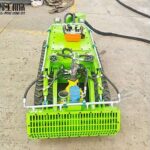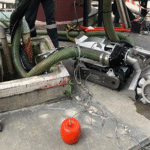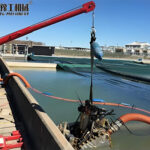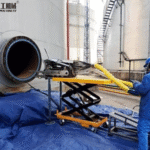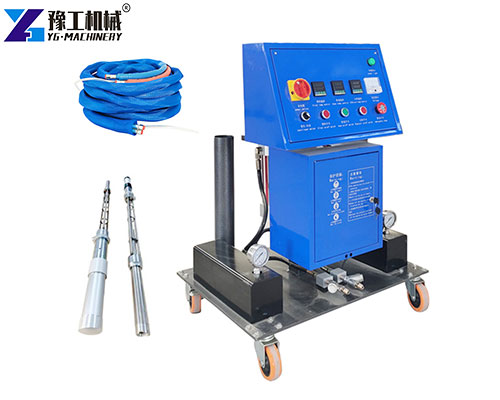
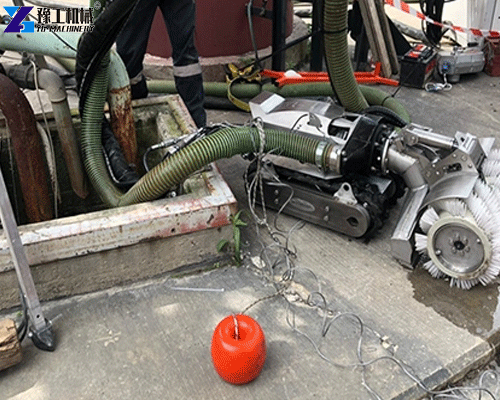
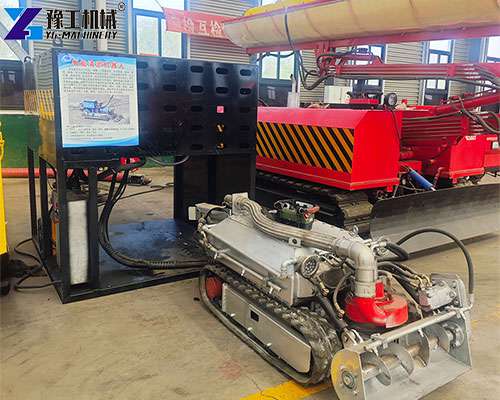
In June 2025, the Tank Cleaning Robot deployed at a major industrial waste treatment plant in the USA reduced manual entry cleaning time by 60% and improved safety compliance, addressing persistent challenges in confined-space maintenance. This automated solution delivered consistent cleaning performance while limiting human exposure to hazardous environments.
Tank Cleaning Robot Parameters
| Parameter | YG500 | YG600 | YG700 | YG800 | YG900 | YG1200 |
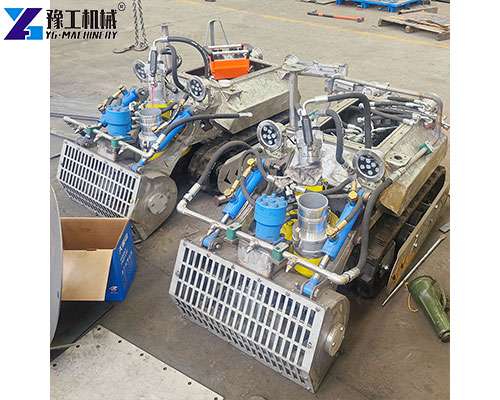
| Robot Dimensions (mm) | 1500*500*650 | 1500*600*650 | 1600*700*650 | 1600*850*700 | 1650*960*750 | 1900*1200*750 |
| Dredging Width (mm) | 500 | 600 | 700 | 800 | 900 | Suitable for large culverts |
| Travel Speed (m/s) | 3–15 | 3–15 | 3–15 | 3–15 | 3–15 | 0–17 m/min |
| Pump Diameter (inch) | 3 | 3 | 4 | 4 | 4 | 4or6 |
| Pump Flow (m³/h) | 100 | 100 | 160 | 160 | 200 | 250 |
| Pump Head (m) | 0–30 | 0–30 | 0–25 | 0–25 | 0–25 | 0–30 (Horizontal: 100–150m) |
| Hydraulic Station Dimensions (mm) | 2200*1200*1700 | 2200*1200*1700 | 2200*1200*1700 | 2200*1200*1700 | 2200*1200*1700 | 2120*1240*1200 |
| Main Motor Power (kW) | 18 | 18 | 22 | 22 | 22 | 45KW (50KW) or Diesel 76KW (123KW) |
| Hydraulic System Pressure (Mpa) | 0–16 | 0–16 | 0–16 | 0–16 | 0–16 | Not specified |
| Particle Size (mm) | 15 | 15 | 40 | 40 | 50 | 0–40 (customizable) |
| Winch Speed (r/min) | 0–10 | 0–10 | 0–10 | 0–10 | 0–10 | 0–10 |
| Pipe Length (m) | 30–50 Optional | 30–50 Optional | 30–50 Optional | 30–50 Optional | 30–50 Optional | 30m/pack, 20kg pressure resistant, optional |
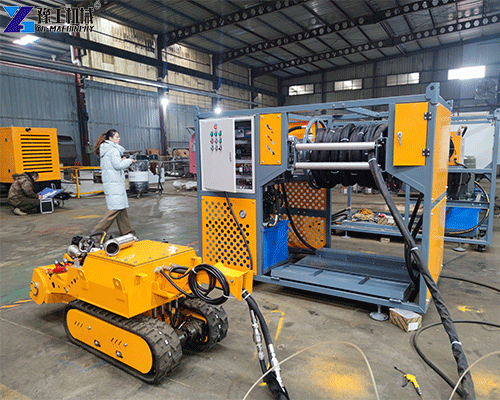
| Control System | Wireless Remote | Wireless Remote | Wireless Remote | Wireless Remote | Wireless Remote | Wireless Remote |
| Lighting System | Underwater LED*2 | Underwater LED*2 | Underwater LED*2 | Underwater LED*2 | Underwater LED*2 | Underwater LED*2 |
These specifications supported the client’s multi‑tank layout, including vertical digesters and horizontal clarifiers.
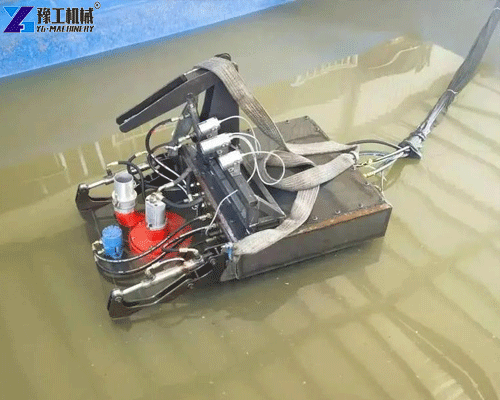
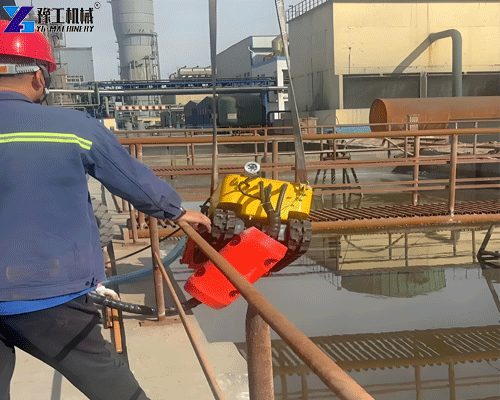
What Problem Did the Client Face?
The client, a wastewater treatment facility serving over 150,000 residents, struggled with repeated cleaning backlogs:
- Manual entry into confined tanks posed OSHA safety violations and risked worker injury.
- Traditional methods required 8–10 operators per cleaning cycle.
- Cleaning intervals stretched to 6–8 weeks, leading to odor complaints and service delays.
- Visual inspection after cleaning showed 30–40% residual solids remaining.
These conditions created operational inefficiencies and increased regulatory pressure.
Why Was YG tank cleaning robot Selected?
The decision to adopt the tank cleaning robot was based on three main factors:
- Safety: Eliminating confined‑space entry reduced compliance violations.
- Efficiency: Automated cleaning cycles allowed one operator to manage multiple tanks.
- Consistency: Repeatable cleaning patterns improved residual removal to >85%.
The evaluation also compared options designed for environmental applications (such as a robotic lake cleaner or autonomous river cleaning robot), but the selected model matched the industrial tank geometry and cleaning reach requirements.
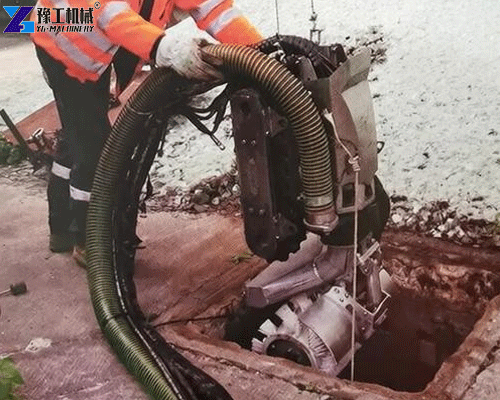
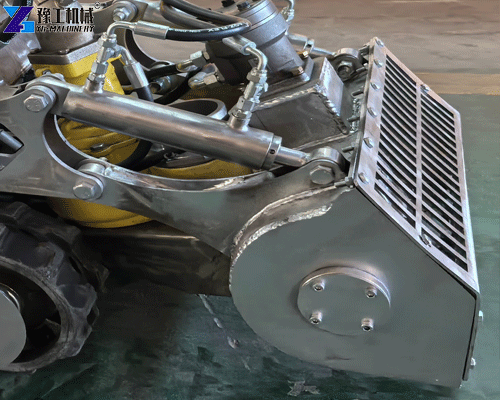
How Was the Solution Implemented?
Implementation followed a structured plan:
- Week 1: Site survey and hazard assessment.
- Week 2: Programming of cleaning sequences tailored to each tank.
- Week 3: On‑site operator training and dry runs.
- Week 4: Full‑scale operational deployment.
During programming, operators defined waypoints to ensure overlap of cleaning paths, maximizing coverage without redundant passes.
What Results Were Achieved with tank cleaning robot?
After 90 days of continuous operation:
- Cycle time per tank dropped from 10 hours manual to 4.2 hours automated.
- Worker hours saved: 60–70 man‑hours per week.
- Compliance metrics: Zero confined‑space entry incidents.
- Cleaning quality: Post‑process solids decreased by 45–60% compared to baseline.
- Odor complaints: Reduced by 28% in surrounding neighborhoods.
These outcomes confirmed operational improvements and supported facility service level objectives.
How Did Cost Compare?
The client evaluated long‑term economics before purchase:
- Lake cleaning machine price and capital investment were compared against recurring contract cleaning costs.
- Projected ROI showed break‑even within 18 months based on labor savings alone.
- Ongoing operational costs were limited to electricity and periodic mechanical checks.
This transparent cost modeling helped justify the procurement before approval.
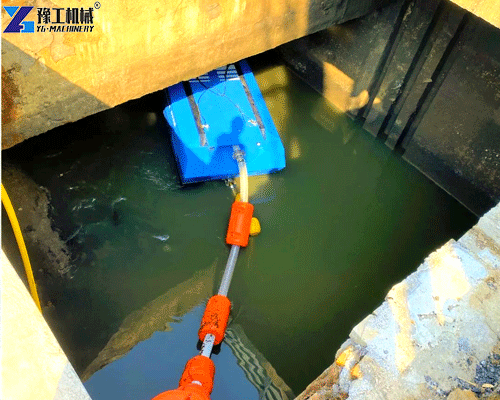
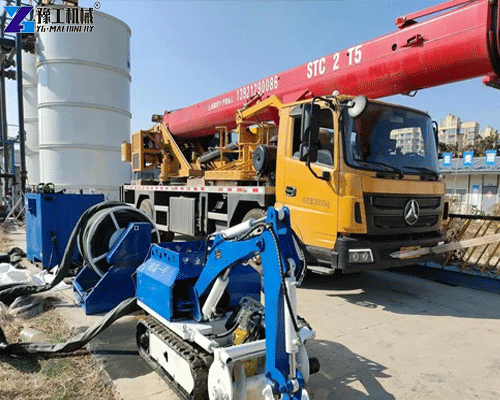
Operational Insights From the Field
Operators shared practical observations:
- Remote operation decreased fatigue and improved focus over multi‑hour sessions.
- Real‑time feedback allowed adjustments to cleaning patterns on complex tank geometries.
- Integration with existing maintenance schedules minimized downtime.
One senior technician noted, “We expected efficiency gains, but reducing exposure risk was the most significant benefit.”
Challenges and Mitigation
While the project succeeded, the team documented challenges:
- Initial programming complexity: Custom tank shapes required detailed mapping.
- Solution: Manufacturer provided additional support for waypoint optimization.
- Access constraints: Some tanks had narrow manways.
- Solution: Pre‑deployment measurements ensured compatible robot ingress.
Documenting these issues helped refine future deployments.
Long‑Term Support and Maintenance
The manufacturer offered structured service:
- Annual inspection: Mechanical systems and articulation joints.
- Remote diagnostics: Firmware insights to adjust performance.
- Parts availability: Critical consumables stocked regionally.
This support framework ensured uptime and predictable maintenance budgeting.
FAQ about tank cleaning robot
Q1: Is this robot suitable for environmental water flows?
A1: While engineered for industrial tanks, variants specialized for open environments exist, such as autonomous river cleaning robot platforms and machines geared toward lakes and reservoirs.
Q2: How does cleaning quality compare to manual methods?
A2: Measured residual solids reduction improved from ~35% with manual methods to >80% with the automated solution.
Q3: What drives the machine cost?
A3: Key factors include powertrain, navigation systems, articulation reach, and corrosion‑resistant materials.
Q4: What training is required?
A4: A 3‑day on‑site program is standard, covering remote operation, safety protocols, and routine maintenance.
Why YG Manufacturer Is a Trusted Partner?
- Over 15 years in robot‑assisted cleaning technologies.
- Engineering teams focused on confined‑space and waterway applications.
- Global service network supporting installation and lifecycle care.
The selection of this Tank Cleaning Robot reflects an evidence‑based match between technical capability and operational requirement.
Tank Cleaning Robot for sale
The industrial Tank Cleaning Robot deployment in the USA demonstrated measurable improvements in safety, efficiency, and cleaning quality. By addressing client’s confined‑space hazards and cleaning variability, the solution delivered quantifiable benefits and informed long‑term maintenance strategy. The structured implementation and operator support framework ensured reliable adoption, making this approach a benchmark for similar facilities evaluating automated cleaning systems.