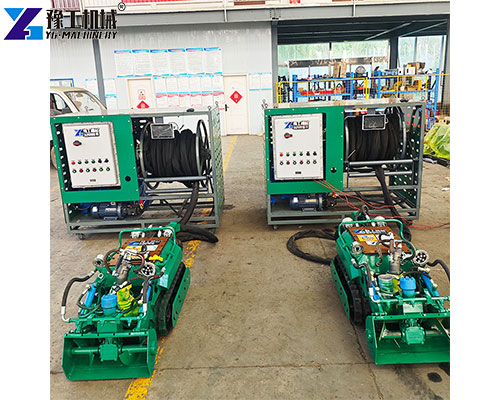
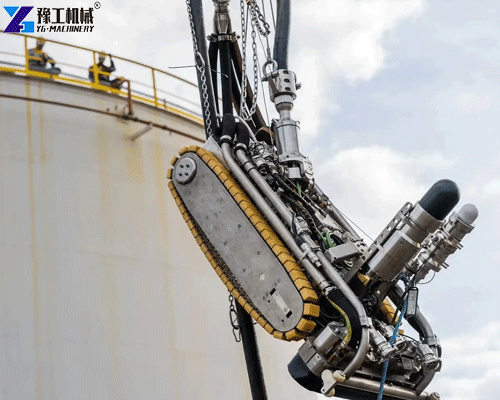
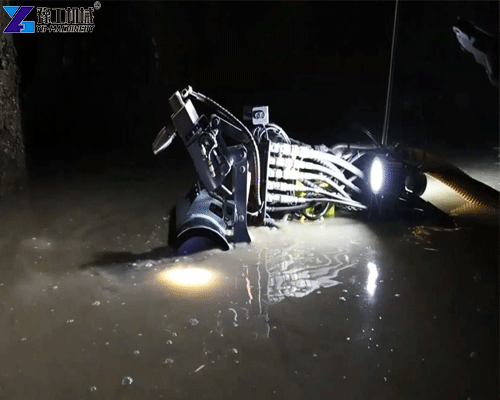
In March 2025, a industrial dredging robot supplied to a chemical processing facility in Jubail, Saudi Arabia, successfully removed 65% of accumulated sludge from their wastewater holding tanks within the first week. The facility previously relied on manual cleaning, which was labor-intensive, costly, and required shutting down production lines. The system is defined as a remotely operated, high-efficiency dredging device capable of continuous underwater operation, designed for sludge removal, sediment transport, and debris extraction in industrial water environments. Its precision and remote control functionality made it suitable for facilities with hazardous liquids and limited on-site manpower.
Industrial Dredging Robot Parameters
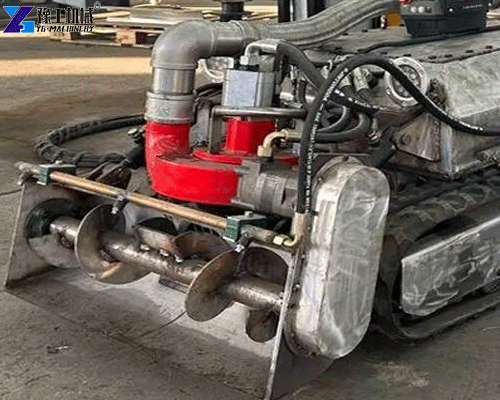
The dredging robot YG700 deployed in Saudi Arabia was tailored for medium-sized industrial wastewater tanks ranging from 1,500 m³ to 6,000 m³.
| Parameter | YG500 | YG600 | YG700 | YG800 | YG900 | YG1200 |
| Robot Dimensions (mm) | 1500*500*650 | 1500*600*650 | 1600*700*650 | 1600*850*700 | 1650*960*750 | 1900*1200*750 |
| Dredging Width (mm) | 500 | 600 | 700 | 800 | 900 | Suitable for large culverts |
| Travel Speed (m/s) | 3–15 | 3–15 | 3–15 | 3–15 | 3–15 | 0–17 m/min |
| Pump Diameter (inch) | 3 | 3 | 4 | 4 | 4 | 4or6 |
| Pump Flow (m³/h) | 100 | 100 | 160 | 160 | 200 | 250 |
| Pump Head (m) | 0–30 | 0–30 | 0–25 | 0–25 | 0–25 | 0–30 (Horizontal: 100–150m) |
| Hydraulic Station Dimensions (mm) | 2200*1200*1700 | 2200*1200*1700 | 2200*1200*1700 | 2200*1200*1700 | 2200*1200*1700 | 2120*1240*1200 |
| Main Motor Power (kW) | 18 | 18 | 22 | 22 | 22 | 45KW (50KW) or Diesel 76KW (123KW) |
| Hydraulic System Pressure (Mpa) | 0–16 | 0–16 | 0–16 | 0–16 | 0–16 | Not specified |
| Particle Size (mm) | 15 | 15 | 40 | 40 | 50 | 0–40 (customizable) |
| Winch Speed (r/min) | 0–10 | 0–10 | 0–10 | 0–10 | 0–10 | 0–10 |
| Pipe Length (m) | 30–50 Optional | 30–50 Optional | 30–50 Optional | 30–50 Optional | 30–50 Optional | 30m/pack, 20kg pressure resistant, optional |
| Control System | Wireless Remote | Wireless Remote | Wireless Remote | Wireless Remote | Wireless Remote | Wireless Remote |
| Lighting System | Underwater LED*2 | Underwater LED*2 | Underwater LED*2 | Underwater LED*2 | Underwater LED*2 | Underwater LED*2 |
The configuration allowed continuous operation up to 10 hours per day with one trained operator, providing predictable maintenance cycles and reduced downtime.
Challenges Faced by the Saudi Facility
The Jubail facility, producing polymer sheets, faced persistent issues with sludge accumulation in sedimentation tanks and wastewater pipelines.
Measured problems included:
- Sediment buildup up to 0.8 m in key tanks
- Pump clogging every 10–14 days
- Manual cleaning costs exceeding USD 45,000 annually
- Production downtime required for tank entry and cleaning
Organic and chemical residues increased sludge density, making conventional dredging equipment less effective. The facility required a solution that minimized human exposure to hazardous liquids while maintaining continuous production.
Why Conventional Methods Were Inefficient?
Manual cleaning and crane-mounted dredgers presented multiple constraints:
- Required complete tank shutdown for access
- High risk of chemical exposure to operators
- Heavy equipment transport was logistically challenging
- Cleaning intervals limited to once every 6–8 weeks
These limitations led to repeated production interruptions and elevated operating costs.
How the Industrial Dredging Robot Provided a Solution?
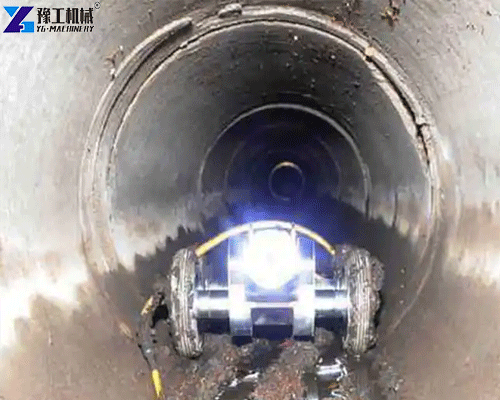
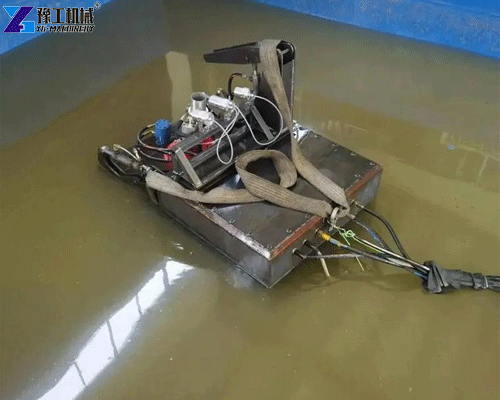
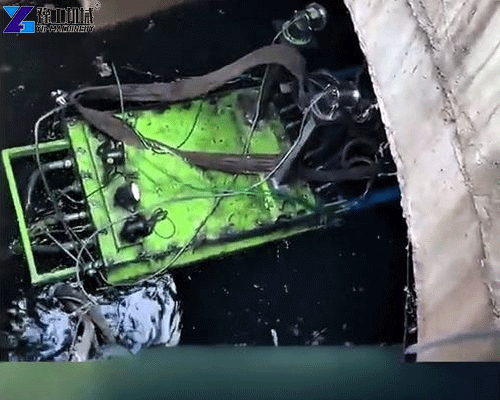
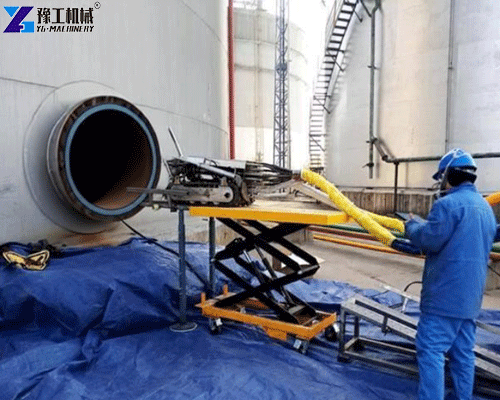
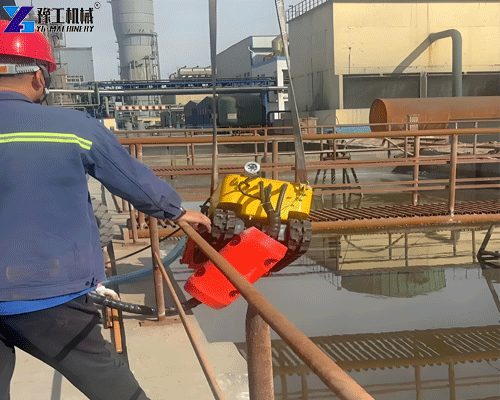
The industrial dredging robot was deployed directly into the tanks without halting production. Using its hydraulic suction pump, the robot removed dense sludge and transferred it to designated sediment collection points onshore.
Implementation steps:
- Setup of shore-based power and control unit
- Placement of discharge piping to sedimentation area
- Initial sludge removal completed in under 12 hours
- Scheduled operation twice per week for routine maintenance
The system restored pump efficiency immediately and reduced clogging frequency significantly.
Results Achieved After Deployment
Operational data collected over two months showed measurable improvements:
- Sludge thickness reduced from 0.8 m to 0.28 m
- Pump maintenance frequency reduced by 60%
- Production downtime eliminated for scheduled cleaning
- Annual cleaning costs projected to drop by 52%
The remote-controlled dredger allowed operators to maintain precise navigation, avoiding damage to tank walls and submerged structures.
Comparison With Conventional Underwater Dredging Robot Options
The facility previously evaluated an underwater dredging robot mounted on floating platforms. That solution required larger crews and extended setup times.
Key advantages of the deployed system:
- Compact footprint allowed operation in confined tanks
- Single-operator control
- Lower power consumption
- Faster deployment and removal
These features made it more suitable for industrial water systems with frequent maintenance needs.
Applicability for Other Industrial Environments
The industrial dredging robot is compatible with multiple industries facing sludge accumulation challenges:
- Plastic recycling lines
- Injection molding wastewater systems
- Paper cup and food processing wastewater tanks
Its design supports precise sludge removal without interrupting ongoing production or contaminating water downstream.
Customer Feedback from Jubail Facility
The facility’s maintenance manager reported:
- Cleaning tasks completed without human entry
- Pump failures decreased by more than 60%
- Predictable maintenance scheduling
- Minimal training required for operators
Based on these results, the facility plans to deploy additional units across three other plants in Saudi Arabia during 2026.
Factors Affecting Industrial Dredging Robot Price
Decision-making focused on lifecycle cost, not just initial purchase price.
Key considerations included:
- Expected service life of 8–10 years
- Reduction in manual labor and safety risk
- Energy-efficient operation
- Minimal downtime and maintenance
The payback period was estimated at 18–24 months, considering reduced labor and maintenance expenses.
Operating Conditions and Environmental Considerations in Saudi Arabia
Industrial wastewater tanks in Saudi Arabia present specific operational challenges:
- High chemical concentration in sludge
- Elevated water temperatures during summer months
- Confined tank access points
- Remote plant locations
The robot’s corrosion-resistant components and sealed hydraulic systems ensured reliable operation in these conditions.
Delivery, Installation, and Commissioning Timeline
Project timeline:
- Manufacturing: 4 weeks
- Sea freight to Saudi Arabia: 21 days
- On-site commissioning: 2 days
- Operator training: 4 hours
Full operational deployment occurred within six weeks of order confirmation.
FAQ about industrial dredging robot
Can the system operate in multiple tanks?
Yes, it is modular and can be redeployed across tanks of various sizes.
Is full tank drainage required?
No. It operates underwater while production continues.
What maintenance is needed?
Inspection every 250 operating hours and hydraulic fluid replacement every 1,000 hours.
Is it safe for chemical wastewater?
Yes, with proper discharge management to approved containment zones.
How does it compare to hiring external dredging contractors?
Annual operating costs are typically 40–55% lower over five years.
Industrial Dredging Robot Delivers Reliable Sludge Removal
The industrial dredging robot successfully addressed sludge accumulation in Saudi Arabia’s industrial water systems, reducing downtime, minimizing operator risk, and lowering maintenance costs. Its precise, remote-controlled operation demonstrates practical value for chemical processing, recycling, and other facilities requiring frequent, high-efficiency sediment management.