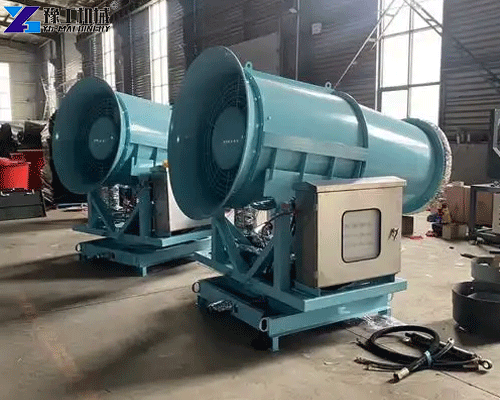
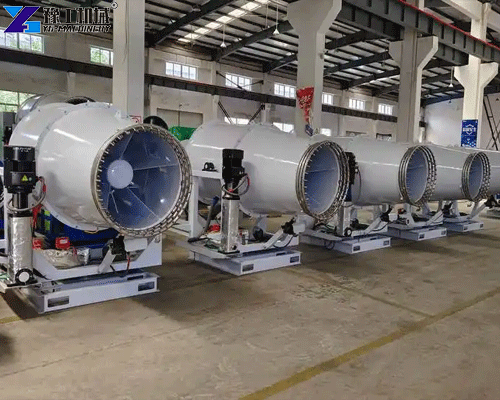
Coal handling plants are among the most dust-intensive industrial environments. From coal unloading and crushing to conveying and storage, large amounts of fine coal dust are generated continuously. Without an effective coal handling plant dust control, airborne dust not only threatens worker health but also increases equipment wear, environmental pollution, and safety risks.
In recent years, fog cannon systems have become a practical and widely adopted solution for dust control in coal handling plants, offering flexible installation, lower operating costs, and effective dust suppression performance.
Click Here to Get A Free Quote
Fog Cannon Dust Suppression Parameters
| Model | YG-20 | YG-30 | YG-40 | YG-60 |
| Spraying distance | 20m | 30m | 40m | 60m |
| Engine | electric | electric | electric | electric |
| Electric | 380V/50HZ,3 phase | 380V/50HZ,3 phase | 380V/50HZ,3 phase | 380V/50HZ,3 phase |
| Fan motor | 3kw | 3kw | 4kw | 11kw |
| Steering motor | 2*1.5kw | 2*1.5kw | 2*1.5kw | 2*1.5kw |
| Pump motor | 1.5kw | 1.5kw | 2.5kw | 7.5kw |
| Horizontal angle | 360° | 360° | 360° | 360° |
| Vertical angle | Minus10°-55° | Minus10°-55° | Minus10°-55° | Minus10°-55° |
| The nozzle | 8 | 10 | 16 | 22 |
| Cylinder material | Q235 Carbon steel | Q235 Carbon steel | Q235 Carbon steel | Q235 Carbon steel |
| Bucket | 460L | 480L | 800L | |
| Water consumption | 1000L/h | 1500L/h | 3000L/h | 7500L/h |
| Recycled water pipe | 1400mm | 1400mm | 1400mm | 1400mm |
| The machine size | 1170*940*1700mm | 1170*940*1800mm | 1650*1200*2200mm | 1700*1200*2200mm |
| Weight | 200kg | 250kg | 300kg | 350kg |
Click Here to Get A Free Quote
Dust Challenges in Coal Handling Plants
Coal handling processes typically include unloading, crushing, screening, transfer points, and stockpiling. Each stage generates dust with different characteristics:
- Fine coal particles easily become airborne
- Dust spreads quickly through open or semi-open areas
- Traditional enclosure-based dust extraction systems are difficult to install in large spaces
- High maintenance requirements increase operating costs
As a result, many coal handling facilities struggle to maintain effective dust extraction across all production stages.
Click Here to Get A Free Quote
Limitations of Traditional Dust Extraction Systems
Conventional dust extraction systems in coal handling plants usually rely on ducting, hoods, and bag filters. While effective in enclosed areas, they face several limitations:
- High installation cost for large-scale conveyor systems
- Reduced efficiency in open stockyards and transfer points
- Frequent filter replacement and maintenance
- Limited flexibility when production layouts change
These challenges have driven many plant operators to seek complementary or alternative dust suppression solutions.
Fog Cannon Systems as an Advanced Dust Extraction Solution
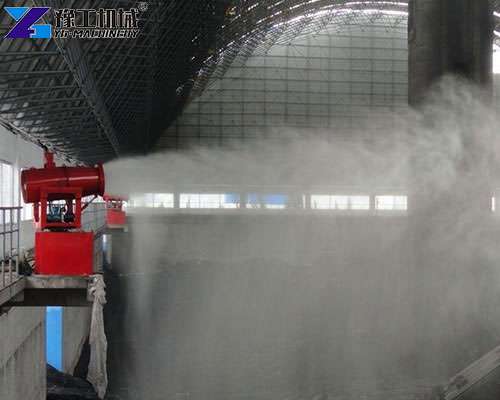
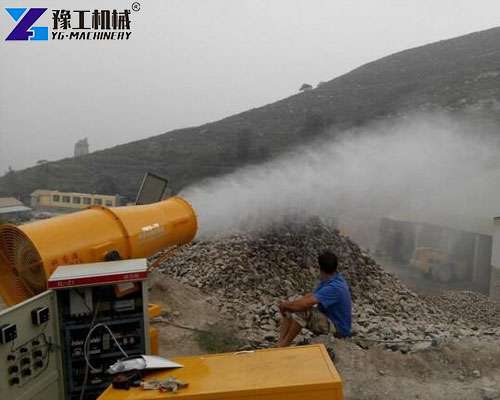
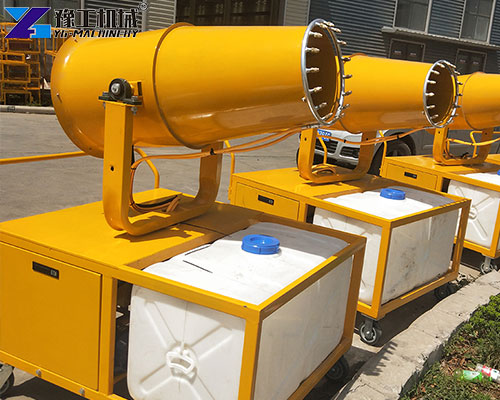
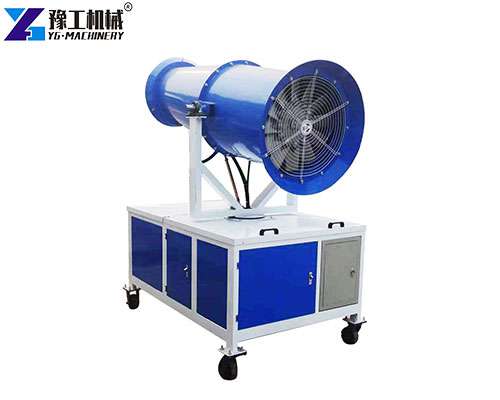
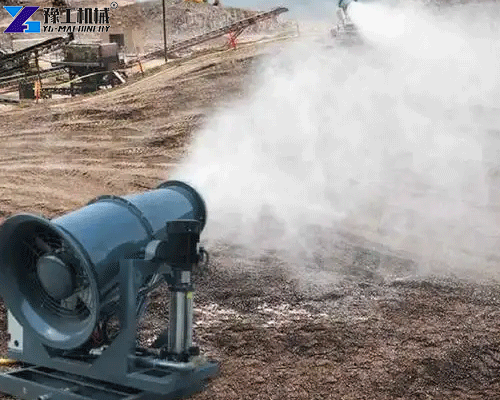
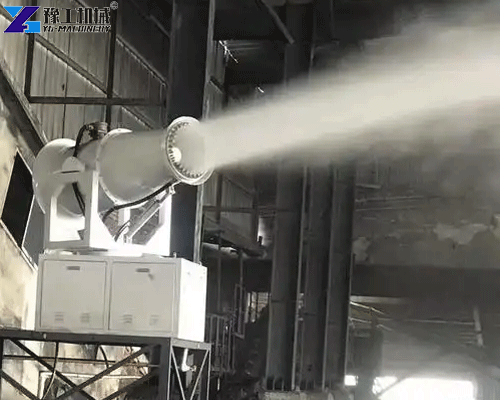
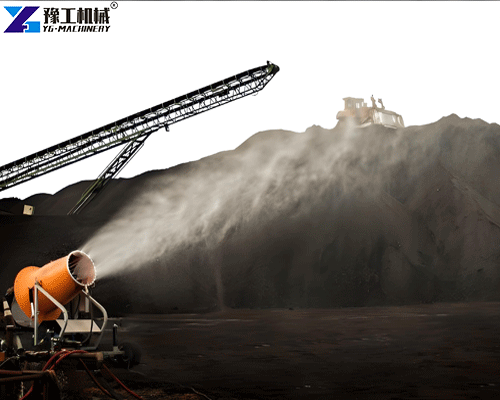
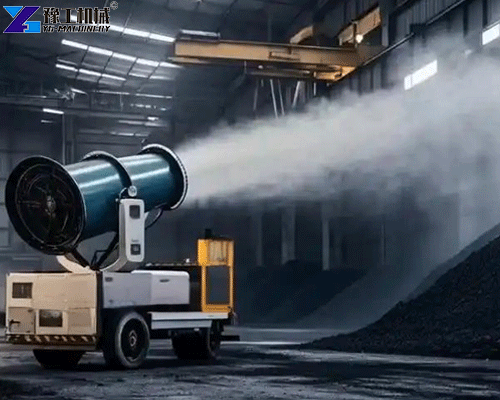
Fog cannon systems, also known as dust suppression fog cannons or mist cannons, use high-pressure water combined with optimized nozzles to generate ultra-fine mist particles. These mist droplets bind with airborne dust and force it to settle, effectively reducing dust concentration at the source.
When integrated into a fog cannon dust suppression system for coal handling plants applications, fog cannons provide several key advantages.
Click Here to Get A Free Quote
How Fog Cannons Work in Coal Handling Plants?
Fog cannons are typically installed near dust-generating areas such as:
- Coal unloading zones
- Crusher and screening stations
- Conveyor transfer points
- Stockpile loading and reclaim areas
The system projects a fine mist over a wide range, covering large areas without the need for full enclosure. The fog particles are sized to match coal dust particles, ensuring efficient dust capture while minimizing water consumption.
Key Advantages of Fog Cannon Dust Suppression Systems
- Effective Dust Control in Open Areas: Fog cannons perform exceptionally well in open or semi-open environments where traditional dust extraction systems struggle.
- Lower Installation and Maintenance Costs: Compared with duct-based extraction systems, fog cannons require less infrastructure and simpler maintenance.
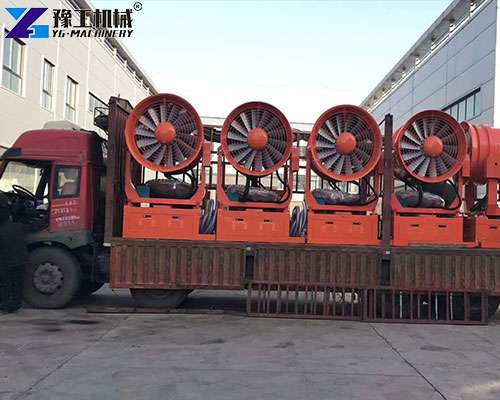
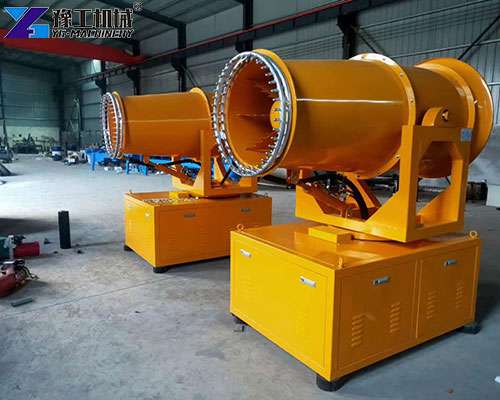
- Flexible Deployment: Mobile or fixed fog cannon units can be repositioned as plant layouts change, making them ideal for dynamic coal handling operations.
- Improved Workplace Safety: Reducing airborne coal dust helps lower the risk of respiratory diseases, equipment damage, and dust explosion hazards.
- Environmentally Friendly Operation: Fog cannon systems consume minimal water and do not require chemical additives, making them suitable for environmentally regulated sites.
Click Here to Get A Free Quote
Integrating Fog Cannons into Existing Dust Extraction Systems
Rather than replacing traditional systems entirely, fog cannons are often used to enhance existing coal handling plant dust control. Common integration strategies include:
- Using fog cannons at open transfer points while maintaining filters in enclosed zones
- Deploying mobile fog cannons during peak dust generation periods
- Combining fog cannons with wind sensors for automatic operation
This hybrid approach delivers comprehensive dust control with optimized costs.
Choosing the Right Fog Cannon for Coal Handling Applications
When selecting a fog cannon for a coal handling plant, key factors include:
- Spray range and coverage area
- Droplet size and dust capture efficiency
- Water and power consumption
- Fixed or mobile configuration
- Environmental and climate conditions
Professional equipment suppliers can help configure the system based on plant size, dust concentration, and operational requirements.
Click Here to Get A Free Quote
Dust Control Solutions for Coal Handling Plants
An effective coal handling plant dust control is essential for safe, compliant, and efficient production. While traditional extraction systems remain important in enclosed areas, fog cannon dust suppression systems offer a highly practical solution for open and large-scale coal handling environments.
By integrating fog cannons into dust control strategies, coal handling plants can significantly reduce airborne dust, improve working conditions, and achieve long-term operational stability with lower overall costs.