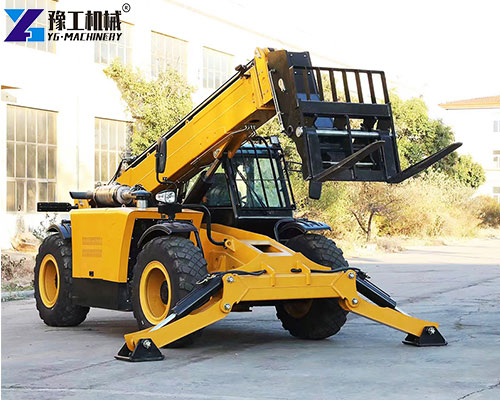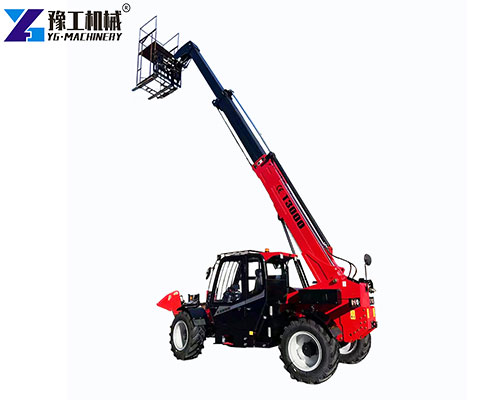
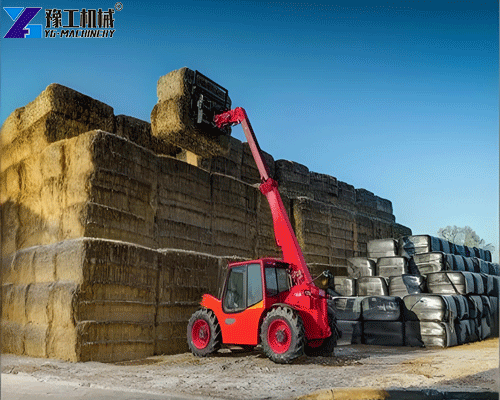
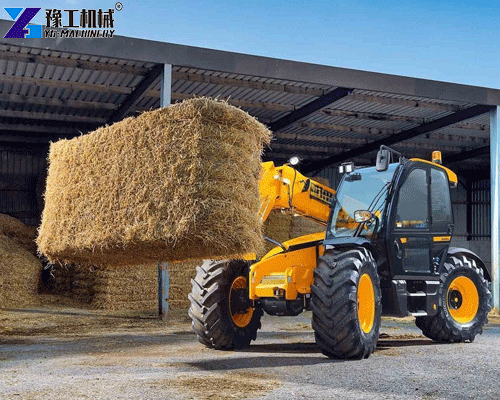
An agricultural telehandler was selected by a large-scale U.S. farm to solve daily lifting and material handling challenges across uneven outdoor terrain.
The decision was driven by labor shortages, increasing feed handling volumes, and the need for a single machine capable of replacing multiple traditional forklifts.
Background: U.S. Farm Operations Face New Handling Constraints
In recent years, many farms in the Midwest and Southern United States have expanded herd sizes and storage capacity.
Material handling demands have increased accordingly.
A farm operator in Texas managing livestock feeding, bale stacking, and bulk material transport reported three persistent issues:
- Frequent forklift downtime on soft ground
- Limited lifting reach when loading high-sided trailers
- High labor dependency during peak seasons
Traditional warehouse forklifts were designed for flat concrete floors. They struggled in open agricultural environments.
Click Here to Get A Free Quote
Project Context: Daily Tasks and Operating Environment
The farm operates year-round with mixed applications:
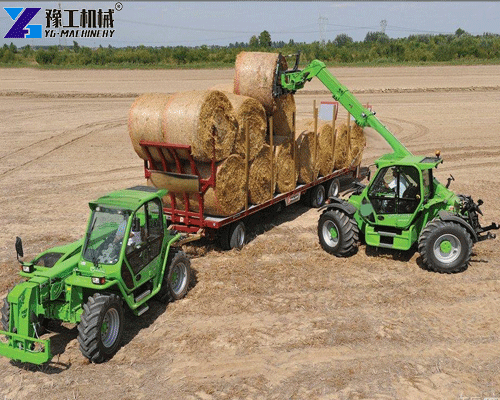
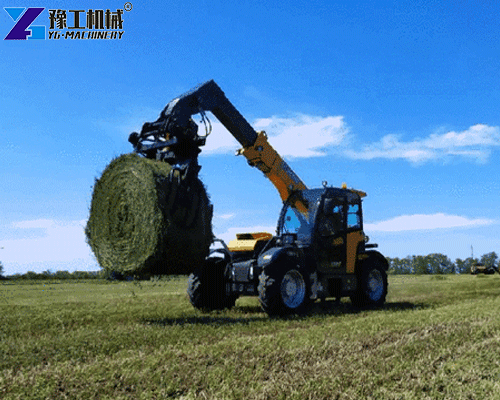
- Loading hay bales up to 4.5 meters
- Moving bulk feed across gravel yards
- Handling palletized supplies near barns
- Working on uneven, sometimes muddy surfaces
Operating conditions include dust, temperature variation, and long daily runtimes. Equipment reliability was a critical requirement.
Technical Requirements Defined by the Customer
Before equipment selection, the customer outlined clear technical expectations:
- Rated load capacity: ≥ 3,000 kg
- Maximum lifting height: ≥ 6 meters
- Stable operation on unpaved ground
- Compatibility with forks and buckets
- Easy maintenance without specialized tools
They also wanted one unit to replace both a loader and a conventional forklift.
Click Here to Get A Free Quote
Solution Overview: Agricultural Telehandler Configuration
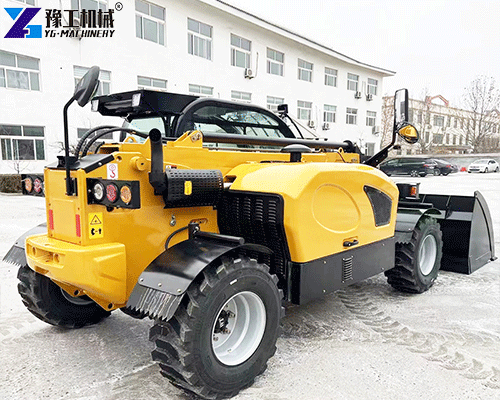
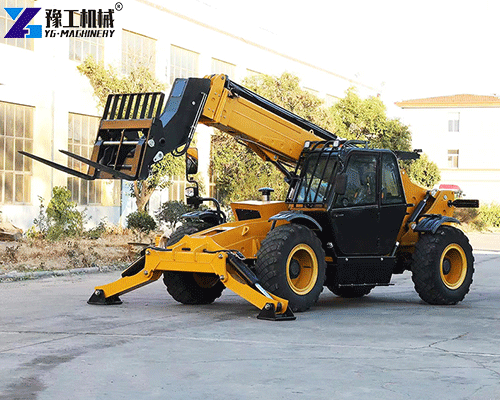
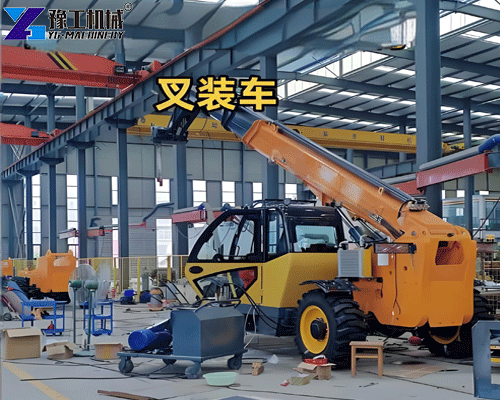
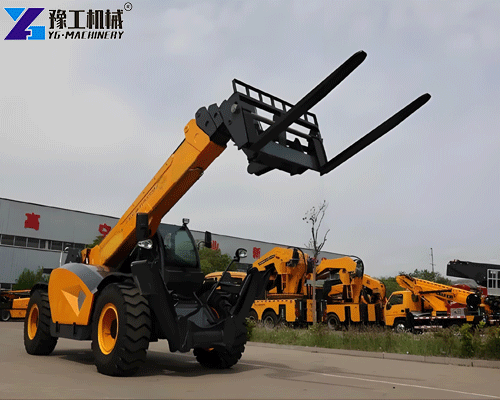
YG Machinery proposed an agricultural telehandler configured specifically for farm use in the U.S. market. the customer selceted the YG-TS1035.
Key Specifications
| Model | YG-TS1035 | YG-TS1440 | YG-TS1850 |
| Rated load | 3500kg | 4000kg | 5000kg |
| Maximum lift height | 10000mm | 13500mm | 17550mm |
| Maximum reach | 5000mm | 8500mm | 13080mm |
| Maximum traction force | ≥70kn | ≥70kn | ≥70kn |
| Minimum ground clearance | 420mm | 420mm | 420mm |
| Overall dimensions | 5700×2230×2400mm | 7000×2350×2550mm | 7500×2430×2550mm |
| Wheelbase | 3670mm | 3670mm | 3670mm |
| Engine Type | CUMMINS/Yuchai | Yuchai Brand | YunneiBrand |
The configuration focused on balance, traction, and visibility rather than maximum speed.
Click Here to Get A Free Quote
Why This Machine Fit the Application
Unlike standard forklifts, the telescopic boom allowed forward reach without repositioning the chassis.
This reduced cycle time when loading feed trucks.
Compared with a wheel loader, fuel consumption was lower during repetitive lifting tasks.
Operator fatigue was also reduced due to improved cab ergonomics.
The customer evaluated several options, including a forklift zoom boom, but rejected smaller units due to stability limits at full extension.
Performance Results After Deployment
After three months of use, the farm reported measurable improvements:
- Daily loading time reduced by approximately 28%
- One operator replaced two manual handling positions
- Fewer ground recovery incidents during wet conditions
- Fuel usage decreased compared to loader-based handling
Maintenance records showed no unplanned downtime during the evaluation period.
Comparison With Other Handling Equipment
In procurement discussions, the farm compared multiple categories:
- Standard diesel forklifts
- Compact wheel loaders
- Small telehandlers
A rough terrain telehandler was considered essential due to uneven yards and seasonal mud.
Traditional forklifts were eliminated early in the process.
The final choice provided reach, lift height, and ground clearance in a single platform.
Click Here to Get A Free Quote
Buyer Decision Logic: Why YG Machinery Was Selected
The purchasing decision was based on technical alignment rather than branding.
Key factors included:
- Clear parameter documentation
- Proven export experience to North America
- Parts compatibility with common diesel engines
- Support for agricultural attachments
The farm manager noted that the machine met operational needs without unnecessary complexity.
Market Insight: Growing Demand in U.S. Agriculture
Demand for this type of equipment continues to grow as farms seek efficiency and labor reduction. Search interest for a farm telehandler for sale reflects this trend, especially among medium to large operations.
Multi-function machines reduce capital investment while improving flexibility.
Click Here to Get A Free Quote
FAQ: Common Buyer Questions in the U.S. Market
How much does an agricultural telehandler cost in the U.S.?
Pricing depends on capacity, lift height, engine configuration, and attachments.
Diesel models with higher lift typically cost more than compact units.
Is it suitable for indoor barn use?
It can operate indoors with proper ventilation.
However, electric alternatives may be better for fully enclosed spaces.
What are the delivery timelines?
Typical production and shipping time ranges from 25 to 40 days depending on configuration.
What after-sales support is available?
Standard wear parts are easily sourced.
Technical guidance and documentation are provided for local maintenance teams.
Final Assessment
This U.S. case demonstrates how an agricultural telehandler can address real farm handling challenges through technical fit rather than overspecification.
The machine replaced multiple tools, improved efficiency, and operated reliably in demanding conditions.
YG Machinery continues to support similar projects by focusing on application-driven equipment design rather than generic configurations.