Semi enclosed tanks are widely used in wastewater treatment plants, industrial facilities, biogas systems, and water storage applications. However, cleaning accumulated sludge from these tanks is often challenging due to limited access, confined spaces, and safety risks.
Traditional tank cleaning methods usually require workers to enter the tank, drain the system, or use temporary pumping solutions. These approaches can increase labor costs, extend downtime, and create potential safety hazards.
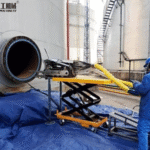
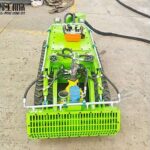
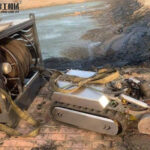
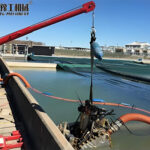
A dredging cleaning robot for semi enclosed tank sludge removal provides a safer and more efficient solution by allowing operators to remove sludge remotely without entering the tank. With a compact crawler design, powerful suction system, and remote control operation, the robot can effectively clean sediment and sludge from difficult-to-access tank areas.
Dredging Cleaning Robot Parameters
| Parameter | YG450 | YG500 | YG600 | YG700 | YG800 | YG900 | YG1200 |
| Robot Dimensions (mm) | ≤1700 × 450 × 450 | 1500 × 500 × 650 | 1500 × 600 × 650 | 1600 × 700 × 650 | 1600 × 850 × 700 | 1650 × 960 × 750 | 1900 × 1200 × 750 |
| Applicable Manhole / Access | ≥600 mm opening | ≥600 mm opening | ≥600 mm opening | ≥700 mm opening | ≥800 mm opening | ≥900 mm opening | Large culvert / open access |
| Dredging Width (mm) | 450 | 500 | 600 | 700 | 800 | 900 | Suitable for large culverts |
| Travel Speed (m/s) | 3–12 | 3–15 | 3–15 | 3–15 | 3–15 | 3–15 | 0–17 m/min |
| Pump Diameter (inch) | 3 | 3 | 3 | 4 | 4 | 4 | 4 or 6 |
| Pump Flow (m³/h) | 50 | 100 | 100 | 160 | 160 | 200 | 250 |
| Pump Head (m) | 0-30 | 0–30 | 0–30 | 0–25 | 0–25 | 0–25 | 0–30 (Horizontal: 100–150 m) |
| Hydraulic Station Dimensions (mm) | 2000 × 1100 × 1500 (recommended) | 2200 × 1200 × 1700 | 2200 × 1200 × 1700 | 2200 × 1200 × 1700 | 2200 × 1200 × 1700 | 2200 × 1200 × 1700 | 2120 × 1240 × 1200 |
| Main Motor Power (kW) | 11–15 kW | 18 | 18 | 22 | 22 | 22 | 45 kW (50 kW) / Diesel 76 kW (123 kW) |
| Hydraulic System Pressure (MPa) | 0–16 | 0–16 | 0–16 | 0–16 | 0–16 | 0–16 | Custom / high-pressure system |
| Particle Size Capacity (mm) | ≤10–20 mm (soft sludge) | 15 | 15 | 40 | 40 | 50 | 0–40 (customizable) |
| Winch Speed (r/min) | 0–10 | 0–10 | 0–10 | 0–10 | 0–10 | 0–10 | 0–10 |
| Pipe Length (m) | 20–30 optional | 30–50 optional | 30–50 optional | 30–50 optional | 30–50 optional | 30–50 optional | 30 m/pack, high-pressure resistant |
| Control System | Wireless Remote Control | Wireless Remote | Wireless Remote | Wireless Remote | Wireless Remote | Wireless Remote | Wireless Remote |
| Lighting System | Underwater LED ×2 | Underwater LED ×2 | Underwater LED ×2 | Underwater LED ×2 | Underwater LED ×2 | Underwater LED ×2 | Underwater LED ×2 |
Why Is Semi Enclosed Tank Sludge Removal Difficult?
Semi enclosed tanks are different from open ponds or reservoirs. Their structure creates several cleaning challenges.
1.Limited Access and Narrow Working Space
Many semi enclosed tanks only have small openings or manholes for maintenance. Large dredging equipment cannot easily enter, making traditional cleaning methods inefficient.
Common problems include:
- Difficult equipment installation
- Limited operator access
- Restricted cleaning range
- High preparation costs
A compact tank cleaning robot is designed to overcome these limitations and operate in restricted spaces.
2.Sludge Accumulation Affects Tank Performance
Over time, sludge, sediment, and organic materials accumulate at the bottom of tanks. Excessive deposits can cause:
- Reduced effective tank capacity
- Lower treatment efficiency
- Pump blockage risks
- Increased maintenance frequency
Regular sludge removal helps maintain stable operation and extends equipment service life.
3.Manual Cleaning Creates Safety Risks
Many semi enclosed tanks are considered confined spaces. Manual cleaning may expose workers to:
- Harmful gases
- Oxygen deficiency
- Slippery surfaces
- Difficult evacuation conditions
A remote operated sludge removal solution reduces the need for personnel to enter hazardous areas.
How Does a Dredging Cleaning Robot Remove Tank Sludge?
A remote controlled dredging robot combines crawler mobility, sludge cutting, high-pressure water jet cleaning, and powerful pumping technology to efficiently remove sludge from semi enclosed tanks without requiring human entry.
The working process includes:
- Remote Robot Deployment: The compact crawler dredging robot enters the tank through an existing access opening and moves steadily across the tank bottom to reach sludge accumulation areas, even in narrow or difficult-to-access spaces.
- Sludge Breaking and Collection: The crawler system provides stable traction, while the front-mounted cutting head breaks up hardened sediment, compacted sludge, and bottom deposits. High-pressure water jets help loosen stubborn materials and improve sludge collection efficiency.
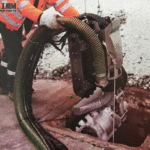
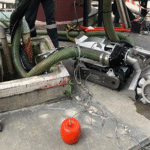
- High-Pressure Sludge Suction and Transfer: After sludge is loosened, the integrated high-pressure remote conveying pump transfers the sludge mixture through a discharge pipeline over a long distance, ensuring continuous and efficient removal.
- Remote Monitoring and Operation: Operators can control the robot, cutting system, water jet cleaning, and pumping process from a safe location without entering the tank, significantly reducing safety risks and labor requirements.
This robotic cleaning method improves worker safety, reduces tank downtime, and provides an efficient solution for sludge removal in semi enclosed tanks, wastewater facilities, and industrial cleaning applications.g labor requirements and cleaning time.
Key Advantages of Dredging Cleaning Robot for Semi Enclosed Tanks
1. No Human Entry Required for Safer Cleaning
The biggest advantage of a robotic tank cleaning system is safer operation.
Instead of sending workers into confined tanks, operators can control the robot remotely and complete sludge removal from outside the working area.
Benefits include:
- Reduced safety risks
- Less manual labor
- Easier maintenance planning
2. Compact Design for Restricted Spaces
Semi enclosed tanks often have limited access conditions. The compact structure of the dredging robot allows it to work in areas where conventional equipment cannot operate.
It is suitable for:
- Narrow tank entrances
- Underground tanks
- Covered sedimentation tanks
- Confined cleaning environments
3. Powerful Sludge Removal Capability
The robot is designed to handle different types of sediment and sludge, including:
- Wastewater sludge
- Organic sediment
- Mud deposits
- Bottom accumulation
The combination of mechanical loosening and suction pumping improves cleaning efficiency compared with simple pumping methods.
4. Reduce Downtime During Tank Cleaning
Traditional cleaning often requires draining tanks or stopping operations for long periods.
A dredging cleaning robot helps reduce downtime by:
- Performing targeted sludge removal
- Minimizing manual preparation
- Improving cleaning efficiency
This is especially valuable for wastewater treatment facilities and industrial plants where continuous operation is important.
Applications of Tank Cleaning Robot for Sludge Removal
A sludge removal robot can be used in various semi enclosed tank applications.
1.Wastewater Treatment Tanks
Wastewater facilities often experience continuous sludge accumulation in:
- Sedimentation tanks
- Equalization tanks
- Sludge holding tanks
The robot provides a practical solution for regular cleaning without complex shutdown procedures.
2.Anaerobic Digesters and Biogas Tanks
Organic materials may settle at the bottom of anaerobic digesters and reduce effective volume.
A robotic cleaning system helps remove deposits while improving operational efficiency.
3.Industrial Storage and Process Tanks
Manufacturing facilities may require regular removal of:
- Industrial sediment
- Production waste
- Slurry deposits
A remote cleaning solution improves maintenance safety and efficiency.
Dredging Cleaning Robot vs Traditional Tank Cleaning Methods
| Manual tank cleaning | High safety risks and labor requirements |
| Drain and clean method | Requires shutdown and long preparation time |
| Vacuum pumping | Limited ability to remove settled sludge |
| Dredging cleaning robot | Remote operation, efficient sludge removal, safer maintenance |
Compared with traditional approaches, robotic cleaning provides a more flexible solution for difficult-to-access tanks.
How to Choose the Right Sludge Removal Robot?
Before selecting a tank cleaning robot, consider the following factors:
1.Tank Structure and Access Size
The robot size should match:
- Tank opening dimensions
- Internal space conditions
- Working depth
2.Sludge Characteristics
Different sludge conditions require different cleaning capabilities, including:
- Sludge thickness
- Sediment hardness
- Organic content
3.Pumping Distance and Capacity
The discharge system should match:
- Sludge transportation distance
- Required cleaning speed
- Site conditions
Choosing the right configuration ensures better cleaning performance and lower operating costs.
Why Choose a Remote Controlled Dredging Robot?
A modern underwater cleaning robot offers a smarter alternative for challenging tank maintenance.
Main advantages include:
- Remote operation without human entry
- Improved worker safety
- Efficient sludge removal
- Adaptation to confined environments
- Reduced cleaning downtime
For facilities that struggle with traditional tank cleaning methods, robotic dredging technology provides a reliable long-term solution.
FAQ About Dredging Cleaning Robot for Semi Enclosed Tank Sludge Removal
1.Can a dredging robot clean a semi enclosed tank?
Yes. Compact dredging robots are designed to operate inside tanks with limited access areas and remove accumulated sludge remotely.
2.Does the operator need to enter the tank?
No. The robot can be controlled remotely, reducing the need for confined-space entry.
3.What type of sludge can the robot remove?
It can remove wastewater sludge, sediment, organic deposits, and other bottom accumulation materials.
4.What industries use tank cleaning robots?
They are commonly used in wastewater treatment, biogas plants, industrial facilities, and water management systems.
Conclusion
Cleaning sludge from semi enclosed tanks is challenging due to restricted access, safety concerns, and accumulated sediment. A dredging cleaning robot for semi enclosed tank sludge removal provides an efficient and safer alternative to traditional cleaning methods.
With remote operation, compact design, and powerful sludge removal capability, this robotic solution helps facilities maintain cleaner tanks, reduce downtime, and improve maintenance efficiency without exposing workers to dangerous environments.
For wastewater plants, industrial tanks, and confined cleaning applications, a remote controlled dredging robot offers a practical way to solve difficult sludge removal challenges.