Do you face these problems in your project?
- Thick sludge accumulation in sedimentation tanks
- Dangerous manual cleaning in wastewater treatment plants
- High labor cost for pond and reservoir dredging
- Difficult cleaning in industrial sludge tanks
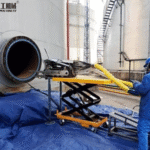
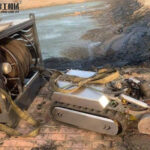
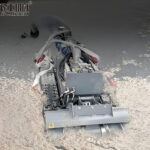
A sludge cleaning robot is designed to solve these problems quickly and safely.
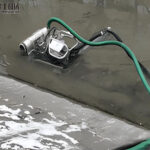
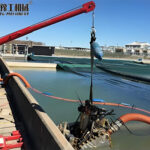
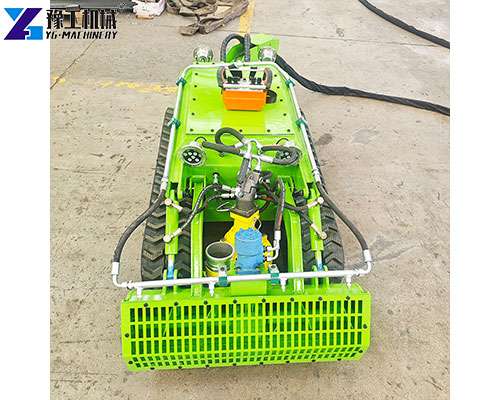
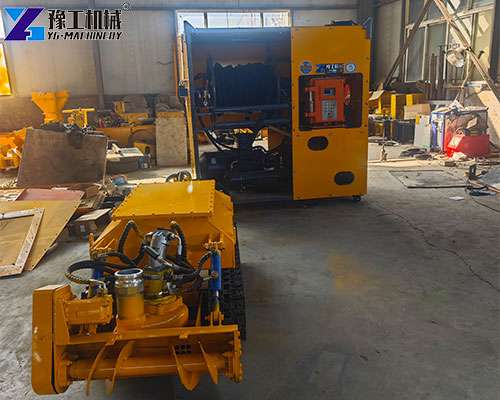
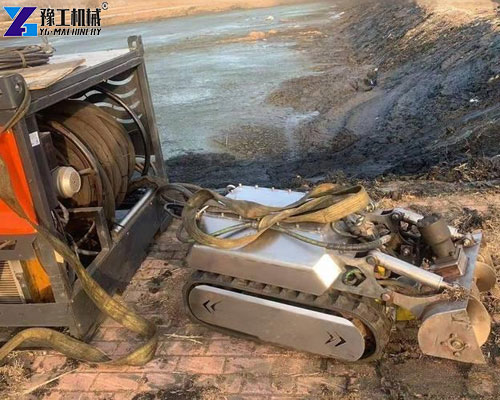
It is a remote-controlled crawler dredging robot that moves on the sludge surface and pumps sediment through pipelines without divers or manual cleaning. This makes sludge removal faster, safer, and more efficient.
Sludge Cleaning Robot Parameters
| Parameter | YG500 | YG600 | YG700 | YG800 | YG900 | YG1200 |
| Robot Dimensions (mm) | 1500*500*650 | 1500*600*650 | 1600*700*650 | 1600*850*700 | 1650*960*750 | 1900*1200*750 |
| Dredging Width (mm) | 500 | 600 | 700 | 800 | 900 | Suitable for large culverts |
| Travel Speed (m/s) | 3–15 | 3–15 | 3–15 | 3–15 | 3–15 | 0–17 m/min |
| Pump Diameter (inch) | 3 | 3 | 4 | 4 | 4 | 4or6 |
| Pump Flow (m³/h) | 100 | 100 | 160 | 160 | 200 | 250 |
| Pump Head (m) | 0–30 | 0–30 | 0–25 | 0–25 | 0–25 | 0–30 (Horizontal: 100–150m) |
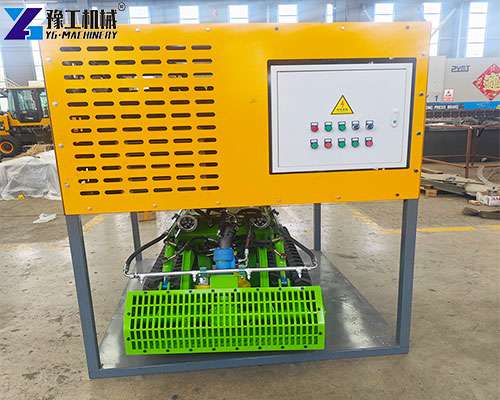
| Hydraulic Station Dimensions (mm) | 2200*1200*1700 | 2200*1200*1700 | 2200*1200*1700 | 2200*1200*1700 | 2200*1200*1700 | 2120*1240*1200 |
| Main Motor Power (kW) | 18 | 18 | 22 | 22 | 22 | 45KW (50KW) or Diesel 76KW (123KW) |
| Hydraulic System Pressure (Mpa) | 0–16 | 0–16 | 0–16 | 0–16 | 0–16 | Not specified |
| Particle Size (mm) | 15 | 15 | 40 | 40 | 50 | 0–40 (customizable) |
| Winch Speed (r/min) | 0–10 | 0–10 | 0–10 | 0–10 | 0–10 | 0–10 |
| Pipe Length (m) | 30–50 Optional | 30–50 Optional | 30–50 Optional | 30–50 Optional | 30–50 Optional | 30m/pack, 20kg pressure resistant, optional |
| Control System | Wireless Remote | Wireless Remote | Wireless Remote | Wireless Remote | Wireless Remote | Wireless Remote |
| Lighting System | Underwater LED*2 | Underwater LED*2 | Underwater LED*2 | Underwater LED*2 | Underwater LED*2 | Underwater LED*2 |
Key Features of the Sludge Cleaning Robot
1.Remote Unmanned Operation for Wastewater Tank Cleaning Robot
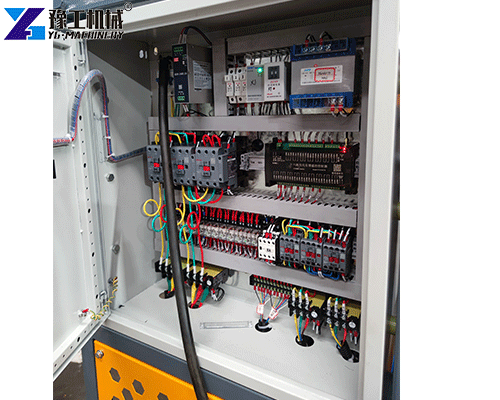
Operators control the robot from the shore using a wireless system.
Benefits:
- No need for workers to enter hazardous tanks
- Suitable for chemical plants and wastewater facilities
- Real-time monitoring with underwater cameras
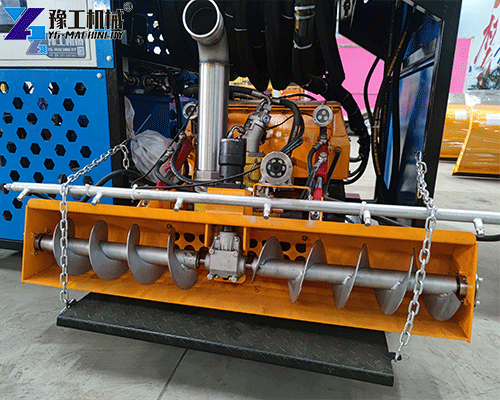
2. High-Capacity Sludge Pump System
Pump flow capacity:
- 100 – 250 m³/h
- Pump head up to 30 m
- Particle size up to 40–50 mm
This allows the robot to handle high-density sludge and sediment layers efficiently.
3. Crawler Mobility for Soft Sludge
The crawler chassis provides strong traction in:
- muddy sediment
- industrial sludge
- uneven tank bottoms
This makes the robot stable even in soft sediment environments.
4. Explosion-Proof Option for Industrial Tanks
For oil or chemical facilities the robot can be equipped with:
- explosion-proof motors
- sealed electrical system
- remote monitoring
This ensures safe operation in hazardous environments.
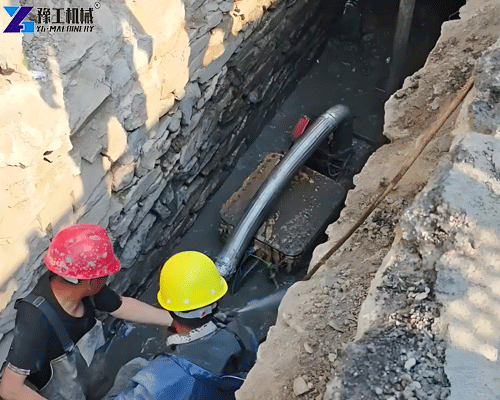
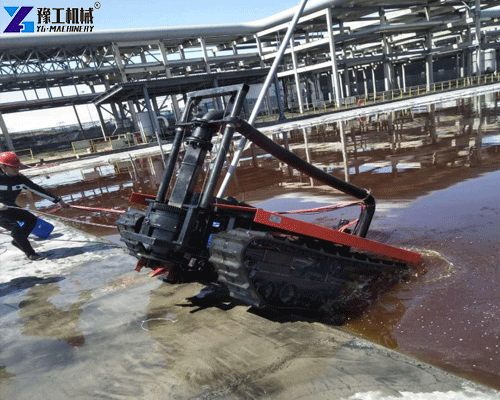
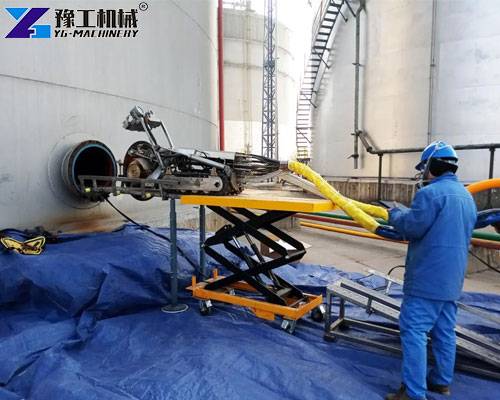
Applications of Sludge Cleaning Robot
The sludge cleaning robot is widely used in various complex dredging and tank cleaning scenarios:
1. Municipal & Pipeline Systems
- municipal sewer cleaning robot applications
- underground pipeline sludge cleaning
- drainage pipe and culvert dredging
- urban sewer and stormwater system maintenance
2. Rivers, Reservoirs & Narrow Water Areas
- narrow river dredging robot projects
- lake dredging robot and pond cleaning
- reservoir sediment removal
- dam discharge channel cleaning
- bridge culvert and underground channel dredging
3. Industrial & Wastewater Treatment Facilities
- wastewater treatment plant sludge cleaning
- sewage tank cleaning robot applications
- industrial sludge pit cleaning
- chemical wastewater tank cleaning
- cooling tower sludge removal
4. Oil, Mining & Hazardous Environments
- oil tank cleaning robot (explosion-proof optional)
- crude oil storage tank sludge removal
- mining sedimentation pond dredging
- tailings pond cleaning robot applications
These applications demonstrate the robot’s ability to operate in confined spaces, hazardous environments, and underwater sludge conditions where traditional dredging equipment cannot work efficiently.
Click Here to Get A Free Quote
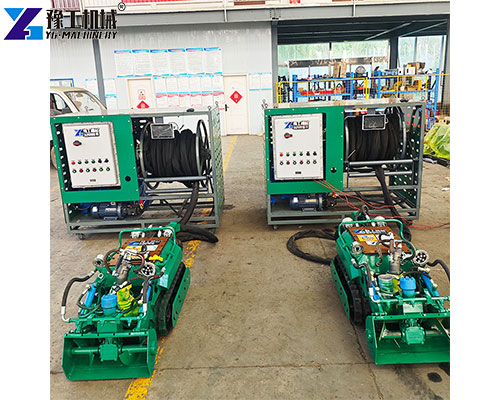
Why Choose a Sludge Cleaning Robot Instead of Manual Cleaning?
Compared with traditional methods, a sludge cleaning robot for sale offers:
– Safer operation in confined sewage tanks
– Higher efficiency than manual dredging
– Lower labor cost in industrial tank cleaning
– Better performance in lake and reservoir dredging projects
Why Choose YG Sludge Cleaning Robot?
✔ Remote unmanned dredging
✔ High pump capacity up to 250 m³/h
✔ Crawler robot for soft sludge
✔ Explosion-proof option available
✔ Custom configurations for different tanks
YG Machinery provides custom sludge dredging solutions for industrial and environmental projects worldwide.
Click Here to Get A Free Quote
FAQ about Sludge Cleaning Robot
What is a sludge cleaning robot?
A sludge cleaning robot is a remote-controlled machine used for wastewater tank cleaning, sewage tank cleaning, and industrial sludge removal.
Where can a sludge cleaning robot be used?
It is widely used in wastewater treatment plants, industrial tanks, oil storage tanks, lakes, reservoirs, and mining sedimentation ponds.
Is this sludge cleaning robot suitable for lake dredging?
Yes, it can be used as a dredging robot for lake, pond cleaning robot, and reservoir dredging robot.
What is the sludge cleaning robot price?
The price depends on model, pump capacity, and customization. Contact us to get the latest sludge cleaning robot price.
Click Here to Get A Free Quote
Get Sludge Cleaning Robot Price
Looking for a reliable sludge cleaning robot for your project?
YG Machinery provides:
- customized dredging robots
- factory direct price
- global shipping
👉 Contact us now to get the latest sludge cleaning robot price.