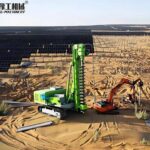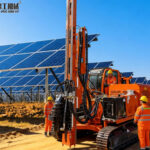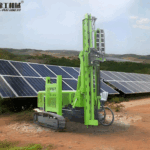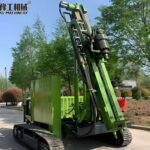
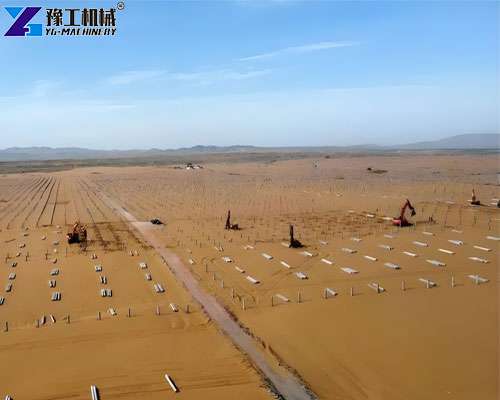
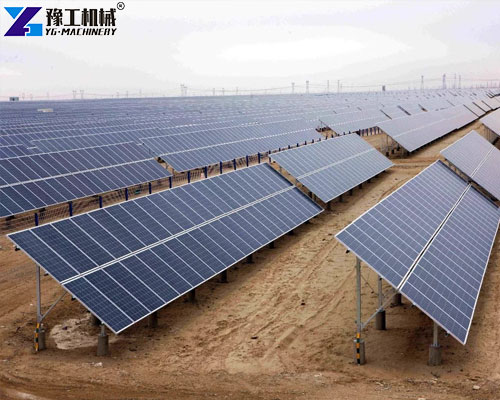
Desert solar farms are rapidly becoming a preferred solution for large-scale renewable energy projects, especially in the Middle East. However, constructing solar mounting foundations in desert environments presents unique challenges that require specialized equipment and careful planning. For contractors and EPC companies, understanding these challenges and choosing the right solar pile driver is critical to ensuring efficiency, precision, and long-term stability.
Challenges of Desert Solar Farm Construction
Desert environments pose several construction difficulties for solar farm projects:
- Loose Sand and Unstable Soil: Loose sandy layers can cause equipment to sink or shift, making it difficult to maintain accurate pile alignment. Unstable foundations may compromise the structural integrity of solar mounting systems.
- High Temperatures: Extreme daytime temperatures can exceed 50°C, which puts significant strain on hydraulic systems and engines, potentially reducing operational efficiency.
- Sand and Dust: Persistent sandstorms and airborne dust can accelerate wear on mechanical components, requiring equipment designed for durability and easy maintenance.
- Irregular Subsurface Conditions: Beneath the sand, hard layers or rock pockets often exist, making consistent pile penetration and alignment more challenging.
These factors make desert solar farm construction far more complex than projects in temperate regions, highlighting the importance of specialized machinery like a solar pile driver for desert projects.
How to Choose a Solar Pile Driver for Desert Projects?
When selecting equipment for desert solar farms, several key considerations should guide decision-making:
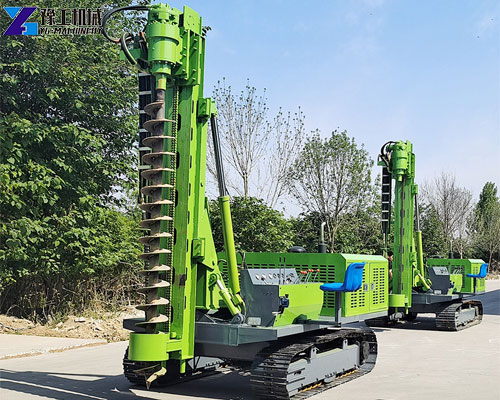
- Crawler vs Wheeled Chassis: Crawler-based machines distribute weight evenly, reducing the risk of sinking in sandy soil, whereas wheeled machines may struggle with stability.
- Pile Installation Method: Some machines rely on direct pile driving, while others combine drilling and driving capabilities. Multi-functional machines can handle both loose and compact soil layers efficiently.
- Equipment Stability: Look for machines with automatic mast leveling, low ground pressure, and reinforced frames to maintain alignment across uneven terrain.
- Cooling System Requirements: High ambient temperatures necessitate robust cooling systems for hydraulic and engine components to prevent overheating.
- Power System Comparison: Hydraulic systems offer precise control and adaptability, whereas hybrid hydraulic-electric systems can provide improved energy efficiency and reduced wear in extreme conditions.
Selecting the right configuration ensures smooth operation, reduces downtime, and minimizes maintenance costs in harsh desert environments.
Comparative Insights from International Projects
While individual project details vary, insights from multiple solar farm projects across different countries provide valuable guidance:
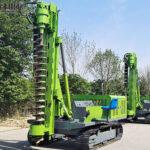
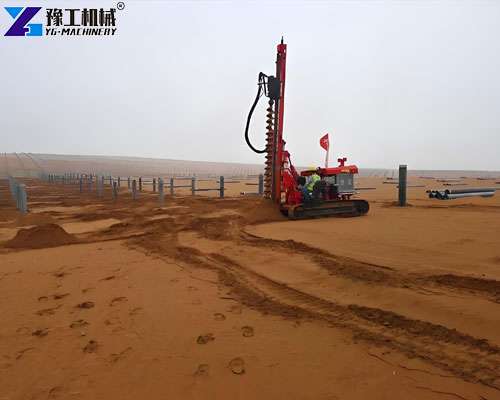
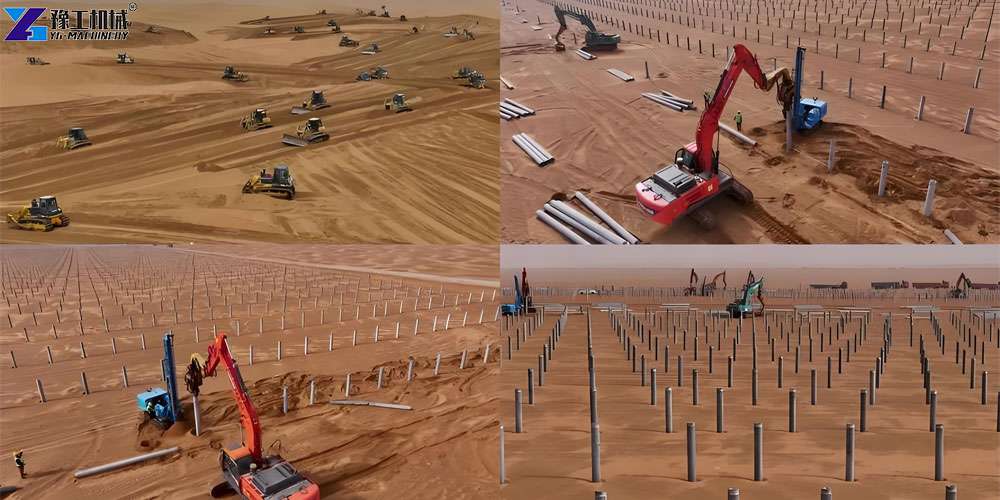
- Saudi Arabia & Middle East Projects: Desert sites benefit significantly from crawler-type solar pile driver machines that maintain stability on loose sand and allow precise pile alignment using 360° rotation and telescopic slide adjustments.
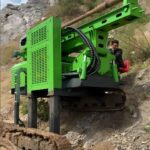
- South America & Africa Projects: Mountainous and uneven terrain requires machines with high ground adaptability and drilling capabilities to overcome rock pockets and slopes.
From these observations, it is clear that multi-functional, crawler-mounted solar pile drivers outperform wheeled alternatives in both desert and hilly environments, offering higher installation efficiency and reduced repositioning requirements.
Industry Trends and Technological Developments
Looking ahead, several trends will shape the future of desert solar farm construction:
- Increased Solar Farm Scale: Utility-scale projects are expanding, requiring faster and more precise pile installation equipment.
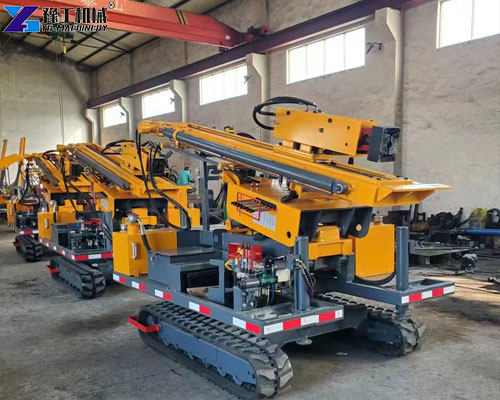
- Advanced Machinery Design: Features like 360° mast rotation and telescopic slide positioning are becoming standard, improving precision and reducing the need for manual adjustments.
- Durability and Maintenance Optimization: Equipment designed to withstand sand, dust, and extreme temperatures ensures lower lifecycle costs.
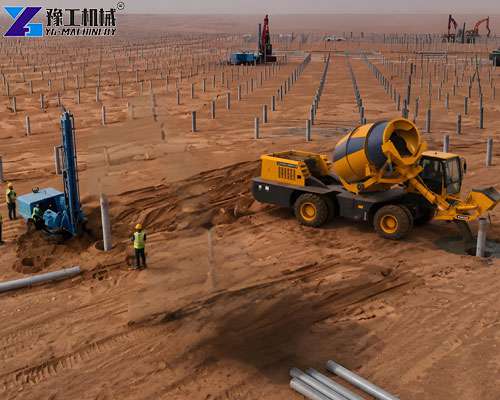
- Integration with Supporting Equipment: Self-loading concrete mixers, mobile drilling rigs, and hydraulic post drivers are increasingly used in combination to streamline foundation construction.
Contractors who adopt these technologies gain a competitive edge, completing projects more efficiently while maintaining high-quality installation standards.
Conclusion
Desert solar farm construction is inherently challenging due to loose soil, high temperatures, sand abrasion, and variable subsurface conditions. A solar pile driver for desert projects equipped with crawler mobility, 360° rotation, telescopic slide adjustment, and multi-functional pile installation capabilities is essential for overcoming these challenges.
By understanding the environment, selecting the right equipment, and applying best practices observed in international projects, solar contractors can achieve faster installation, precise alignment, and lower operational costs. For EPC companies and project developers targeting desert solar farms, investing in specialized pile-driving machinery is no longer optional—it’s a critical factor for project success.