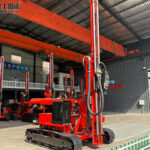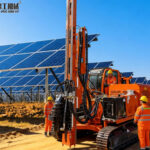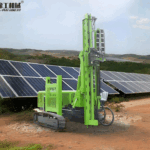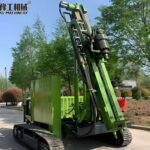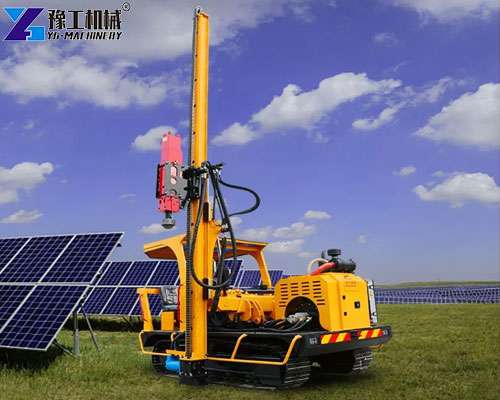
A solar pile installation machine is specialized equipment used to install steel foundation piles for ground-mounted photovoltaic (PV) systems. A solar pile driver is one of the most common machine types, using hydraulic impact force to drive piles into suitable ground. Depending on the pile profile, required embedment depth, and ground conditions, the installation process may also involve pre-drilling or a combined drilling-and-piling method.
For solar contractors, selecting the appropriate installation method is important for maintaining piling efficiency, pile alignment, and consistent foundation quality across the project.
Crawler Solar Pile Installation Machine – Hydraulic Hammer + DTH Drilling
| Overall Size | 4700 × 2100 × 2800 mm | Track Shoe Width | 400 mm |
| Power Head | Hydraulic Power | Engine | Yuchai 4-Cylinder, 85 kW |
| Operating Weight | Approx. 6.5 t | Maximum Drilling Depth | 6 m* |
| Maximum Drilling Diameter | 350 mm | Hydraulic Hammer Flow | 50–110 L/min |
| Impact Frequency | 350–800 bpm | Hydraulic System Pressure | 25–30 MPa |
| Hydraulic Pump | 40/40/32 | Travel Speed | 5 km/h |
| Climbing Angle | 30° | Cooling System | Large Radiator |
* Drill rods can be connected for greater drilling depths. DTH drilling requires an external air compressor.
What Is a Solar Pile Installation Machine?
A solar pile installation machine is specialized equipment for installing steel piles that support solar mounting structures. A typical machine integrates a crawler chassis, hydraulic system, pile-driving hammer, drilling system, or a combination of these components.
The installation method mainly depends on ground resistance:
- Direct pile driving uses a hydraulic hammer to drive the steel pile directly into suitable soil.
- Pre-drilling and pile driving creates a pilot hole before the pile is driven when ground resistance is too high.
- DTH drilling uses compressed air and a down-the-hole hammer to penetrate dense gravel, hard soil, or semi-rock formations.
This flexibility allows contractors to adapt the foundation installation method to actual site conditions.
How Are Solar Piles Installed?
A typical solar pile installation process includes the following steps:
- Position the machine at the designated pile location.
- Align the pile according to the required foundation layout.
- Choose the installation method based on ground resistance.
- Drive the pile directly or pre-drill a pilot hole when necessary.
- Check pile depth and alignment before moving to the next location.
On large solar farms, maintaining consistent pile positioning and depth is particularly important because thousands of foundation piles may need to be installed according to the mounting-system layout.
Types of Solar Pile Installation Machines
Different projects may require different machine configurations.
1.Hydraulic Solar Pile Driver
A hydraulic pile driver uses an impact hammer to drive steel piles directly into the ground. It is suitable where the soil provides sufficient penetration without extensive pre-drilling.
This method can reduce excavation and is particularly practical for repetitive pile installation on large open sites.
2.Drilling and Piling Machine
A drilling and piling machine combines ground drilling with hydraulic pile driving. The drilling system can prepare difficult ground, while the hydraulic hammer completes the pile installation.
This configuration is useful when soil conditions vary across a project site.
3.DTH Solar Pile Installation Machine
A DTH system is designed for harder ground conditions. A down-the-hole hammer breaks and penetrates dense or semi-rock formations to create a pilot hole.
After drilling, the steel solar pile can be installed using the pile-driving system.
This DTH pre-drilling + hydraulic hammer configuration is particularly useful for projects involving dense gravel, hard soil, or semi-rock ground.
What Types of Solar Piles Can Be Installed?
Solar pile installation machines can be configured for different steel foundation profiles, including:
- H-shaped steel piles
- C-shaped steel piles
- U-shaped steel piles
- Steel posts
- Other project-specific steel profiles
The machine configuration should match the pile dimensions, length, cross-section, and required embedment depth. The hammer and drilling system also need to provide sufficient performance for the selected pile and ground conditions.
Direct Pile Driving vs. Pre-Drilling
The appropriate installation method depends largely on ground resistance.
| Soft to medium soil | Direct pile driving |
| Dense gravel | Direct driving or pre-drilling, depending on resistance |
| Hard soil | Pre-drilling + pile driving |
| Semi-rock ground | DTH pre-drilling + hydraulic hammer |
| Very hard rock | Drilling-based foundation method |
There is no single installation method suitable for every solar project. A site investigation and actual pile-driving requirements should be considered before selecting the machine configuration.
Key Factors When Buying a Solar Pile Installation Machine
For contractors and EPC companies, machine selection should be based on the actual foundation requirements rather than machine size alone.
1. Pile Type and Dimensions
Provide the pile profile, width, thickness, length, and steel specifications. These factors affect the hammer and mast configuration.
2. Required Embedment Depth
The required pile depth determines the working range of the machine and may affect the choice of drilling system and drill rod length.
3. Ground Conditions
Soil, gravel, weathered rock, and harder formations can require different installation methods. If direct driving is not practical, a pre-drilling system may be necessary.
4. Project Scale and Daily Output
For large-scale photovoltaic projects, contractors should consider the number of piles to be installed and the required daily production rate.
5. Site Access and Terrain
Crawler-mounted equipment can provide better mobility and stability on uneven or undeveloped solar project sites. Machine dimensions should also be checked against transportation and site-access limitations.
6. Installation Accuracy
Pile verticality, installation depth, and positioning are important for the subsequent installation of solar mounting structures. The machine should provide sufficient control and stability to meet the project’s foundation requirements.
Solar Pile Installation for Large PV Projects
Ground-mounted solar farms may require thousands of steel foundation piles, making installation efficiency and consistency major project considerations.
For relatively driveable ground, direct hydraulic piling can provide a straightforward installation method. When the project contains dense gravel, hard soil, or semi-rock layers, a drilling and piling machine can provide greater flexibility by allowing contractors to pre-drill difficult sections before driving the piles.
For example, a solar project in Chile required a combination of DTH pre-drilling and hydraulic hammer piling because dense gravel and semi-rocky ground created high resistance to direct pile driving. This approach allowed the contractor to prepare the hard ground and then complete steel pile installation with hydraulic impact force.
A Chile solar project using DTH pre-drilling and hydraulic pile driving demonstrates how this combined method can be applied when dense gravel and semi-rock ground create high penetration resistance.
How to Select the Right Solar Pile Installation Method
Before purchasing a machine, it is useful to provide the equipment supplier with:
- Steel pile type and dimensions
- Pile length and required embedment depth
- Soil or geological conditions
- Required drilling diameter, if pre-drilling is needed
- Expected number of piles
- Target installation output
- Site terrain and access conditions
- Required pile alignment and installation accuracy
Based on these details, the machine can be configured for direct pile driving, drilling, or a combined installation process.
Conclusion
A solar pile installation machine is more than a pile-driving hammer. It is a foundation installation system that can be configured around the pile type, ground conditions, installation depth, and project requirements.
Direct hydraulic pile driving is practical for suitable ground, while pre-drilling + hydraulic pile driving provides an alternative for dense gravel, hard soil, and semi-rock formations. Selecting the appropriate configuration before construction can help contractors improve installation efficiency and maintain consistent solar foundation quality.
If you are planning a ground-mounted PV project, provide your pile dimensions, required installation depth, ground conditions, and project scale to determine the most suitable solar pile installation configuration.