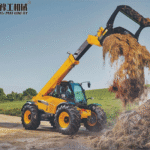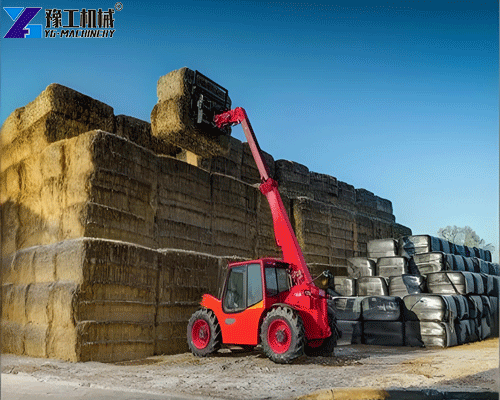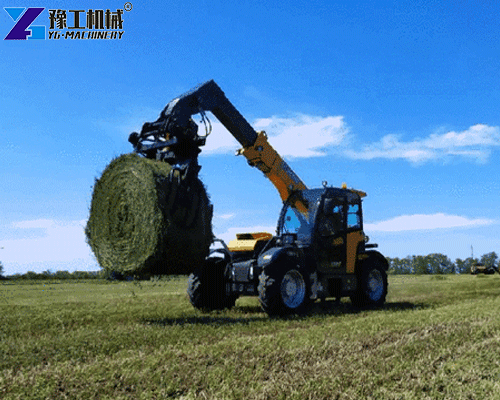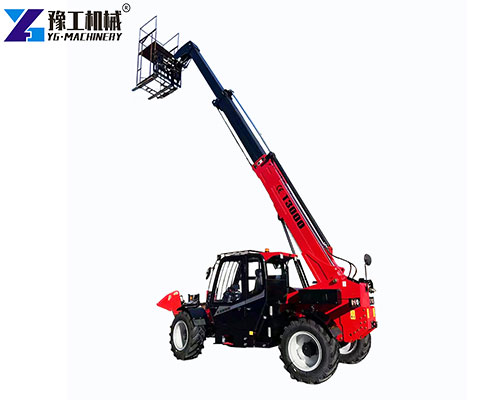
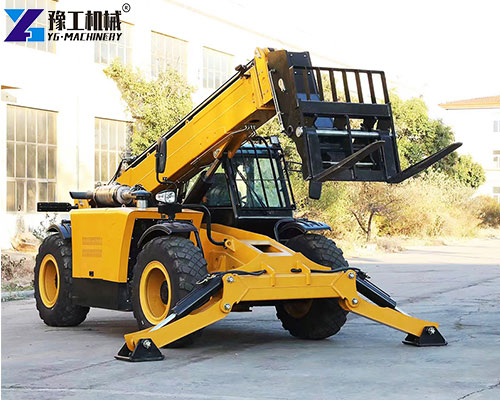
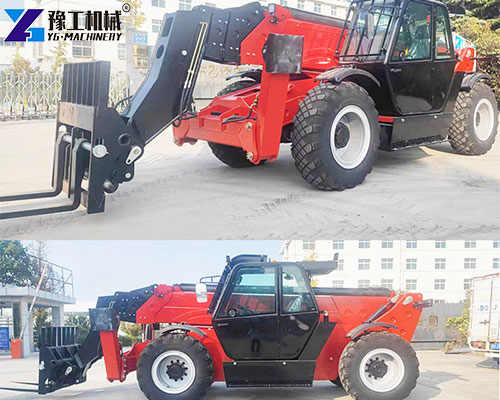
A telescopic telehandler proved to be the most practical solution for a Canadian materials-handling contractor facing uneven terrain, cold winters, and multi-task farm and construction operations.
Project Background: Why Telescopic Telehandlers Are Gaining Attention in Canada
In November 2024, a logistics and agricultural service contractor based in Alberta, Canada, reported increasing difficulty using conventional forklifts across mixed outdoor worksites.
The company operates grain storage yards, prefabricated building sites, and seasonal agricultural facilities.
Traditional forklifts struggled with:
- Soft ground and gravel surfaces
- Long-reach loading onto trailers
- Reduced traction during winter months
These conditions are common across western Canada and reflect a broader shift toward multi-purpose lifting equipment that can operate year-round. After comparing different options, including electric forklift for indoor tasks, the Canadian farm selected a telescopic telehandler for its extended reach and rough terrain performance.
Click Here to Get A Free Quote
Equipment Overview: Telescopic Telehandler Configuration Selected
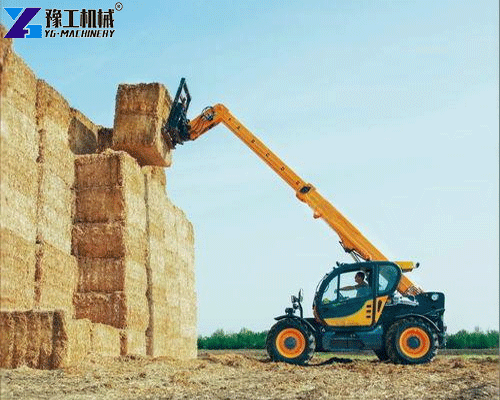
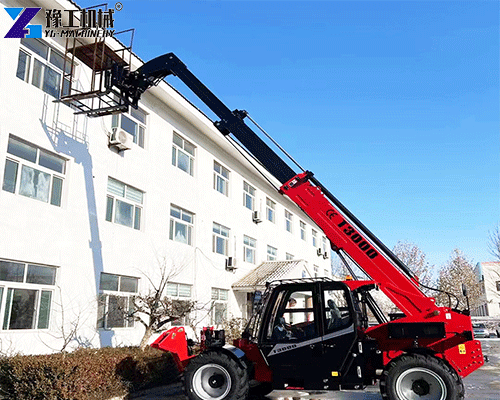
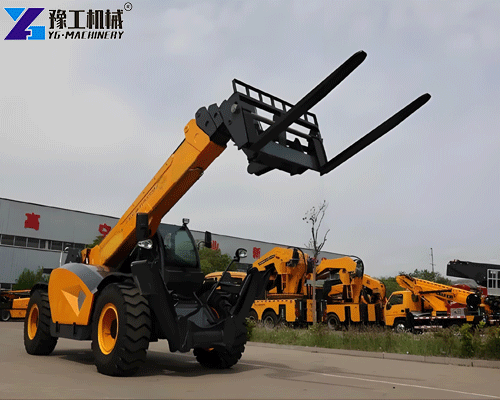
To address these constraints, the customer selected a YG-TS1440 telescopic telehandler configured for cold climate operation and outdoor use.
Key Technical Parameters
| Model | YG-TS1035 | YG-TS1440 | YG-TS1850 |
| Rated load | 3500kg | 4000kg | 5000kg |
| Maximum lift height | 10000mm | 13500mm | 17550mm |
| Maximum reach | 5000mm | 8500mm | 13080mm |
| Maximum traction force | ≥70kn | ≥70kn | ≥70kn |
| Minimum ground clearance | 420mm | 420mm | 420mm |
| Overall dimensions | 5700×2230×2400mm | 7000×2350×2550mm | 7500×2430×2550mm |
| Wheelbase | 3670mm | 3670mm | 3670mm |
| Engine Type | CUMMINS/Yuchai | Yuchai Brand | YunneiBrand |
The configuration balanced reach, stability, and maneuverability without oversizing the machine.
Click Here to Get A Free Quote
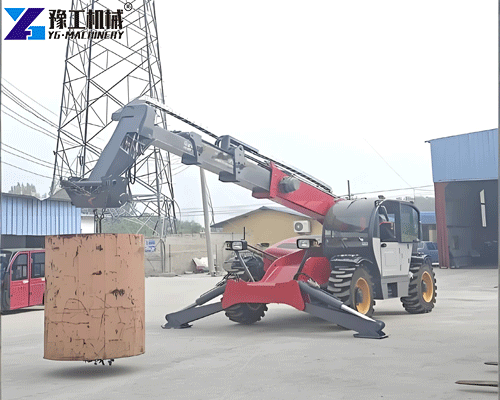
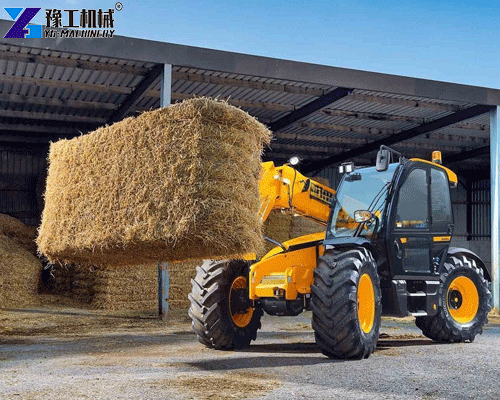
What Problem Was the Customer Trying to Solve?
Limited Reach and Stability on Uneven Ground
The previous setup relied on a standard forklift and wheel loader combination.
This caused inefficiencies:
- Pallets could not be safely placed onto high trailers
- Rehandling increased labor hours
- Machine switching slowed daily output
Winter conditions further amplified these issues, especially during early morning operations.
Why a Telescopic Telehandler Was Chosen?
Decision Logic Explained
The telescopic telehandler was selected based on three core requirements:
- Extended reach without cranes
- Stable lifting on rough, unpaved terrain
- Single-machine versatility for multiple tasks
Compared with a conventional forklift, the telescopic boom handler provided forward outreach that reduced the need for repositioning during loading.
Click Here to Get A Free Quote
How the Solution Was Implemented on Site?
Operating Environment
- Outdoor yards with compacted gravel
- Temperature range: −25°C to +30°C
- Frequent trailer loading and unloading
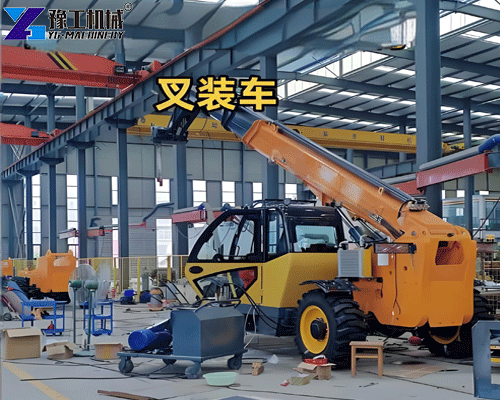
The machine was delivered fully assembled and commissioned on site within two days.
Operators required minimal retraining due to familiar control logic.
Measurable Results After Deployment?
After three months of operation, the contractor reported:
- 22% reduction in loading time per trailer
- Lower equipment switching frequency
- Improved safety during high-reach pallet placement
The rough terrain telehandler configuration maintained traction during winter without additional ground preparation.
Click Here to Get A Free Quote
Cost Consideration: More Than Just Telehandler Forklift Price?
The customer initially compared options based on telehandler forklift price, but the final decision prioritized total operating value.
Key evaluation factors included:
- Fuel efficiency under partial load
- Maintenance access and service intervals
- Ability to replace multiple machines
The result was lower overall equipment utilization cost rather than the lowest upfront price.
Application Scope in Canada
This setup is now used across:
- Agricultural storage yards
- Seasonal construction projects
- Equipment rental support during peak periods
The machine operates year-round without seasonal downtime.
Click Here to Get A Free Quote
FAQ: Telescopic Telehandler for Canadian Buyers
Is this machine suitable for winter operation?
Yes. Cold-start engines, hydraulic oil selection, and enclosed cab options support sub-zero conditions.
Can it replace both a forklift and a loader?
In many applications, yes. It reduces the need for separate lifting and reach equipment.
What limits should buyers consider?
Lift capacity decreases at full outreach. Load charts must be reviewed carefully during selection.
How long is delivery to Canada?
Typical lead time is 25–40 days depending on configuration and port routing.
What about after-sales support?
Remote diagnostics, standard spare parts lists, and technical documentation are provided.
Click Here to Get A Free Quote
Manufacturer Insight: Why YG Machinery Was Selected
YG Machinery was chosen based on:
- Experience exporting telescopic telehandlers to cold-climate markets
- Application-based configuration support
- Transparent technical documentation
The focus was not on maximum specifications, but on fit-for-purpose performance.
Conclusion
This Canadian case demonstrates that a telescopic telehandler is a practical response to mixed-terrain, cold-weather handling challenges.
Matching reach, stability, and operating environment proved more important than selecting the largest or lowest-priced machine.