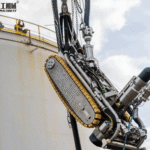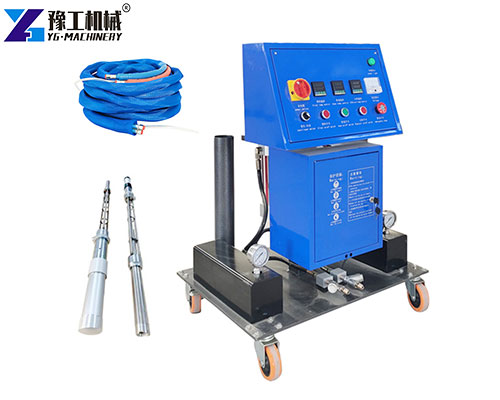
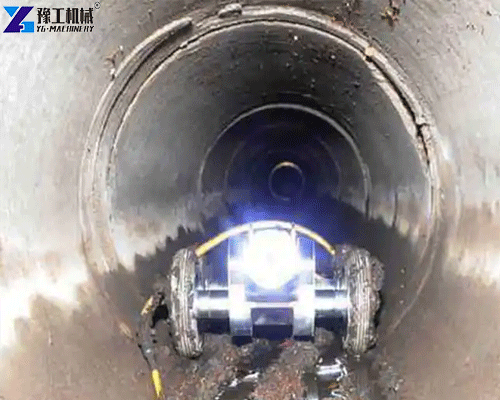

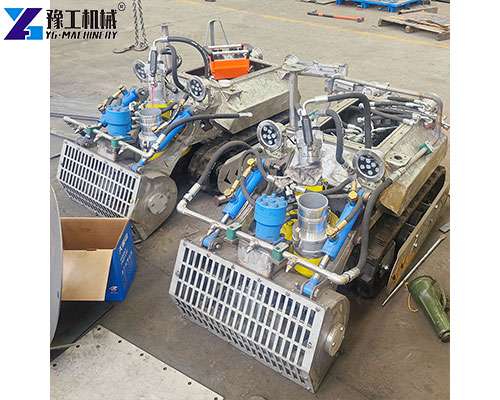
Blocked pipes, accumulated sludge, and hazardous gases make sewer maintenance one of the most dangerous and time-consuming tasks for municipalities and industrial facilities. Traditional manual cleaning is not only inefficient but also exposes workers to serious safety risks. A Sewer Cleaning Robot offers a safer and more efficient solution by allowing operators to perform sewer inspection and sludge removal remotely. With strong mobility, high-pressure cleaning capability, and real-time monitoring, it can quickly clear blockages and sediment in complex pipeline systems. For cities and contractors looking to improve sewer maintenance efficiency while reducing labor risks, robotic cleaning technology is becoming the smarter choice.
Technical Features of YG Sewer Cleaning Robot
| Parameter | YG500 | YG600 | YG700 | YG800 | YG900 | YG1200 |
| Robot Dimensions (mm) | 1500*500*650 | 1500*600*650 | 1600*700*650 | 1600*850*700 | 1650*960*750 | 1900*1200*750 |
| Dredging Width (mm) | 500 | 600 | 700 | 800 | 900 | Suitable for large culverts |
| Travel Speed (m/s) | 3–15 | 3–15 | 3–15 | 3–15 | 3–15 | 0–17 m/min |
| Pump Diameter (inch) | 3 | 3 | 4 | 4 | 4 | 4or6 |
| Pump Flow (m³/h) | 100 | 100 | 160 | 160 | 200 | 250 |
| Pump Head (m) | 0–30 | 0–30 | 0–25 | 0–25 | 0–25 | 0–30 (Horizontal: 100–150m) |
| Hydraulic Station Dimensions (mm) | 2200*1200*1700 | 2200*1200*1700 | 2200*1200*1700 | 2200*1200*1700 | 2200*1200*1700 | 2120*1240*1200 |
| Main Motor Power (kW) | 18 | 18 | 22 | 22 | 22 | 45KW (50KW) or Diesel 76KW (123KW) |
| Hydraulic System Pressure (Mpa) | 0–16 | 0–16 | 0–16 | 0–16 | 0–16 | Not specified |
| Particle Size (mm) | 15 | 15 | 40 | 40 | 50 | 0–40 (customizable) |
| Winch Speed (r/min) | 0–10 | 0–10 | 0–10 | 0–10 | 0–10 | 0–10 |
| Pipe Length (m) | 30–50 Optional | 30–50 Optional | 30–50 Optional | 30–50 Optional | 30–50 Optional | 30m/pack, 20kg pressure resistant, optional |
| Control System | Wireless Remote | Wireless Remote | Wireless Remote | Wireless Remote | Wireless Remote | Wireless Remote |
| Lighting System | Underwater LED*2 | Underwater LED*2 | Underwater LED*2 | Underwater LED*2 | Underwater LED*2 | Underwater LED*2 |


Key Advantages of Using a Sewer Cleaning Robot
1. Remote Sludge Removal Without Direct Worker Entry
One of the main advantages of a robotic dredging system is that operators can control the machine remotely from outside the sludge-filled working area.
The crawler robot performs the dredging and sediment removal work while operators remain in a safer operating position.
This is particularly useful when municipal drainage structures contain:
- Accumulated sludge
- Contaminated water
- Decomposing organic material
- Hazardous gases
- Deep or difficult-to-access sediment zones
The objective is not to replace all sewer maintenance operations, but to reduce the need for personnel to directly enter areas where heavy sludge removal is required.
2. Integrated Agitation and Sludge Pumping
Removing thick sediment is more difficult than simply pumping water.
Accumulated sludge can settle into compact layers that restrict pumping efficiency. The dredging robot uses its working mechanism to disturb and mobilize the sediment so that it can be transferred through the pumping system.
This integrated process combines:
- Crawler movement
- Sediment agitation
- Sludge collection
- Pumping
- Remote operation
As a result, the machine can continuously work on sediment removal instead of relying entirely on manual excavation and handling.
3. Strong Crawler Mobility in Sludge-Filled Areas
The crawler-type chassis provides traction when the working surface contains mud, sediment, and standing water.
Compared with conventional wheeled equipment, a tracked dredging robot can distribute its weight over a larger contact area and maintain more stable movement in soft working conditions.
This makes the equipment suitable for applications such as:
- Municipal drainage channels
- Large-diameter sewer channels
- Underground culverts
- Stormwater drainage structures
- Sedimentation areas
- Wastewater facilities
The appropriate robot width should be selected according to the available access opening and the required dredging width.
4. High-Capacity Sludge Transfer
Different YG models provide pump capacities from approximately 100 to 250 m³/h, allowing the system to be configured for different sediment removal requirements.
The required pump capacity depends on factors such as:
- Sludge consistency
- Sediment depth
- Required cleaning rate
- Discharge distance
- Elevation difference
- Available discharge location
For this reason, pump capacity should be considered together with pump head rather than evaluated by flow rate alone.
5. Wireless Remote Control and Underwater Operation
The robot is controlled through a wireless remote control system, allowing operators to manage movement and dredging operations without standing directly beside the machine.
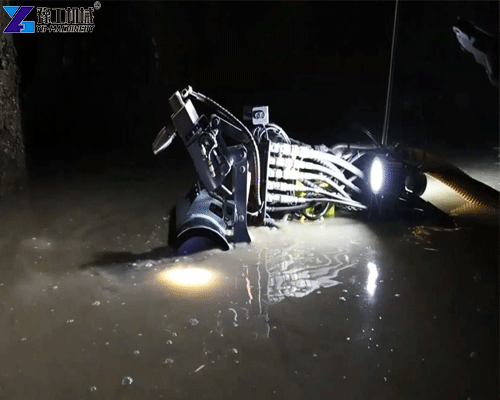
Underwater LED lighting provides visibility around the working area, while the sealed system allows the equipment to work in wet and partially or fully submerged conditions, depending on the configuration.
This makes the system particularly useful for sediment removal where conventional dry-land equipment cannot directly access the working zone.
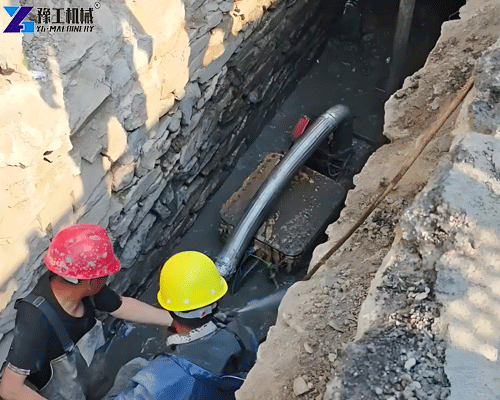
What Problems Can a Sewer Cleaning Robot Solve?
Municipal drainage systems can gradually accumulate sediment even when the drainage structure continues to function normally.
The problem becomes more serious when heavy sediment occupies a significant portion of the available flow area.
A sewer sludge removal robot can be used for removing accumulated:
- Sand
- Silt
- Mud
- Organic sludge
- Fine sediment
- Loose debris
- Other pumpable deposits
The equipment is especially valuable when sediment has accumulated in locations that are difficult or unsafe for conventional manual removal.
1. Thick Sediment Accumulation
Sediment accumulation reduces the effective cross-sectional area available for water flow.
During heavy rainfall, reduced drainage capacity can contribute to slower water discharge and increased flood-management pressure.
A robotic dredging system can remove accumulated sediment and help restore the usable capacity of the drainage structure.
2. Difficult Underground Access
Many municipal drainage structures are located underground and can only be accessed through limited entry points.
Instead of bringing large conventional excavation equipment into the structure, a compact crawler robot can be lowered or guided into the working area where its dimensions permit.
The equipment should be selected according to the actual access opening, internal dimensions, dredging width, and working conditions.
3. Wet and Flooded Working Areas
Traditional dry-cleaning equipment may not be suitable when the working area contains substantial standing water.
A waterproof underwater dredging robot can work directly in wet or submerged conditions, allowing sludge removal without first completely draining the structure when site conditions permit.
This can reduce preparation requirements and make sediment removal possible in locations where dewatering is difficult.
4. Repeated Municipal Drainage Maintenance
For municipalities and drainage contractors responsible for multiple sites, equipment mobility and remote operation can be important advantages.
Instead of relying entirely on manual crews for every sediment removal project, a robotic system can be deployed repeatedly for scheduled maintenance and emergency cleaning work.
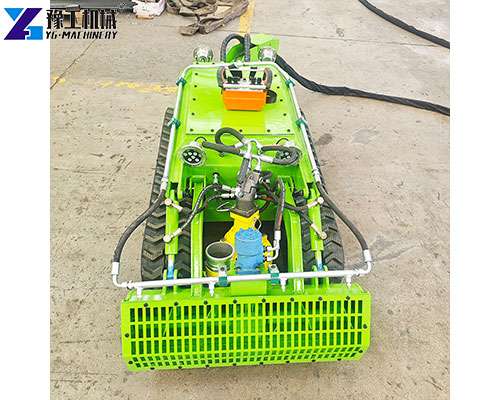
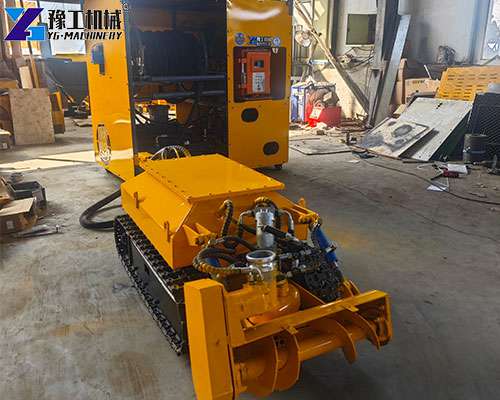
Sewer Cleaning Robot vs. Traditional Manual Sludge Removal
The main difference is not simply the cleaning speed. It is the way the work is performed.
Traditional sludge removal may involve workers entering the working area, manually loosening sediment, collecting material, and transferring it out.
A robotic dredging system changes this process by placing the main dredging operation on the machine.
| Factor | Manual Sludge Removal | Robotic Sludge Removal |
|---|---|---|
| Worker exposure | Higher | Reduced through remote operation |
| Sediment handling | Manual or semi-manual | Mechanized |
| Sludge pumping | Usually separate | Integrated with robot system |
| Operation in standing water | More difficult | Designed for wet/submerged conditions |
| Continuous operation | Limited by working conditions | Machine-based continuous operation |
| Mobility | Depends on workers/equipment | Crawler-driven |
| Control | Direct operation | Wireless remote control |
| Suitable applications | Accessible areas | Difficult-access sediment removal areas |
The most suitable method depends on the site conditions, sediment characteristics, access dimensions, and project requirements.
Mexico Municipal Drainage Cleaning Project
Location: Mexico
Application: Municipal drainage sediment removal
Equipment: YG hydraulic crawler dredging robot
The municipal project involved heavy sediment accumulation inside an underground drainage structure. The accumulated material reduced the available drainage space and made conventional manual removal labor-intensive.
The project team needed a solution that could:
- Enter the underground working area
- Operate in a wet environment
- Loosen accumulated sediment
- Pump the mobilized sludge out of the structure
- Allow operators to remain outside the working area
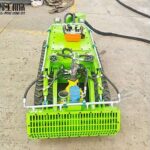
YG supplied a remotely controlled crawler dredging robot configured for the site’s working conditions.
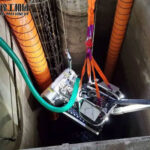
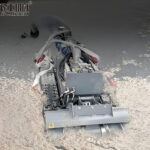
The robot was lowered into the drainage structure and remotely driven toward the sediment accumulation area. Its dredging mechanism loosened the deposited material, while the pumping system transferred the sludge through the discharge pipeline.
The solution reduced the need for direct manual sludge handling and allowed the municipal maintenance team to carry out the sediment removal operation with fewer personnel working directly in the underground environment.

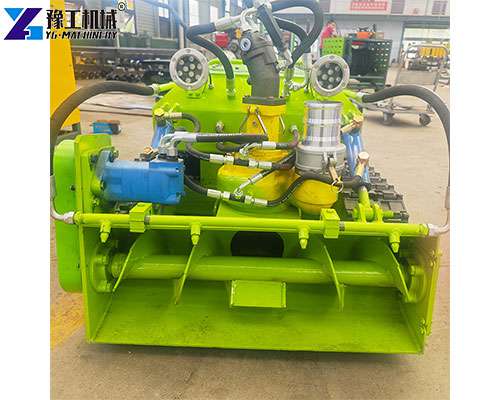
How to Choose the Right Sewer Cleaning Robot for Sludge Removal?
The correct model should be selected according to the working dimensions and sludge removal requirements, rather than simply choosing the largest machine.
1. Check the Sewer Diameter and Access Opening
For municipal sewer and drainage sludge removal, YG sewer cleaning robots are generally designed for sewer diameters of 600 mm and above. This provides sufficient working space for the crawler chassis, dredging mechanism, and sludge pumping operation.
Before selecting a model, measure the actual internal diameter or working dimensions of the sewer or drainage structure, as well as the access opening through which the robot must enter.
For sewer diameters below 600 mm, a customized sludge cleaning robot can be developed according to the available space and project requirements. The final robot dimensions, dredging width, and pumping configuration can be adjusted to suit the specific application.
This is particularly important for municipal drainage projects where the available working space varies significantly between sites.
2. Measure the Internal Working Width
Determine the width of the drainage channel, culvert, or sewer structure.
The dredging width should provide sufficient working coverage without restricting robot movement.
3. Evaluate Sludge Thickness and Material
Identify whether the deposit mainly consists of:
- Fine silt
- Sand
- Mud
- Organic sludge
- Mixed sediment
- Larger debris
This information affects the selection of the dredging mechanism and pump configuration.
4. Determine the Required Pump Flow
Higher sediment volumes may require a higher-capacity pumping system.
YG models provide different pump capacities, allowing the equipment to be matched to the expected removal workload.
5. Consider Discharge Distance
The discharge distance and elevation difference between the robot and the discharge point affect the required pump head.
This is especially important for underground municipal drainage projects.
6. Check Whether the Area Is Submerged
If the working area contains significant standing water or is permanently submerged, the robot configuration should be suitable for underwater operation.
7. Consider Remote Operation Requirements
For hazardous or difficult-access environments, wireless remote control allows operators to manage the machine from a safer position outside the working area.
8. Sewer Diameter: 600 mm or Above?
As a general guideline, the standard YG sewer cleaning robot range is suitable for sewer and drainage structures with diameters of 600 mm or larger.
If your sewer diameter is less than 600 mm, do not assume that robotic sludge removal is impossible. YG can customize a more compact sludge removal robot according to the actual sewer diameter, access opening, sludge thickness, and required pumping capacity.
When requesting a quotation, simply provide the sewer diameter or internal dimensions. The engineering team can then evaluate whether a standard model or customized compact dredging robot is more appropriate.
Sewer Cleaning Robot Applications
Although commonly called a sewer cleaning robot, this equipment is primarily intended for mechanized sludge and sediment removal, rather than CCTV inspection or pipeline condition monitoring.
Typical applications include:
- Municipal Drainage Systems: Remove accumulated sand, silt, and sludge from underground drainage structures.
- Large-Diameter Sewer Channels: Assist with sediment removal where sufficient internal working space is available for crawler equipment.
- Stormwater Drainage Structures: Remove deposits that accumulate after repeated rainfall and stormwater runoff.
- Drainage Culverts: Provide mechanized sediment removal in large culverts where conventional equipment has limited access.
- Wastewater Facilities: Remove settled sludge and sediment from suitable tanks, channels, and other structures according to site requirements.
- Industrial Sedimentation Areas: Handle accumulated sediment in industrial water management and wastewater-related facilities.
equipment to restore drainage capacity rather than inspect pipeline conditions.
Why Choose YG Sewer Cleaning Robot?
YG provides crawler-based dredging equipment for municipal, industrial, and environmental sludge removal applications.
Key advantages include:
- Remote-controlled operation to reduce direct worker exposure
- Crawler mobility for muddy and wet working conditions
- Integrated sludge pumping for continuous material transfer
- Multiple model sizes for different working widths
- Pump capacities up to 250 m³/h
- Underwater lighting for low-visibility environments
- Customizable configurations according to project requirements
- Factory-direct equipment supply for international projects
Instead of purchasing a machine based only on a generic “sewer cleaning” description, buyers can provide the actual site dimensions and sludge conditions so the appropriate dredging configuration can be selected.
Sewer Cleaning Robot for Sale: Request a Project-Based Quote
If your requirement is sewer sludge removal, municipal drainage sediment cleaning, or underground dredging, YG can recommend a suitable crawler dredging robot based on your working conditions.
To receive a more accurate quotation, provide:
- Access opening dimensions
- Internal channel width and height
- Estimated sludge thickness
- Sludge or sediment type
- Working length
- Required discharge distance
- Water depth
- Available power supply
- Required daily cleaning capacity
These details are more useful than simply requesting a generic sewer cleaning robot price.
FAQ About Sewer Sludge Cleaning Robots
1.Can the robot remove accumulated sludge and sediment?
Yes. The system is designed for mechanized removal of pumpable sludge, sand, silt, mud, and other suitable sediment deposits.
2.Can it work underwater?
The robot is designed for wet and submerged working conditions, with waterproof components and underwater LED lighting. The exact operating conditions should be confirmed according to the selected configuration.
3.Is this a sewer inspection robot?
No. The primary purpose of this equipment is sludge removal and dredging, not CCTV inspection or sewer condition monitoring.
4.Can it be used in municipal drainage systems?
Yes. Suitable applications include municipal drainage channels, large sewer structures, stormwater systems, culverts, and other underground structures where the robot has sufficient access and working space.
5.How do I choose the right model?
The most important factors are the access opening, internal working width, sludge characteristics, sediment thickness, required pumping capacity, discharge distance, and water depth.
6.How much does a sewer cleaning robot cost?
The price depends on the robot size, pump capacity, motor power, dredging configuration, control system, and customization requirements. A project-specific quotation is more meaningful than a standard price because different drainage structures require different configurations.
7.Can the sewer cleaning robot be used in small-diameter sewers?
Standard YG sewer cleaning robots are generally designed for sewer and drainage structures with diameters of 600 mm and above. For applications with a diameter below 600 mm, YG can customize a compact sludge cleaning robot based on the available working space and project requirements.
The final solution depends on the sewer diameter, access opening, sludge conditions, required dredging width, and pumping distance.
Conclusion
A modern sewer cleaning robot should not be confused with a pipeline inspection robot.
For municipalities and contractors dealing with accumulated sludge, sediment, sand, and mud, the key requirement is often mechanized dredging and sludge removal, rather than visual inspection.
YG’s crawler dredging robots combine remote operation, crawler mobility, sediment agitation, and sludge pumping to provide a practical solution for underground drainage structures, large sewer channels, culverts, stormwater systems, and other suitable sediment-removal applications.
By selecting the robot according to access dimensions, sludge conditions, pump requirements, and discharge distance, contractors and municipal maintenance teams can build a more efficient and safer approach to recurring sludge removal work.